
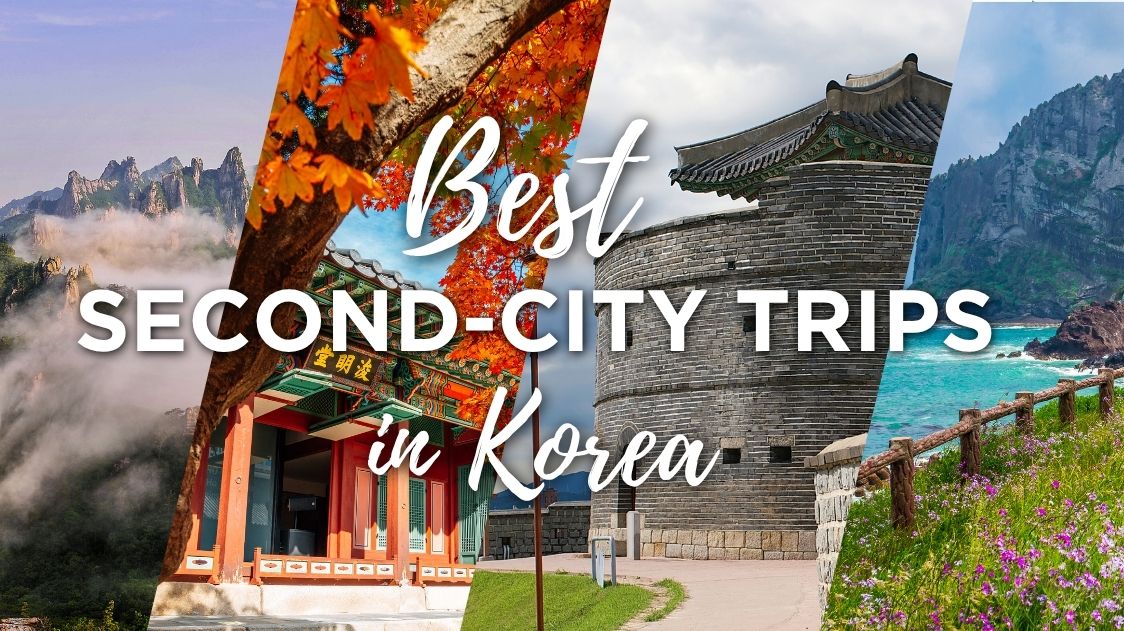
Most first Korea trips follow the same shape: a few days in Seoul, a few days in Busan, maybe a KTX day trip somewhere in between. It’s a genuinely good itinerary, and there’s no real argument against it for a first visit. But it also means most travelers see roughly the same 10% of the country that every other visitor sees, while an enormous amount of what makes Korea interesting — mountain scenery, coffee culture, food traditions centuries deep, entire historical periods barely represented in Seoul or Busan — sits an hour or two away by train, largely untouched by the standard itinerary.
This guide rounds up the strongest destinations beyond Korea’s two biggest cities, what each one actually offers, how to reach it, and how much time it deserves. Think of it as a menu for a second trip, a longer first trip, or simply a way to build an itinerary that doesn’t look identical to everyone else’s.
Why go beyond Seoul and Busan at all
A few honest reasons, beyond just novelty. First, transport makes it easy — Korea’s KTX network and extensive bus system mean almost everywhere on this list is under three hours from Seoul, often closer to two, which is a genuinely different proposition than “regional Korea” sounding remote or difficult. Second, prices tend to drop the moment you leave Seoul and Busan specifically — accommodation, food, and even some attractions run noticeably cheaper in these smaller cities, since demand and real estate costs are lower. Third, and this is the less quantifiable reason: several of these places do something Seoul and Busan structurally can’t. Jeonju’s hanok village is too dense and specific a food culture to exist inside a city the size of Seoul. Seoraksan’s granite peaks aren’t a thing either big city has. That specificity is worth chasing.
Jeonju: Korea’s food capital
What it offers
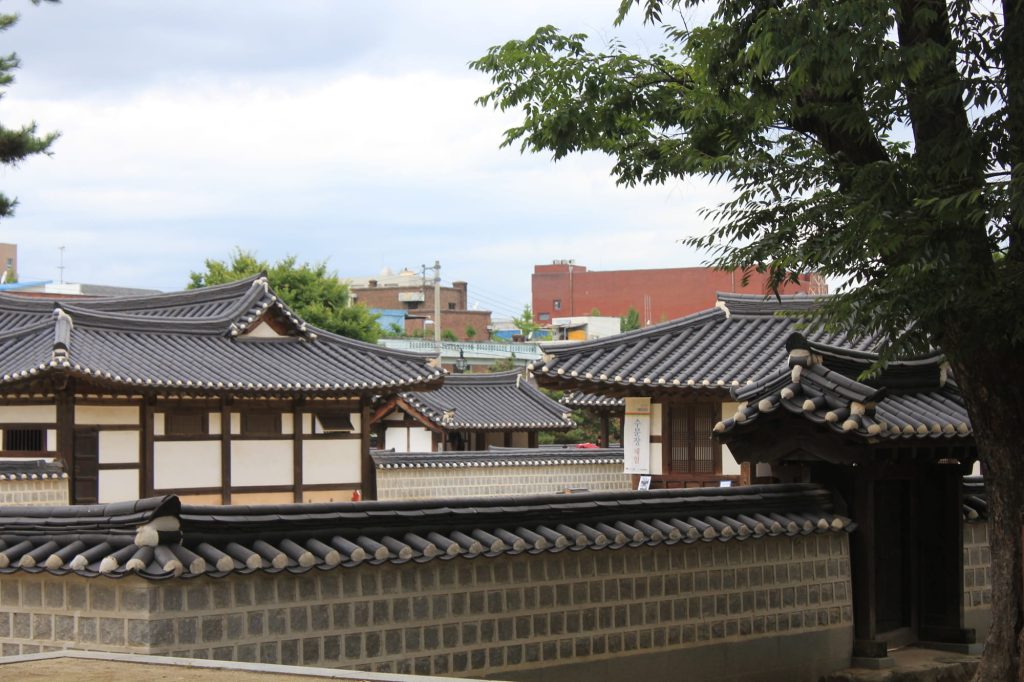
Korea’s largest living hanok village — more than 700 traditional houses in a real, inhabited neighborhood rather than a preserved museum piece — built around a food culture serious enough to earn Jeonju UNESCO’s City of Gastronomy designation. This is where bibimbap actually comes from, and the local version, with its wider range of banchan and locally made gochujang, is different enough from what’s served in Seoul to be worth the trip on its own.
Getting there
KTX from Seoul Station or Yongsan Station, roughly 1 hour 50 minutes, no transfer required. Express buses from Gangnam’s Honam terminal run cheaper at around 2.5 hours.
Time to allocate
A rushed day trip works but really underdelivers — two days with one night in a hanok guesthouse is the practical minimum to experience the food culture properly, including the early-morning kongnamul gukbap breakfast and an evening at a makgeolli bar.
Full guide: Jeonju Hanok Village: The Complete Guide
Seoraksan National Park & Sokcho: Korea’s most dramatic mountains

What it offers
Jagged granite peaks, a UNESCO Biosphere Reserve, and hiking that ranges from an easy cable car ride to a genuinely demanding full-day summit attempt at Daecheongbong, Korea’s third-highest peak. Paired with Sokcho, a coastal city with its own beaches and seafood scene, this is the strongest hiking-and-scenery destination in the country that isn’t Jeju.
Getting there
No direct train exists — express or intercity bus from Seoul’s Express Bus Terminal or Dong Seoul Terminal, roughly 2.5 hours, then a local bus into the park itself.
Time to allocate
A single-day round trip from Seoul is genuinely tight given the transit time; one overnight stay in Sokcho transforms the experience and lets you actually hike rather than rushing between buses.
Full guide: Seoraksan National Park & Sokcho: The Complete Guide
Gangneung: the coffee coast

What it offers
The origin point of Korea’s coffee culture, centered on Anmok Beach, where more than thirty ocean-view cafés line a single stretch of coastline, alongside genuinely good seafood and a slower, coastal pace. It’s less a checklist of sights and more a specific atmosphere — walk the beach, sit at a café window, repeat.
Getting there
KTX from Seoul Station or Cheongnyangni Station, roughly 2 hours.
Time to allocate
Works well as a genuine single-day round trip from Seoul, thanks to good early and late train times; an overnight stay adds the payoff of an uncrowded sunrise walk along Anmok Beach.
Full guide: Gangneung: Korea’s Coffee Coast
Pairs naturally with: Seoraksan and Sokcho, roughly 1.5 hours further north by bus — the two together make a strong 3–4 day Gangwon coastal itinerary.
Gyeongju: the ancient capital

What it offers
Over a thousand years as the capital of the Silla Dynasty left Gyeongju with a density of historical sites unmatched anywhere else in Korea — the Daereungwon tomb complex, Bulguksa Temple, Seokguram Grotto, and Cheomseongdae, one of the oldest surviving astronomical observatories in East Asia. Unlike Jeonju’s living-neighborhood feel, this is history at genuine monumental scale, much of it outdoors and walkable.
Getting there
KTX to Singyeongju Station, roughly 2–2.5 hours from Seoul, or as an add-on from Busan, which is considerably closer.
Time to allocate
One full day covers the essentials; two days allows for a slower pace across the spread-out tomb complexes and temple sites, several of which sit outside the compact city center and require a bus or taxi to reach.
If you’re combining Gyeongju with Busan specifically, our Best Things to Do in Gyeongju guide covers the full site list and timing in more depth.
Jeju Island: Korea’s own island escape
What it offers
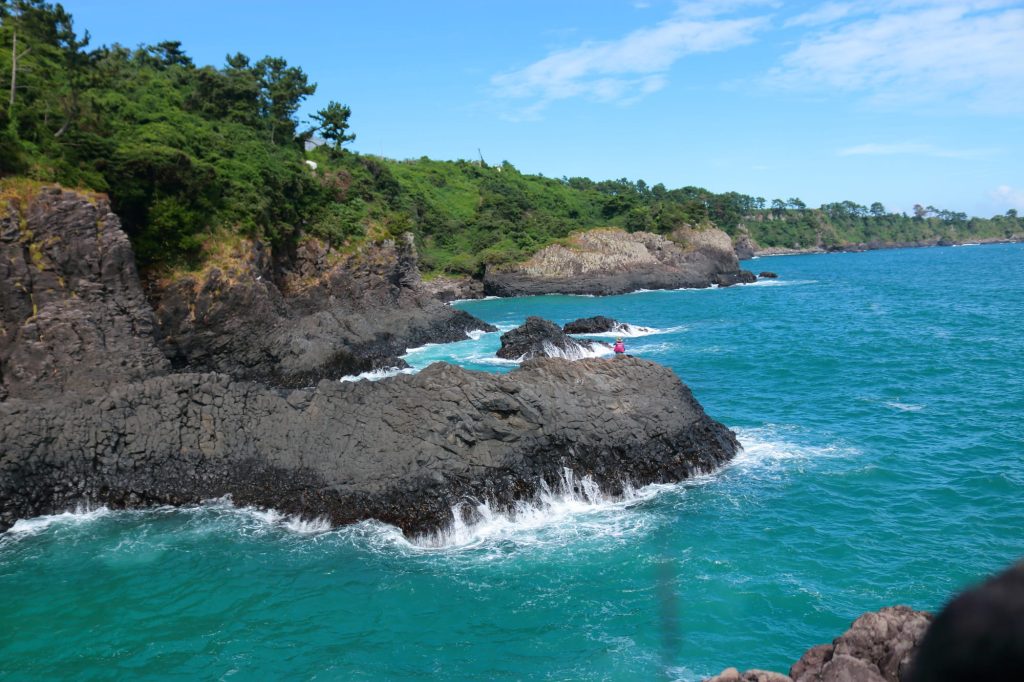
Volcanic landscapes built around Hallasan, South Korea’s highest peak, along with dramatic coastline, waterfalls, and a genuinely distinct island culture with its own dialect and food traditions. It’s the closest thing Korea has to a resort-island trip, without leaving the country.
Getting there
By air only — no bridge or rail connection exists, so a short domestic flight from Seoul (Gimpo, not Incheon, for most routes) or Busan is required, typically under an hour in the air.
Time to allocate
Three to four days is the realistic minimum to see the island properly, given how spread out its highlights are and how much a rental car (close to essential here) opens up.
For a full route, see our Jeju Island Itinerary.
Andong: Korea’s Confucian heartland

What it offers
Hahoe Folk Village, a UNESCO World Heritage site and one of the best-preserved traditional villages in the country, still home to descendants of the clans who settled it centuries ago. Andong carries a level of unbroken Confucian tradition — ancestral rites, traditional mask dance performances, centuries-old academies — that neither Seoul nor Busan, both reshaped repeatedly by modern development, can really offer anymore.
Getting there
KTX to Andong Station via a transfer, or direct intercity bus from Seoul’s Dong Seoul Terminal, roughly 3–3.5 hours.
Time to allocate
A long day trip is possible for the highly organized, but an overnight stay — including the option of a traditional hanok stay within Hahoe Village itself — gives a considerably richer sense of the place.
Full guide: Andong & Hahoe Folk Village: Korea’s Confucian Heartland
Worth pairing with: Gyeongju, given the relative proximity within Korea’s southeastern interior, for travelers building a history-focused leg of a longer trip.
Suwon: a half-day dose of history without leaving the Seoul area
What it offers
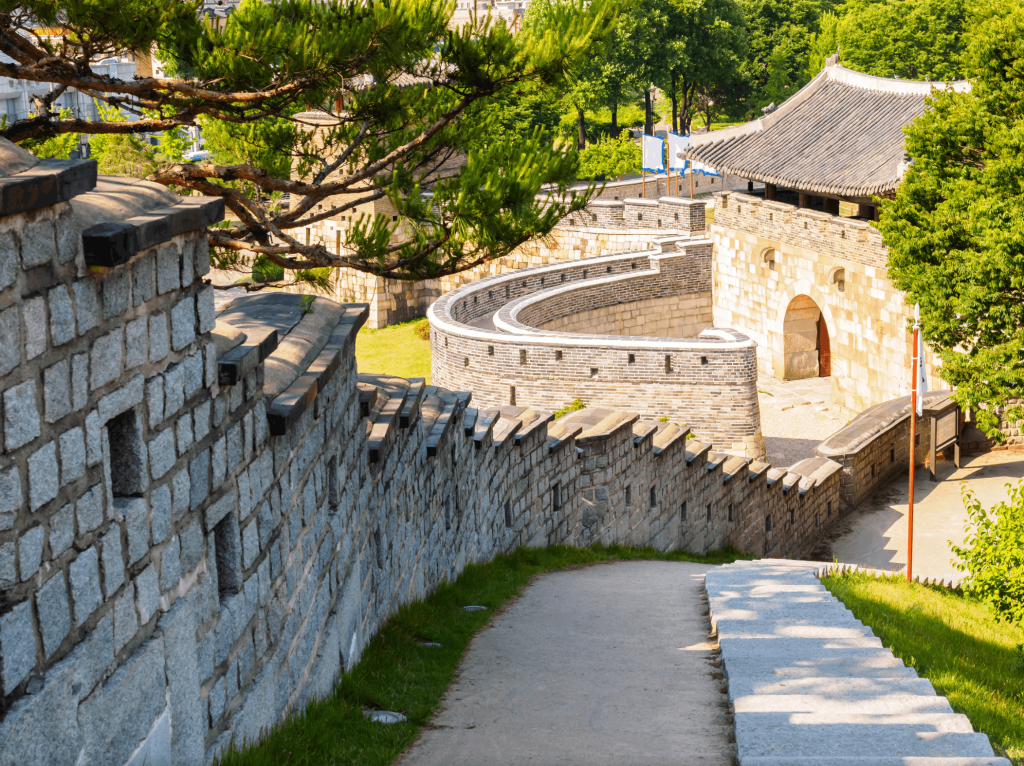
Hwaseong Fortress, a UNESCO World Heritage site and one of Korea’s best-preserved fortress walls, built in the late 18th century under King Jeongjo. It’s a genuinely impressive piece of engineering and design, walkable in a loop along the top of the fortress wall with views over the surrounding city.
Getting there
By regular commuter train (Line 1) from Seoul, or a slightly faster express option, generally under an hour — this is less a “trip” than a half-day excursion.
Time to allocate
A half-day comfortably covers the fortress walk and surrounding sites, making it one of the easiest additions to a Seoul-based itinerary on this entire list.
Full guide: Suwon Hwaseong Fortress: The Easiest UNESCO Day Trip from Seoul
A few honorable mentions

The seven destinations above are the strongest all-around picks, but a handful of others are worth knowing about depending on your interests.
Yeosu and Tongyeong, both on Korea’s southern coast, offer a quieter, less internationally known alternative to Busan’s beach scene — smaller harbor towns with excellent seafood and a slower pace, reachable by KTX or bus and often combined with a broader southern coastal itinerary.
Incheon, mostly known to travelers as the airport city, has its own worthwhile pockets beyond the transit hub — a historic Chinatown, the futuristic Songdo district, and Wolmido’s waterfront amusement area — and works well as either a final-day stop before a flight or a deliberate short addition for travelers who’d otherwise treat Incheon purely as a place to pass through.
Suncheon, home to one of Korea’s most significant wetland ecosystems at Suncheon Bay, appeals specifically to travelers interested in nature and birdwatching rather than history or food, and pairs reasonably with a southern-coast itinerary that includes Yeosu.
Budgeting for a trip beyond Seoul and Busan
One of the more pleasant surprises for travelers venturing into these smaller cities is how much cheaper accommodation and food tend to run compared to the big two. A hanok guesthouse night in Jeonju, a beachfront hotel in Gangneung, or a mid-range hotel in Andong typically costs 20–40% less than an equivalent standard in Seoul, and meals follow a similar pattern outside of Jeju’s more tourist-price-adjusted areas. The main added cost is transport — an extra KTX or bus fare for each additional destination, generally in the ₩20,000–₩60,000 range depending on distance — which is a modest trade-off against the savings on accommodation and food once you’re there. For a full walkthrough of what a broader Korea trip costs across different travel styles, see our Korea Travel Budget Guide.
When to time a trip across these destinations
Spring and autumn remain the strongest windows across nearly every destination on this list, for the same reasons they work well in Seoul and Busan — mild temperatures and lower humidity make walking-heavy days considerably more comfortable, whether that’s touring Gyeongju’s tomb complexes, hiking in Seoraksan, or wandering Jeonju’s hanok lanes. A few destinations have their own specific timing worth flagging: Seoraksan’s autumn foliage season (mid-to-late October) is arguably the single best natural spectacle on this entire list, Gangneung’s October coffee festival adds a cultural layer worth timing a visit around, and Jeju’s shoulder seasons (April–May, September–October) avoid both the summer crowds and the typhoon risk that runs roughly August through October. For a full month-by-month breakdown that applies across the country, our Best Time to Visit Korea guide covers the seasonal patterns these destinations share with Seoul and Busan.
Booking transport across multiple regions
A few practical habits make multi-destination trips across these regions considerably smoother. Booking KTX tickets through the Korail app or website a few days ahead, rather than assuming same-day availability, avoids the scramble that can happen around weekends and holiday periods, particularly on popular routes like Seoul–Gyeongju or Seoul–Gangneung. A T-money card, covered in depth in our transit guides, works across every city on this list, removing the need to think about local transport payment separately at each stop. For destinations without direct rail access — Seoraksan/Sokcho most notably — building a little schedule flexibility around bus departure times, which run less frequently than KTX services, prevents a tight connection from derailing an otherwise well-planned day.
How to combine these into a longer itinerary
A 10-day trip that isn’t just Seoul and Busan: 4 days Seoul (including a Suwon half-day), 2 days Gyeongju, 2 days Busan, 2 days Gangneung or Sokcho on the way back north, depending on flight logistics.
A coastal-and-mountain northeastern loop: Seoul, then Gangneung, then Sokcho, working up the Gangwon coast before returning to Seoul — a genuinely different-feeling trip from the standard Seoul-Busan axis, and one that barely overlaps with what most first-time visitors do.
A food-and-heritage interior loop: Seoul, then Jeonju, then Andong, then Gyeongju, then down to Busan — this route trades big-city time for a deeper look at Korea’s food and historical traditions, and works especially well for a second or third Korea trip.
A short add-on to a Seoul-and-Busan trip: if a full second itinerary isn’t realistic, Suwon’s half-day fortress visit and a single overnight in either Jeonju or Gangneung are the lowest-effort ways to add real diversity to a standard trip without reworking the whole plan.
A quick comparison table
| Destination | Distance from Seoul | Minimum time | Best for |
|---|---|---|---|
| Jeonju | ~2 hr KTX | 2 days | Food, living hanok culture |
| Seoraksan/Sokcho | ~2.5 hr bus | 1–2 days | Hiking, dramatic scenery |
| Gangneung | ~2 hr KTX | 1 day | Coffee culture, coastal pace |
| Gyeongju | ~2–2.5 hr KTX | 1–2 days | Ancient Silla-dynasty history |
| Jeju | ~1 hr flight | 3–4 days | Island scenery, volcanic landscapes |
| Andong | ~3–3.5 hr | 1–2 days | Confucian heritage, folk village |
| Suwon | <1 hr commuter train | Half day | Fortress architecture, easy add-on |
Frequently asked questions
Which of these is the single best first “second trip” beyond Seoul and Busan? Jeonju and Gyeongju are the two most commonly recommended starting points, since both are relatively easy to reach, deliver a genuinely different experience from Seoul or Busan, and don’t require the extra planning that Jeju’s flight-only access or Andong’s longer travel time involve.
Can I visit more than one of these in a single trip without it feeling rushed? Yes, particularly along a few natural pairings — Gangneung with Seoraksan/Sokcho on the northeastern coast, or Andong with Gyeongju in the southeastern interior. Combining destinations that aren’t geographically close, like Jeonju and Gangneung, works better across a longer trip (8+ days) than a shorter one, since the transit adds up.
Do any of these require a rental car? Only Jeju genuinely benefits from one, given how spread out the island’s highlights are and how thin public transport coverage is outside the main cities. Everywhere else on this list is reachable and navigable using KTX, express buses, local buses, and taxis, the same combination that covers Seoul and Busan.
Is it worth prioritizing these over more time in Seoul or Busan on a first trip? For a first-time visitor with five days or less, no — Seoul and Busan’s essentials are worth prioritizing first. For anyone with a week or more, or planning a second Korea trip, these destinations offer considerably more return on the extra planning effort than a third or fourth day added to an already-covered city.
Which destination is best for someone who wants a slower, less touristy pace? Andong and Gangneung both stand out here — Andong for its genuinely local, historically continuous character with relatively few international visitors, and Gangneung for its unhurried, mostly-domestic-tourist coastal pace that feels distinctly different from the more internationally oriented energy of Seoul or Busan.
Do I need to speak Korean to visit these smaller destinations? No, though it helps more than it does in Seoul. Major sights, train stations, and most restaurants in the hanok village and coastal café areas covered here manage fine in English, with signage and menus generally available. Venturing into smaller local markets or family-run restaurants off the main tourist paths benefits from a translation app, but this is true of regional travel in most countries and rarely presents a real obstacle.
Korea’s reputation abroad still runs almost entirely through Seoul and, to a lesser extent, Busan, but the country’s own residents have known for years that some of its best experiences sit just outside that frame. None of these destinations require abandoning a standard itinerary — most slot in as an extra day or two, or a natural extension once the essentials are covered — but each one offers a genuinely different version of Korea than the one most travelers come home describing.