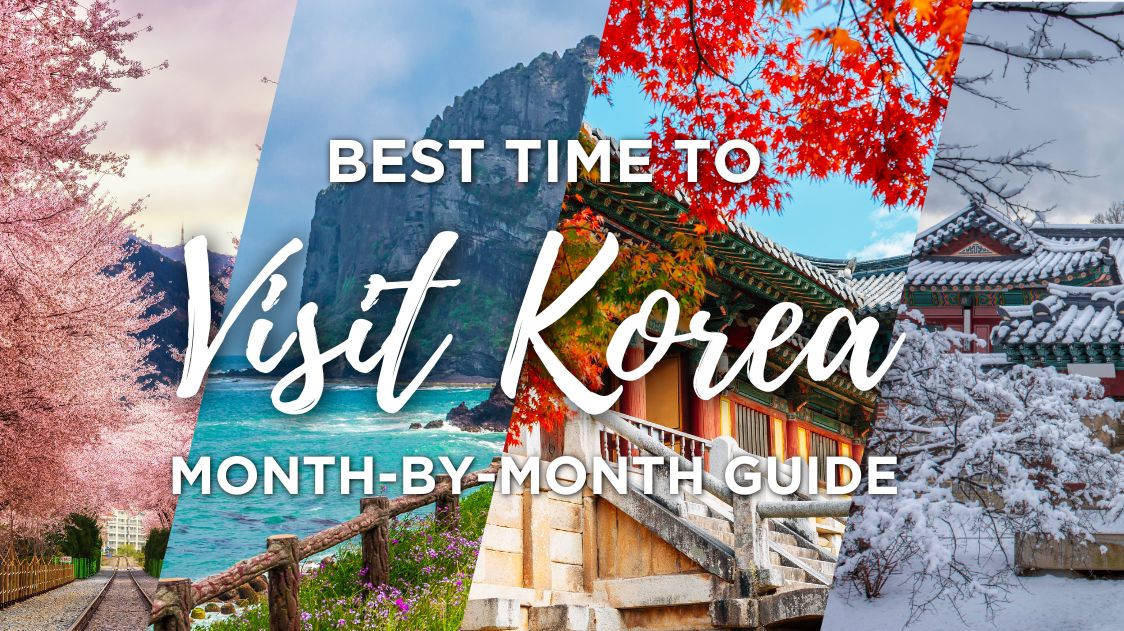
Ask ten people when to visit Korea and you’ll get roughly three answers repeated with total confidence: April for cherry blossoms, October for foliage, and “avoid summer.” All three are reasonable, and none of them are the whole story. Korea has four genuinely distinct seasons, each changing not just the weather but which parts of the country make sense to visit and what a day of sightseeing actually feels like. This guide goes through the year month by month, with enough specifics on temperature, crowds, and cost to actually plan around rather than just confirming what you’d already guessed.
The short answer
If you want one recommendation and nothing else: late April to early May, or mid-to-late October. Both windows deliver comfortable walking weather, manageable humidity, and Korea at its most photogenic, without quite hitting the absolute peak crowds and hotel surcharges of the first two weeks of April or the first week of October. If your dates are flexible by even a week or two, shifting slightly off the exact peak of blossom or foliage season saves a meaningful amount on hotels while sacrificing very little of the visual payoff.
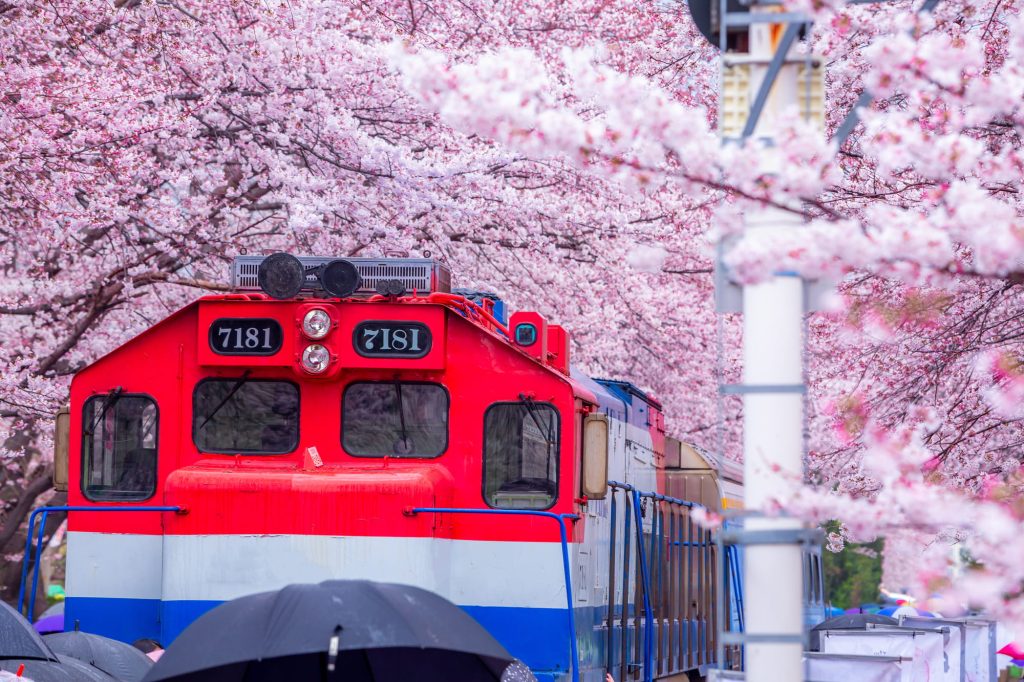
Spring (March–May): the popular choice, for good reason
March is the transition month — still cool, often in the 5–12°C range, with the first hints of blossom starting in the far south around Jeju and Busan toward the end of the month. It’s a reasonable time to visit if you want spring without the crowds, though you’re gambling somewhat on whether the blossoms have started by the time you land.
April is peak cherry blossom season across most of the country, and it’s peak season in every sense — peak beauty, peak crowds, and peak hotel prices, sometimes 60–100% above baseline rates around the most famous blossom viewing spots. Blossoms move north to south to… actually, north as the season progresses, roughly: Jeju and Busan bloom first in late March, Seoul follows in early April, and the timing shifts a few days earlier or later each year depending on how warm the preceding winter was. Peak bloom in any given location lasts about a week, which makes exact timing genuinely difficult to guarantee months in advance — worth checking a current-year cherry blossom forecast a few weeks before booking rather than assuming last year’s dates will repeat. Yeouido’s Han River park and Jinhae’s cherry blossom festival, which draws crowds to see roughly 360,000 blooming trees, are two of the most popular viewing spots, and both get seriously crowded during peak week.
May is, for a lot of experienced Korea travelers, the actual best month of the year, and it gets less credit than it deserves because it doesn’t have a single headline event the way April has blossoms. Temperatures sit in a genuinely pleasant 15–25°C range, the monsoon hasn’t started, humidity stays manageable, and everything is lush and green rather than pink-and-fading. Children’s Day (May 5th) and Buddha’s Birthday, which brings the Lotus Lantern Festival with its striking evening lantern parades through Seoul, both fall in this window most years, adding a cultural layer without the crowd intensity of peak blossom season. Prices climb from April’s dip but haven’t yet reached summer highs.
Summer (June–August): heat, humidity, and the beach
June starts warm and pleasant before the monsoon (called jangma, 장마) typically arrives in the second half of the month, bringing sustained rain that can last into mid-July. The first half of June, before the rain sets in, is genuinely underrated — warm, dry-ish, and noticeably less crowded with international visitors than spring or autumn.
July is Korea’s hottest and most humid month, regularly pushing past 30°C with humidity that makes it feel considerably worse. The Boryeong Mud Festival, one of the country’s most distinctive summer events, runs in mid-July on the west coast, and it’s genuinely fun if you don’t mind heat and crowds — read our Boryeong Mud Festival guide for what to expect. Outside of festival-specific trips, July isn’t the strongest month for city sightseeing, palace visits, or hiking, all of which are considerably more pleasant in cooler months.
August stays hot, but the rainy season has typically ended, which makes it more predictable than July even if not more comfortable. This is peak domestic beach season — Haeundae and Gwangalli beaches in Busan get seriously crowded with Korean holidaymakers, and coastal hotel prices spike accordingly. August 15th is Liberation Day (Gwangbokjeol), a public holiday marking the end of Japanese colonial rule, observed with public events and, depending on the year, heightened security around certain sites.
Summer isn’t a mistake if a beach trip or a specific festival is the point of your visit, but it’s the season where city-focused itineraries — palace-hopping, hiking, long days of walking between neighborhoods — suffer the most from heat fatigue.
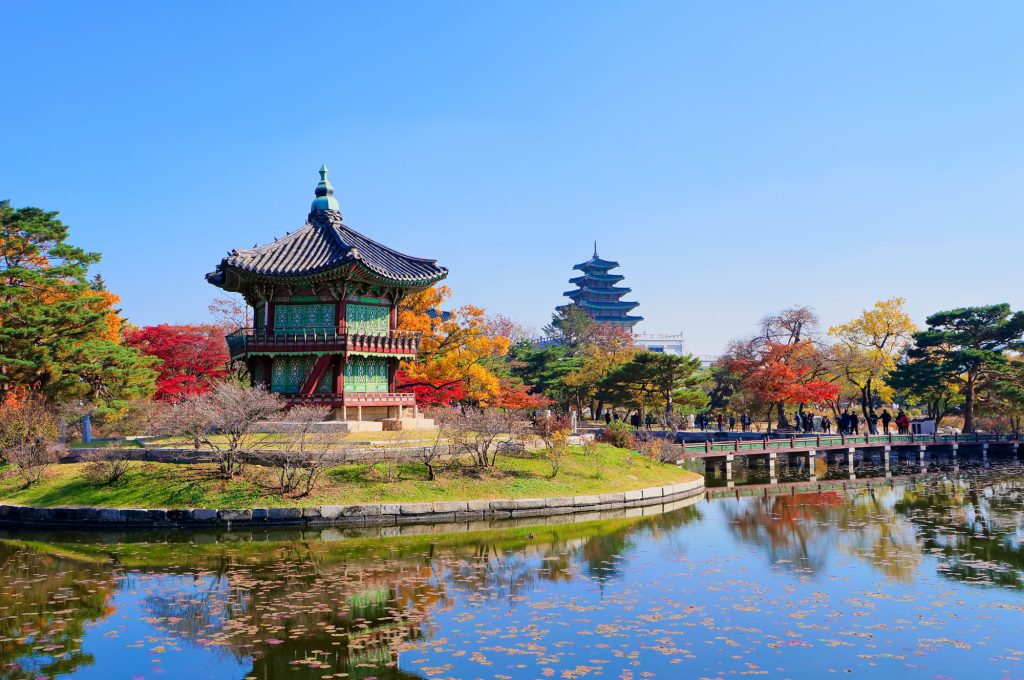
Autumn (September–November): the other great season
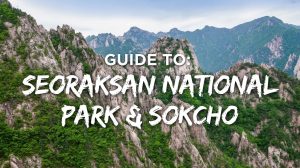
September starts hot and humid, carrying over from August, but cools noticeably by the back half of the month. Crowds thin from summer peaks while the sea stays warm enough for a beach day, which makes it an underrated window for a coastal trip if you want summer water temperatures without summer crowds. Early fall foliage begins in the far north and at higher elevations, like Seoraksan National Park, toward the end of the month.
Chuseok, Korea’s harvest thanksgiving holiday and one of the two biggest holidays of the year alongside Lunar New Year, falls in either September or October depending on the lunar calendar, and it’s worth checking the exact dates for your travel year before booking. It’s a three-day public holiday during which much of the country travels to their hometowns to observe ancestral rites — trains and buses get heavily booked, some smaller businesses close, and Seoul itself gets noticeably quieter as residents leave the city, which is either an inconvenience or an advantage depending on what you’re hoping to see.
October is, by a wide consensus among people who’ve spent real time traveling in Korea, the single best month of the year to visit. Peak autumn foliage typically runs from mid to late October in Seoul and lower elevations, slightly earlier at altitude, painting the country’s many mountains and palace grounds in deep reds and golds. Temperatures are comfortable, humidity is low, and the combination of good weather with a packed calendar of cultural festivals makes it the strongest all-around month. It’s also, unsurprisingly, one of the most expensive and crowded, with hotel and flight prices climbing 20–35% above baseline around the peak two or three weeks.
November starts pleasant, extending the tail end of foliage season into the first week or two, then turns noticeably colder as the month progresses. Layering becomes necessary by the back half — mornings and evenings get properly cold even while afternoons stay mild. It’s an underrated shoulder-season choice for travelers who want autumn’s visual appeal without October’s crowds and pricing, accepting that the back half of the trip may feel more like early winter than true autumn.
Winter (December–February): cold, festive, and cheap
December is cold and dry, with holiday markets and Christmas lighting displays giving Seoul a genuinely festive atmosphere despite Christmas not being observed at the scale it is in Western countries. It’s not South Korea’s coldest month, but it’s cold enough that layering matters, and it’s too early in the season for skiing to be fully underway at most resorts.
January is Seoul’s coldest month, with average temperatures ranging roughly -6°C to 2°C and regular snowfall. It’s also, for budget-focused travelers, one of the best months of the year: flights and hotels bottom out, typically 20–40% below peak-season rates, and international crowds thin dramatically outside of the Lunar New Year window (dates shift year to year with the lunar calendar, and travel around that specific week gets busy with domestic travelers visiting family, similar to Chuseok). This is also peak ski season, with resorts like Yongpyong and Vivaldi Park in full swing.
February stays cold but starts showing early signs of the shift toward spring by the back half of the month. Ski season remains strong through most of February. Like January, it’s a genuinely good month for a budget-conscious trip focused on museums, cafés, indoor markets, and skiing rather than long days of outdoor walking.
Winter in Korea isn’t the compromise choice it might sound like. It rewards specific kinds of trips — skiing, a cozy café-and-market pace, dramatically lower prices — while genuinely underdelivering for anyone hoping to spend long days walking between outdoor palace grounds and hiking trails.
Does the best time to visit change by region?
Seoul dominates most “best time to visit Korea” advice, reasonably, since it’s where most itineraries center. But the calculation shifts a little for the country’s other major destinations.
Busan runs slightly warmer than Seoul year-round thanks to its coastal position, which stretches its comfortable season a few weeks longer on both ends. Beach season (roughly June through September) is naturally the city’s peak, with July and August drawing the largest domestic crowds to Haeundae and Gwangalli. Outside of summer, Busan in spring or autumn is arguably even more pleasant than Seoul during the same months, since the coastal breeze tempers both the spring warmth and the autumn chill. For a full regional breakdown, see our guide to the best things to do in Busan.
Jeju Island has its own distinct rhythm: cherry blossoms arrive earliest here, typically mid-to-late March, and canola (rapeseed) flowers bloom across the island’s fields shortly after, creating a second, less internationally famous but locally beloved flower season through April. Summer on Jeju means beach weather but also the country’s highest typhoon risk, generally August through October, worth checking forecasts for specifically if a Jeju trip falls in that window. Winter on Jeju is considerably milder than the mainland, making it a reasonable option for travelers who want some outdoor time without full winter conditions.
Gyeongju, given its wealth of outdoor historical sites — tomb complexes, temple grounds, the Bulguksa and Seokguram area — rewards the same spring and autumn timing as Seoul, arguably even more, since so much of what there is to see involves walking around open-air sites rather than ducking into museums.
Mountain regions and national parks (Seoraksan, Jirisan) run their own foliage calendar slightly ahead of the lowlands, with color starting at higher elevations in mid-September and working down through October, meaning a hiking-focused trip can sometimes catch a longer effective foliage season by moving between elevations over a week or two.
What to pack, by season
Spring: layers are essential, since April mornings can start near 5°C and afternoons reach a comfortable 18–20°C. A light jacket, a few long-sleeve layers, and comfortable walking shoes cover most of the season. An umbrella is worth having in your bag from April onward, as spring showers, while brief, are common.
Summer: lightweight, breathable clothing, and genuinely embrace it — cotton and linen handle the humidity far better than synthetic fabrics. A compact umbrella or light rain jacket is close to essential during the June–July monsoon window. Sunscreen matters more than most visitors expect, and Korea happens to make some of the best in the world if you forget to pack your own — worth a look at our Korean sunscreen guide once you’re there.
Autumn: similar layering logic to spring, reversed — start the season in light layers through September, and add a mid-weight jacket by late October and into November as evenings turn properly cold.
Winter: this is the one season where under-packing genuinely causes problems. A proper insulated winter coat, thermal base layers, gloves, and a hat aren’t optional in January and February, when wind chill regularly pushes the felt temperature well below the reported one. Good waterproof boots help on days after snowfall, when sidewalks can stay icy for longer than expected in a city this dense.
A rough festival and events calendar
Beyond the seasonal weather patterns, a handful of recurring events are worth timing a trip around, or at least being aware of if your dates happen to overlap:
- Late March–April: cherry blossom festivals nationwide, most famously in Jinhae and along Seoul’s Yeouido riverside park.
- May: Buddha’s Birthday and the Lotus Lantern Festival, with evening lantern parades through central Seoul.
- Mid-July: the Boryeong Mud Festival on the west coast.
- August 15: Liberation Day, a national holiday with public commemorations.
- September or October (dates shift yearly): Chuseok, Korea’s harvest holiday and one of the two biggest travel periods of the year domestically.
- October: a dense calendar of autumn cultural festivals across the country, alongside peak foliage.
- December: Christmas lighting and holiday markets, particularly in Myeongdong and around City Hall.
- Late January or February (dates shift yearly): Lunar New Year (Seollal), the other major domestic travel holiday.
A quick seasonal comparison
| Season | Weather | Crowds | Prices | Best for |
|---|---|---|---|---|
| Spring (Mar–May) | Mild, cherry blossoms | High in April | High in April, moderate in May | Blossoms, comfortable sightseeing |
| Summer (Jun–Aug) | Hot, humid, monsoon in Jun–Jul | Moderate, high at beaches in Aug | Moderate, high at coast | Beach trips, festivals |
| Autumn (Sep–Nov) | Cool, crisp, foliage in Oct | High in October | High in October, moderate elsewhere | Foliage, hiking, all-round best weather |
| Winter (Dec–Feb) | Cold, snow | Low, except Lunar New Year | Lowest of the year | Skiing, budget trips, festive markets |
Matching the season to your specific trip
Hiking: October and May are the strongest months for trails like Seoraksan, Jirisan, or Bukhansan — dry conditions, comfortable temperatures, and in October’s case, the best scenery of the year. A few higher-elevation trails can still hold snow into early May, worth checking before a serious hike that early in spring.
A honeymoon or romantic trip: April and October are the conventional picks for a reason — both deliver Korea at its most visually striking. If avoiding the heaviest crowds matters more than hitting the exact blossom or foliage peak, the tail ends of each window (late April, late October) offer a reasonable compromise.
A family trip: May and August tend to work well — May for weather and the Children’s Day/Buddha’s Birthday cultural layer, August for beach access during school holidays, accepting the heat and crowds that come with it.
A ski trip: January and February, with resorts fully operational and snow reliable.
A budget-focused trip: January, February, or early December, avoiding the Lunar New Year window specifically, when domestic travel spikes push prices up even in the depths of winter.
K-culture and city-focused sightseeing without a strong seasonal preference: May and late September through October both work well, with October edging ahead on pure scenery and May edging ahead on lower prices and thinner crowds.
Frequently asked questions
When exactly do cherry blossoms peak in Seoul? Typically the first two weeks of April, though the precise dates shift year to year — sometimes by a week or more — based on how mild or cold the preceding winter and early spring were. Checking a current-year forecast a few weeks out is more reliable than assuming a fixed calendar date.
Is it worth visiting during Chuseok or Lunar New Year? It depends on what you’re after. Both holidays mean crowded domestic transport and some closed businesses, particularly smaller family-run restaurants and shops, but also quieter major tourist sites in Seoul as residents travel to their hometowns, and a chance to see genuine Korean holiday traditions if you happen to be near a temple or palace hosting seasonal events.
What’s the rainiest month? July, during the peak of monsoon season, though the wet period typically starts in the latter half of June and can extend into early August in some years. Rain during this stretch tends to come in sustained multi-day spells rather than brief showers.
Is winter too cold for sightseeing? Not too cold to be miserable, but cold enough that it changes the character of a trip — more museums and cafés, less extended outdoor walking. Proper layering (thermal base layers, a real winter coat, gloves) makes a significant difference, and hand warmers are sold everywhere for around ₩500–₩1,000.
Which is better: cherry blossoms or autumn foliage? Genuinely a matter of taste. Cherry blossoms are more delicate and fleeting, with a shorter peak window and a softer, pastel visual character. Autumn foliage is more dramatic and forgiving — the color show lasts longer overall across the country as it moves through different elevations and regions, giving you a wider booking window with less risk of missing the peak entirely.
Does the timing change if I’m mainly interested in K-pop and entertainment sites? Not much, weather-wise, since most of these are indoor or urban experiences (agency buildings, fan cafés, concert venues). The bigger factor is checking concert and event calendars directly rather than the season, since major tours and fan events are scheduled independently of weather patterns.
There’s no single correct month to visit Korea, and the fact that the country genuinely transforms across its four seasons is part of what makes repeat visits worthwhile rather than repetitive. The honest advice is to pick the season that matches what you actually want from the trip — blossoms, foliage, skiing, budget travel, or just comfortable weather — rather than defaulting to April or October because they’re the months everyone mentions first.