Jeju is South Korea’s largest island and most popular domestic holiday destination, sitting roughly 80 km south of the mainland across the Korea Strait. From Seoul, you can be on Jeju in under an hour by plane. Once there, you find a landscape completely unlike the mainland: a volcanic island dominated by Hallasan (South Korea’s highest mountain), black lava rock coastlines, waterfalls that flow directly into the sea, and a food culture built around black pork, abalone, and seafood pulled up by haenyeo diving women.
Three days covers the island’s essential sights at a comfortable pace. Four days allows for a proper Hallasan hike and a more relaxed approach to the west coast beaches. This itinerary gives you both options.
Getting to Jeju
By Plane
The fastest and most practical way to reach Jeju from Seoul. Domestic flights from Gimpo Airport (GMP) to Jeju International Airport (CJU) take approximately 55–65 minutes and are frequent throughout the day.
Budget carriers: Jeju Air, Jin Air, T’way Air, and Air Busan operate the Gimpo–Jeju route with fares starting from ₩30,000–₩50,000 (~$20–$34/€18–€30) one-way if booked weeks in advance. Last-minute fares can be ₩100,000+ (~$67+/€60+).
Full-service: Korean Air and Asiana fly from both Gimpo and Incheon (GMP is closer to central Seoul).
If you are arriving in Korea directly from abroad and continuing to Jeju the same day, Incheon Airport (ICN) also has direct Jeju flights, which avoids the transfer to Gimpo.
Booking: Use NaverFlight (Naver항공) or Kayak Korea for real-time domestic fare comparison. Book at least 2–3 weeks in advance for reasonable prices; 4–6 weeks for travel in April (cherry blossom season) and July–August (summer peak).
By Ferry
Slower but useful if you are connecting from Busan or another south coast city rather than Seoul. Ferries run from Busan Port and Mokpo to Jeju’s two main ports. Journey time from Busan is approximately 12 hours on standard ferry or 3 hours on high-speed hydrofoil. Not recommended as a primary option for international visitors with limited time.
Getting Around Jeju: You Need a Car
This is non-negotiable for visiting Jeju properly. The island’s main attractions are spread across 1,847 km² and public bus connections between them are infrequent and slow. Without a car, you are limited to the areas served by the main bus routes and will spend significant time waiting at rural bus stops.
Car rental: Multiple agencies operate at Jeju Airport. Book in advance, particularly for summer and autumn weekends when cars are in short supply. International visitors need an International Driving Permit (IDP) in addition to their home country licence. Most rental cars are automatic. Budget ₩50,000–₩90,000/day (~$34–$61/€30–€54) for a standard compact car, including basic insurance.
Recommendation: Book through a Korean rental platform (Lotte Rent-a-Car or SK Rent-a-Car) rather than international aggregators for better availability and clearer insurance terms. Your hotel can usually assist with this.
Author’s Tip: Book your rental car at the same time as your flights, not after. Jeju is South Korea’s most popular domestic holiday destination and cars genuinely run out, particularly on spring and autumn weekends. I once arrived in April with no advance booking and spent two hours at the airport getting progressively worse options at increasingly higher prices. Book early.
Driving in Jeju: Roads are well-maintained and signposted in Korean and English. Traffic is light outside the main city areas. Parking is available at all major attractions, usually free. The main ring road (Route 1132/1136) circles the island and makes navigation straightforward.
Alternative: Chartered taxi or tour. If you cannot drive or do not want to rent, hiring a local driver for a full day costs approximately ₩120,000–₩180,000 (~$80–$120/€72–€108) and is popular with Chinese and Japanese visitors. Your hotel can arrange this.
Day 1: East Jeju: Sunrise Peak, Udo Island, and Seongsan
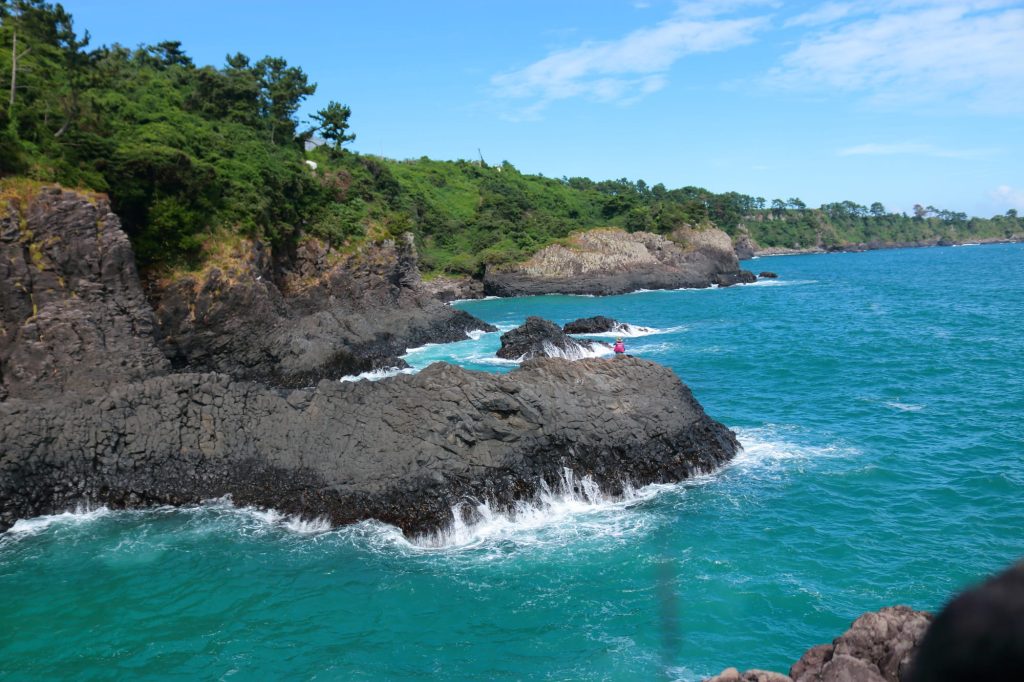
The east of Jeju is the most dramatic part of the island and the logical starting point. The centrepiece is Seongsan Ilchulbong, a UNESCO-listed volcanic crater that rises from the sea at the island’s eastern tip.
Morning: Seongsan Ilchulbong (Sunrise Peak)
Seongsan Ilchulbong (성산일출봉) is a 182-metre tuff cone formed by a submarine volcanic eruption around 100,000 years ago. The crater at the summit is 600 metres wide and still holds grass and vegetation inside its rim.
The hike to the summit takes approximately 20–30 minutes via a steep staircase path. The views from the top look south over the sea, west across the east coast of Jeju, and down into the crater itself.
Sunrise visits: The peak is named for the sunrise it offers, and visiting at dawn (typically 05:30–06:30 depending on season) is the classic experience. The light changes rapidly and the crowds are minimal at this hour. If you are not willing to wake before 05:00 to drive here from your accommodation, visiting at 09:00 still produces good photographs: you just share the path with more people.
Entry: ₩5,000 (~$3.35/€3.00) for adults, ₩2,500 (~$1.70/€1.50) for children. Free for Jeju residents.
Author’s Take: The sunrise visit is worth doing once. Get there by 05:30, climb in the dark with a phone torch, and watch the light come up over the crater rim. It is one of those experiences that genuinely lives up to the photographs. The 09:00 visit is also fine and much easier logistically, but the light and atmosphere are completely different.
Late Morning: Udo Island
A 15-minute ferry ride from Seongsan Pier takes you to Udo Island (우도), a small island (roughly 6 km x 3 km) famous for its clear turquoise water, white sand beaches, and peanut ice cream.
The main beach is Seobin Baeksa on the west coast: pale white sand formed from fragments of red algae rather than quartz, giving it an unusual colour against the clear water. The snorkelling here is some of the best accessible from the main tourist circuit on Jeju.
You can rent an electric scooter or bicycle on the island to loop around it in 2–3 hours. The peanut ice cream at the small stalls near the ferry dock is genuinely worth trying: peanut cultivation is one of Udo’s traditional industries and the flavour is noticeably different from generic peanut products.
Ferry: ₩10,900 (~$7.30/€6.50) return including island entry. Runs from 07:30 to 17:30, approximately every 30 minutes. Note: cars can be taken on the ferry but are not necessary for a few hours’ visit.
Afternoon: Seopjikoji and the East Coast Drive
After returning from Udo, drive south along the east coast to Seopjikoji (섭지코지), a coastal headland of black volcanic rock extending into the sea. The landscape here is open, windswept, and unusual: the combination of black lava, yellow wildflowers, and turquoise water photographed from the clifftop walking path is some of the most distinctive scenery on the island.
The Genius Loci building by Tadao Ando (a simple concrete box set into the hillside above the sea) is worth visiting for architecture enthusiasts. A small glass café inside serves coffee and light food.
Evening: Seogwipo
Drive southwest to Seogwipo (서귀포), the island’s second city and the best base for exploring the south coast. The city sits on cliffs above the sea and has significantly more character than the main city of Jeju to the north.
Dinner in Seogwipo: The area around the Seogwipo Fish Market (서귀포매일올레시장) is lined with haenyeo restaurants serving abalone (전복), sea urchin rice (성게밥), and hoe (raw fish). A meal of abalone porridge, sea urchin rice, and assorted banchan (side dishes) runs ₩20,000–₩35,000 (~$13–$23/€12–€21) per person and is significantly better than anything equivalent you will find in Seoul.
Day 2: South Jeju: Hallasan, Waterfalls, and the Coast
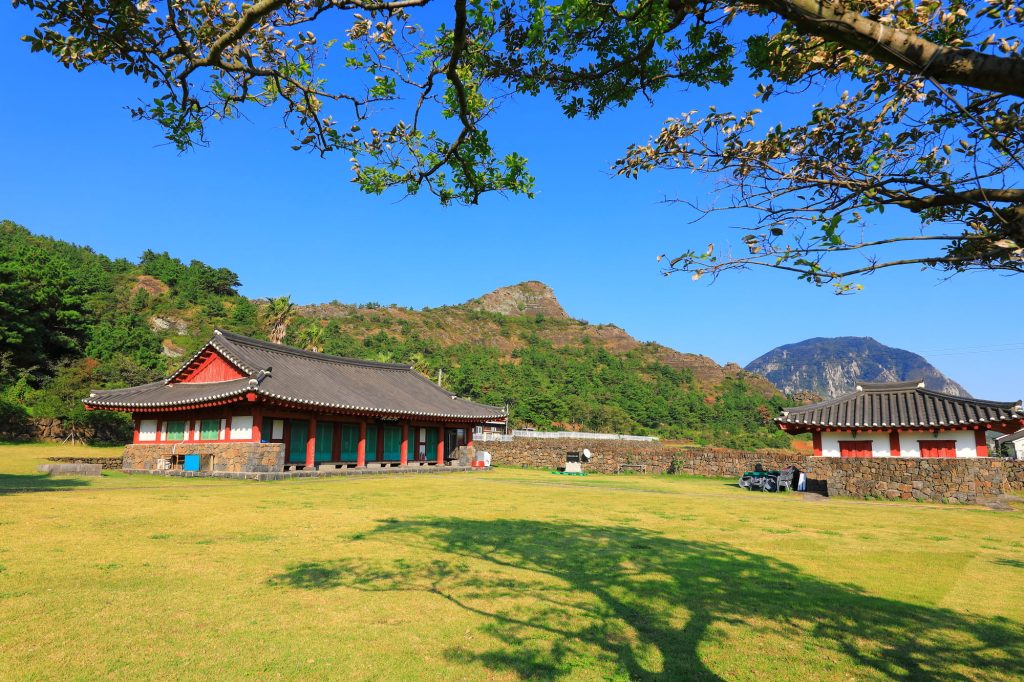
Day 2 is the most physically demanding. Hallasan is a full-day commitment for those doing the summit. If you prefer a lighter day, the south coast route without Hallasan is still excellent.
Option A: Hallasan Summit Hike
Hallasan (한라산) at 1,950 metres is South Korea’s highest peak and the dominant physical presence of the island: on a clear day you can see it from almost anywhere on Jeju.
The Seongpanak Trail is the recommended route to the summit: 9.6 km one way through forested slopes, taking approximately 4.5–5 hours up and 3.5–4 hours down. The trail is well-maintained with regular rest areas and emergency shelters. The summit section involves steeper rocky terrain and is closed during bad weather.
Critical planning detail: The summit section gate closes at 12:00 to ensure all hikers descend before nightfall. This means you must leave the Seongpanak trailhead car park no later than 07:00 to reach the gate in time. Trail entry records are checked and latecomers are turned back.
Booking: Daily hiker numbers are capped. Reserve your spot at hallasan.jeju.go.kr (English available). Book at least a week in advance; popular dates (spring and autumn weekends) fill up weeks ahead.
Author’s Tip: The summit is frequently in cloud even when the lower slopes are clear. Check the Jeju weather forecast specifically for Hallasan the day before, not just the island-wide forecast. On a clear day the summit views are extraordinary. On a cloudy day you climb for five hours to stand in fog. Both are valid experiences but know which one you are likely to get.
What to bring: 2–3 litres of water (no sources on the upper section), snacks, sun protection, and an extra layer. The summit can be 15°C cooler than the coast and is frequently in cloud even when the lower slopes are clear. Waterproofs are worth packing.
After descending (you will finish around 15:00–16:00), drive to the south coast for the waterfall visits below.
Option B: South Coast Without Hallasan
If Hallasan is not for you, the south coast has enough to fill a full day at a relaxed pace.
Jeongbang Waterfall (정방폭포) near Seogwipo is one of Asia’s few waterfalls that flows directly into the sea. The drop is approximately 23 metres into the water below. Entry ₩2,000 (~$1.35/€1.20). Best visited in the morning before coach groups arrive.
Cheonjiyeon Waterfall (천지연폭포), a 15-minute walk from central Seogwipo, drops 22 metres into a pool surrounded by subtropical forest. The walk to the falls passes through a narrow gorge lit by spotlights in the evening: night visits are popular and the effect is striking. Entry ₩2,000 (~$1.35/€1.20).
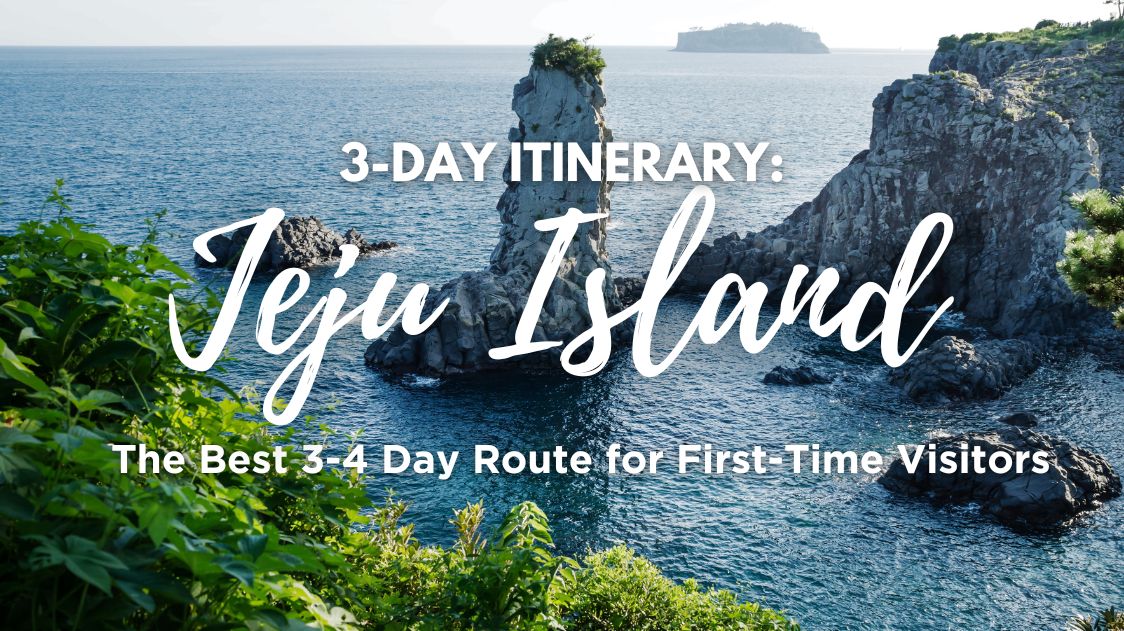
Oedolgae Rock (외돌개) is a 20-metre sea stack rising from the ocean 2 km west of Seogwipo. The coastal walking path around it takes about 30 minutes and gives dramatic views of the south coast cliffs.
Afternoon: Camellia Hill
Camellia Hill (카멜리아힐) is a large garden with over 500 varieties of camellia, best in full bloom from December through February. Outside this window the garden is still pleasant, with walking paths through subtropical vegetation, a café, and good views of Hallasan. Entry ₩9,000 (~$6/€5) for adults.
Evening: Continue in Seogwipo or Drive North
If you are based in Seogwipo, stay for a second evening. If you want to position yourself for the west coast on Day 3, drive north and west toward Aewol or Hallim.
Day 3: West Jeju: Beaches, Lava Tubes, and Sunset
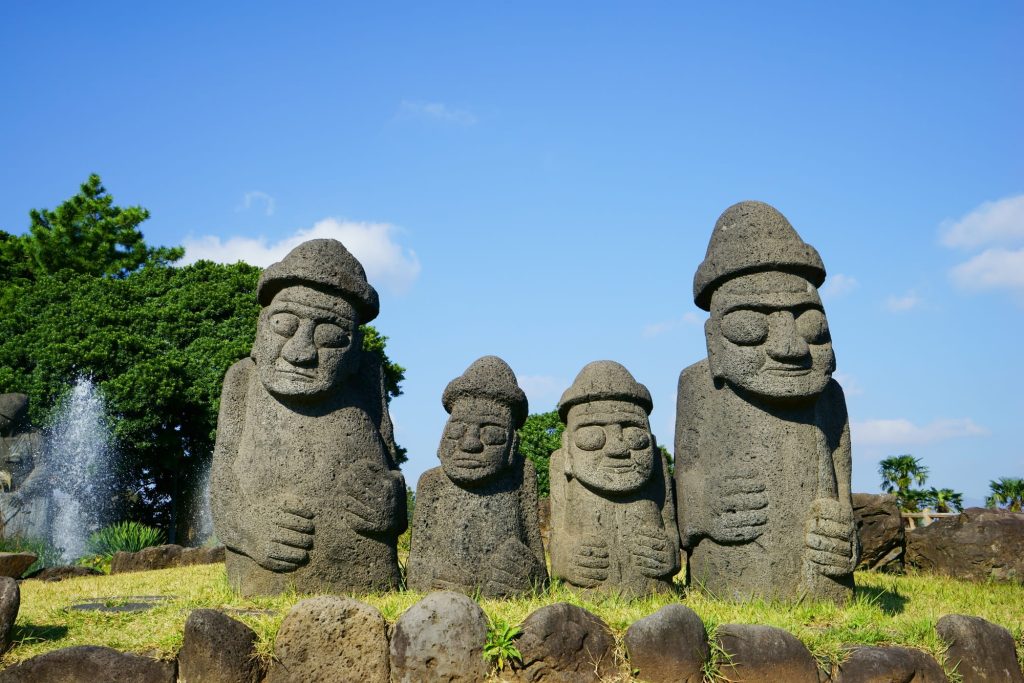
The west coast is Jeju’s most photogenic coastal area, with pale turquoise water against black volcanic rock that looks unlike any beach on the mainland.
Morning: Hyeopjae Beach and Hallim Park
Hyeopjae Beach (협재해수욕장) is consistently rated among Korea’s best beaches. The water colour: pale turquoise to green depending on the light and tide: comes from the shallow sandy bottom and the reflection off the Biyangdo Island (비양도) that sits directly offshore. Swimming is excellent in summer (July–August); the beach is cold and windswept in winter but still beautiful.
Arrive early to claim a spot under one of the pine trees that line the beach. In summer the shore fills quickly by late morning.
Author’s Take: Hyeopjae is genuinely one of the most beautiful beaches I have visited anywhere. The water colour in the morning, with Biyangdo Island sitting offshore against the sky, does not look real. The beach in July and August is also extremely crowded. If you are visiting in summer, get there before 09:00 or accept that you will be sharing the shoreline with several thousand other people.
A 10-minute drive north takes you to Hallim Park (한림공원), a large botanic garden notable for the Hyeopjae Lava Tubes (협재굴 and 쌍용굴) running beneath it. These UNESCO-listed volcanic lava tube caves stretch for several kilometres and are one of the world’s longest cave systems of their type. The section open to visitors is about 1 km, maintained at a constant 11–12°C regardless of season: bring a jacket in summer. Entry to the park including the caves: ₩14,000 (~$9.35/€8.35) for adults.
Afternoon: Aewol Handam Coast and Café Hopping
The Aewol Handam Coastal Road (애월 한담 해안산책로) runs along the northwest coast through the Aewol area, connecting a series of black lava rock formations, small coves, and white-painted cafés that have made this stretch one of the most photographed sections of coast in South Korea.
The walking path along the coast takes about 40 minutes at a relaxed pace. Countless independent cafés line the route, and choosing one with an ocean view for afternoon coffee is one of the more pleasant things you can do on Jeju. Popular options include A-Land Café and the various glass-fronted coffee shops overlooking the water: no specific reservation needed, arrive and take whatever table is available.
Editor’s Tip: The Aewol café strip has become genuinely overcrowded on weekends. If you are there on a Saturday afternoon in spring or summer, expect a queue at most of the well-known spots. Weekday mornings are a different experience entirely: you can sit at the window, watch the ocean, and not feel like you are in a queue.
Seopjikoji was the most dramatic east coast scenery; Aewol is the most Instagram-consistent west coast scenery. Different characters, both worth seeing.
Evening: Sunset and Dinner
The west coast faces directly into the sunset, and watching it from Aewol or from Hyeopjae Beach is one of the better free things to do on the island. The sky colours can be spectacular on clear evenings, particularly in autumn when the air is dry.
For dinner, the main Jeju City (제주시) area to the north has the island’s widest restaurant selection. Dongmun Market(동문시장) is Jeju’s largest traditional market, worth an evening wander for the food stalls: Jeju black pork sausage, tangerine products (Jeju produces most of South Korea’s tangerines), and various grilled seafood are all good options.
For a proper sit-down meal, Jeju heuk-dwaeji (제주 흑돼지, Jeju black pork BBQ) is the island’s signature dish. The local black pig breed has a distinctly different flavour and texture from mainland Korean pork: richer, fattier, and more flavourful when grilled over charcoal. Budget ₩25,000–₩40,000 (~$17–$27/€15–€24) per person for a full BBQ meal.
Author’s Take: The black pork genuinely tastes different from mainland Korean pork. It is richer, fattier, and has more flavour when grilled over charcoal. The restaurants in the neighbourhood around Dongmun Market in Jeju City are where locals eat it. The ones near the tourist waterfront in Seogwipo are fine but slightly more expensive for the same quality.
Day 4 (Optional): Slow Day or Add-Ons
If you have a fourth day, several options extend the itinerary without significant additional driving.
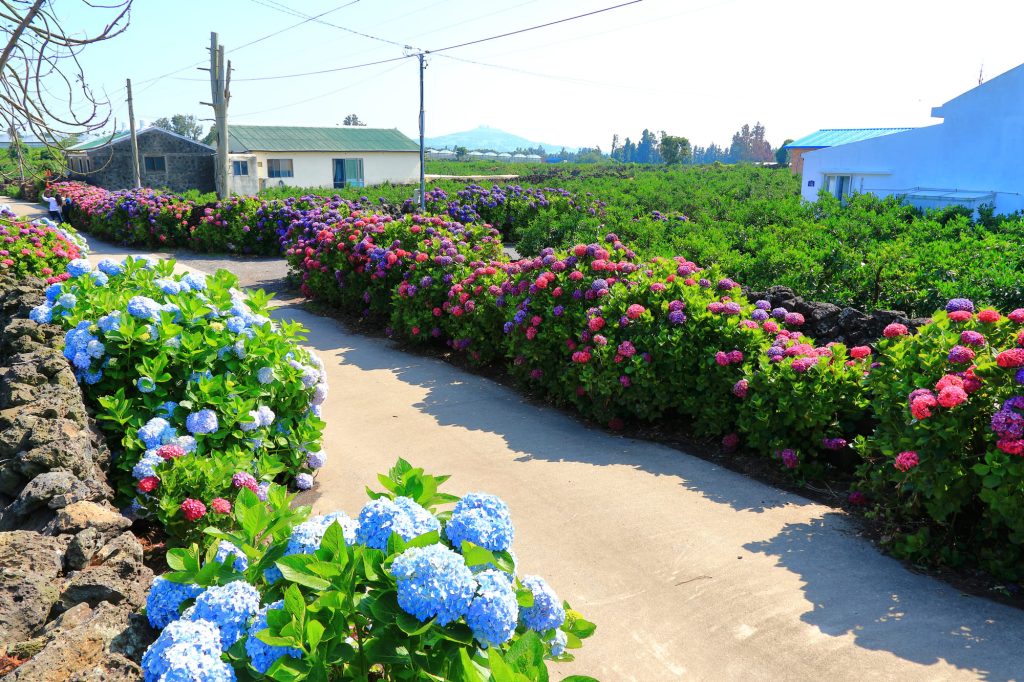
Jeju Folk Village (성읍 민속마을, Seongeup): A well-preserved traditional Jeju village from the Joseon era, still inhabited, in the island’s interior. The traditional thatched-roof stone houses (doldam) are distinctive to Jeju and found nowhere else. Free entry to the village; small fees for specific houses.
Manjanggul Lava Tube (만장굴): Different from the Hyeopjae tubes in Hallim: longer (7.4 km total, 1 km open to visitors), more dramatically lit, and set in the island’s interior. UNESCO World Heritage listed. Entry ₩4,000 (~$2.70/€2.40).
Bijarim Forest (비자림숲): A grove of old-growth bija (nutmeg yew) trees, some over 800 years old, connected by quiet forest paths. A significant contrast to the volcanic coastlines. Entry ₩1,000 (~$0.70/€0.60).
Jeju Art Museum or Jeju National Museum: Both are worthwhile if the weather turns poor. The Art Museum in particular has strong collections of contemporary Korean art in a well-designed building.
Where to Stay in Jeju
Jeju City (North)
The practical base for airport access and Dongmun Market. Central convenience but less scenic than the south coast. Good for those with early or late flights and travellers who want central location over atmosphere.
Seogwipo (South)
More scenic, better restaurant scene, closer to the south coast waterfall attractions. 30–40 minutes from the airport. The better choice for most visitors who want to wake up to ocean views.
Aewol or Hallim (West)
Increasingly popular for boutique accommodation. Puts you close to the west coast beaches and café culture. Less convenient for east coast attractions but works well as a second base if you want to divide your time between east and west.
Budget to mid-range accommodation: ₩80,000–₩150,000/night (~$54–$100/€48–€89) for a clean guesthouse or small hotel. Comfort: ₩200,000–₩400,000/night (~$133–$267/€119–€238) for a well-regarded hotel with sea views.Luxury: Several resort hotels (Lotte, Hyatt, Shinhwa) operate on Jeju at ₩400,000–₩1,000,000+/night (~$267–$667+/€238–€595+).
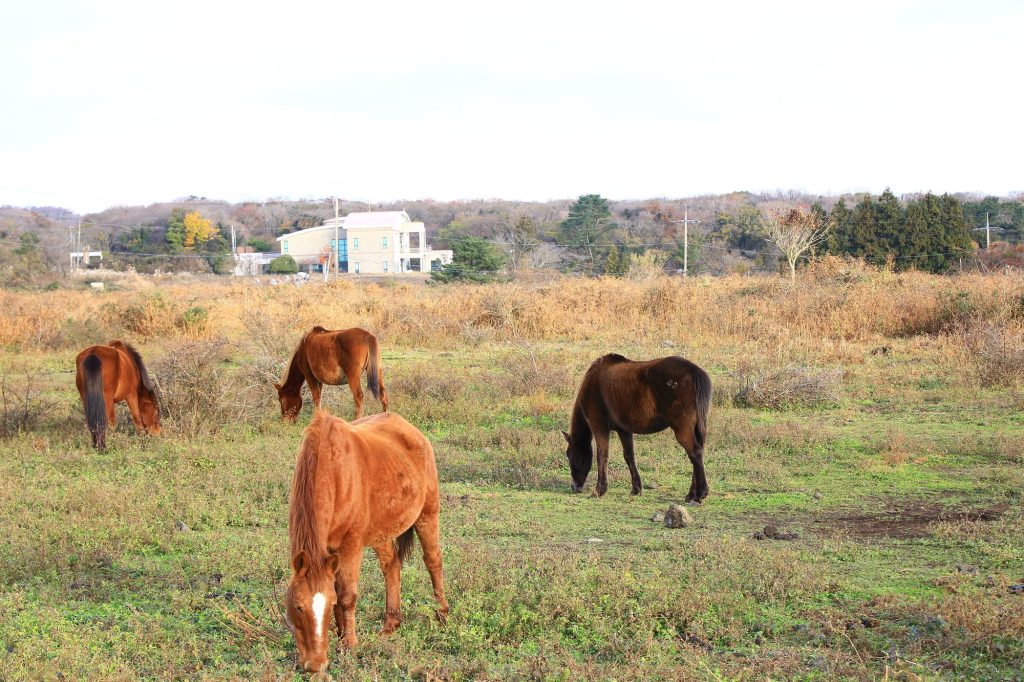
Practical Tips for Jeju
Best time to visit:
- Spring (April–May): Cherry blossoms, yellow canola flowers, and comfortable temperatures. The most popular season: book accommodation and Hallasan hike slots far in advance.
- Autumn (September–October): Clear skies, moderate temperatures, and excellent hiking conditions. The second peak season.
- Summer (June–August): Hot and humid, and Jeju’s monsoon season runs late June to late July. Beach season in August but expensive and crowded.
- Winter (December–February): The island is cold and windy but uncrowded, prices drop significantly, and camellia season is in full bloom.
Connectivity: Mobile data coverage is excellent across the island. Most visitors use an eSIM or pocket WiFi rented at the mainland airport.
Language: English is less widely spoken in Jeju than in Seoul’s tourist areas. Download the Papago translation app (stronger than Google Translate for Korean) and have key phrases ready: restaurant orders and directions in particular are easier with a translation tool.
Currency: Most restaurants and shops accept credit cards but carry some cash for smaller traditional markets and rural food stalls. GS25 and CU convenience stores are everywhere and their ATMs accept international cards.
Frequently Asked Questions
Do I need to book the Hallasan hike in advance? Yes, particularly for spring and autumn weekends. Reserve at hallasan.jeju.go.kr, which has English-language booking. Confirm your slot the day before as conditions can change quickly.
Can I visit Jeju without renting a car? You can visit Seongsan Ilchulbong, Seogwipo city centre, and Jeju City using public buses, but you will miss the west coast, interior mountain areas, and many of the best beaches. For a proper three-day visit, a car is essential.
How many days should I spend on Jeju? Three days gives a solid overview. Four days allows for a Hallasan summit hike without sacrificing any of the coastal sights. Five days is comfortable if you want to explore at leisure and add lesser-known spots.
Is Jeju suitable for children? Yes. The beaches, the lava tube caves, petting farms, and Hallim Park are particularly good with children. The Seongsan Ilchulbong hike is accessible for children over about 6 years old on a clear day.
What is the best beach on Jeju? Hyeopjae Beach on the west coast for water colour and scenery. Hamdeok Beach on the north coast for ease of access and facilities. Gwakji Beach near Aewol for a less crowded alternative to Hyeopjae.
Prices accurate as of June 2026. Exchange rate: ₩1,500 = $1 USD, ₩1,680 = €1 EUR.
👉 Seoul 3-Day Itinerary: Best Route for First-Time Visitors
👉 Best Luxury Hotels in Jeju 2026
👉 Busan Travel Guide: Complete Korea Trip Planner
Jeju Food Guide
Jeju’s food culture is built around what comes out of the sea and the island’s volcanic soil. Several dishes are found nowhere else in South Korea.
Jeju Heuk-Dwaeji (흑돼지): Black pork BBQ is the island’s most famous food. Jeju’s indigenous black pig breed is raised outdoors and produces meat with a higher fat content and more intense flavour than mainland breeds. Order samgyeopsal (belly) or moksal (neck) cuts and grill them at the table. Most restaurants in the city centre have English menus or picture menus.
Abalone (전복): Jeju produces most of South Korea’s abalone, harvested by haenyeo diving women. Abalone porridge (전복죽) is the breakfast of choice throughout the island: rice cooked in the abalone’s own juices to a rich, oceanic flavour. Budget ₩15,000–₩20,000 (~$10–$13/€9–€12) for a bowl.
Sea Urchin Rice (성게밥): A bowl of rice topped with fresh raw sea urchin (uni), eaten mixed together or separately. Sea urchin quality on Jeju is exceptional when in season (spring and early summer). ₩20,000–₩30,000 (~$13–$20/€12–€18) per bowl.
Haenyeo Seafood: Many coastal restaurants in Seogwipo and elsewhere are operated by or source from haenyeo (해녀), the female free-divers who have harvested Jeju’s coastal seafood for centuries. A UNESCO cultural heritage practice, watching haenyeo dive from the rocks near Seongsan or Udo is worth seeking out. The dive sites are not formal tourist attractions: you often simply pass a group of older women in wetsuits sorting their catch by the harbour.
Jeju Tangerines (한라봉 / 천혜향): Jeju produces the majority of South Korea’s tangerines and related citrus fruits. The local varieties include hallabong (a large, bumpy-topped mandarin) and cheonhyehyang (an intensely flavoured citrus hybrid). Both are best bought at roadside stalls or the Dongmun Market, not supermarkets, and are at peak sweetness in the winter and spring months.
Omegi Tteok and Omegi Makgeolli: A traditional Jeju snack and drink combination. Omegi tteok are small chewy rice cakes made with millet, coated in red bean paste. Omegi makgeolli is a slightly sour, milky rice wine unique to Jeju. Both are sold at traditional markets and specialist shops.
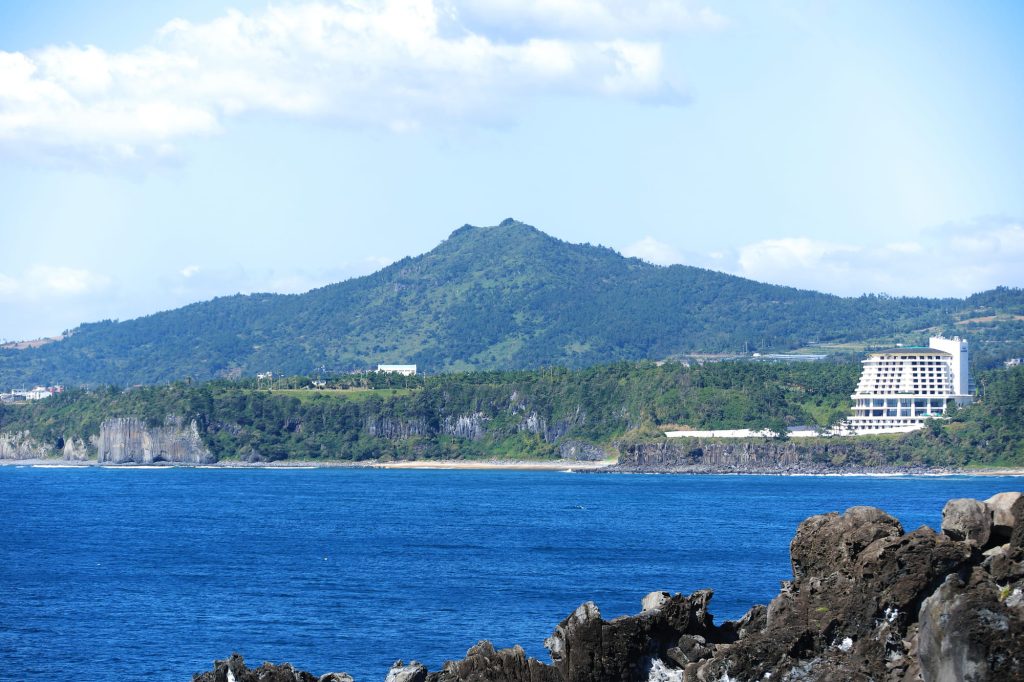
Haenyeo: Jeju’s Diving Women
No visit to Jeju is complete without some understanding of the haenyeo (해녀), the island’s female free-divers who have been harvesting abalone, sea urchin, and shellfish from Jeju’s coastal waters for at least 1,500 years.
Traditional Korean society assigned underwater fishing to women because men were lost at sea on boats far more often than women diving in coastal waters. Over centuries, Jeju’s haenyeo developed techniques for diving to 10–20 metres on a single breath, staying underwater for up to two minutes, and working in cold water for 4–7 hours a day.
At their peak in the mid-20th century, there were estimated to be around 30,000 haenyeo on Jeju. Today the number is approximately 4,000, almost all over 50 years old. The youngest generations have not taken up the practice in large numbers and the tradition is genuinely in decline.
UNESCO added haenyeo culture to its Intangible Cultural Heritage of Humanity list in 2016. The Haenyeo Museum in Gujwa-eup on the northeast coast has comprehensive English-language displays on the practice, the tools, the social structure, and the current state of the tradition. Entry ₩1,100 (~$0.75/€0.65). Well worth two hours if you are in the area.
You will see haenyeo most easily at the working dive sites near Seongsan or along the southern coast of Udo Island. They are not performing for tourists; they are working. Watching from a respectful distance is fine.
Planning Your Jeju Trip
Jeju rewards a car and a loose schedule more than a tight checklist. The island is small enough that you will pass the same coast road twice, and the best moments tend to be the ones not on the itinerary: a café you stopped at because the queue at the famous one was too long, a stretch of black rock coastline with nobody else on it, the abalone porridge place a local pointed you toward instead of the one in the guidebook.
If you are choosing between three and four days, the deciding factor is Hallasan. Climbing it is a genuine commitment: an early start, a strict turnaround time, and weather that can turn a clear morning into a fogged-in afternoon with no warning. If the summit is not a priority, three days covers the east coast, the south coast waterfalls, and the west coast beaches comfortably, with room to slow down rather than rush between stops.
The contrast between the island’s two halves is the thing most first-time visitors do not expect going in: the east is dramatic and volcanic, the west is pastel and photogenic, and the drive between them, with Hallasan visible on a clear day from almost anywhere on the ring road, is part of the experience rather than just the transport between sights.
Prices accurate as of June 2026. Exchange rate: ₩1,500 = $1 USD, ₩1,680 = €1 EUR.
👉 Seoul 3-Day Itinerary: Best Route for First-Time Visitors