Ask a well-traveled Korean where to eat the best bibimbap in the country and almost none of them will say Seoul. They’ll say Jeonju, a mid-sized city of around 650,000 people roughly two hours southwest of the capital, and they’ll say it without hesitation. Jeonju holds UNESCO’s City of Gastronomy designation, and it earns it — this is the birthplace of bibimbap, the home of Korea’s most beloved bean-sprout soup, and a place where the local gochujang has enough regional identity that Jeonju cooks can tell a national supermarket brand apart from the real thing by smell.
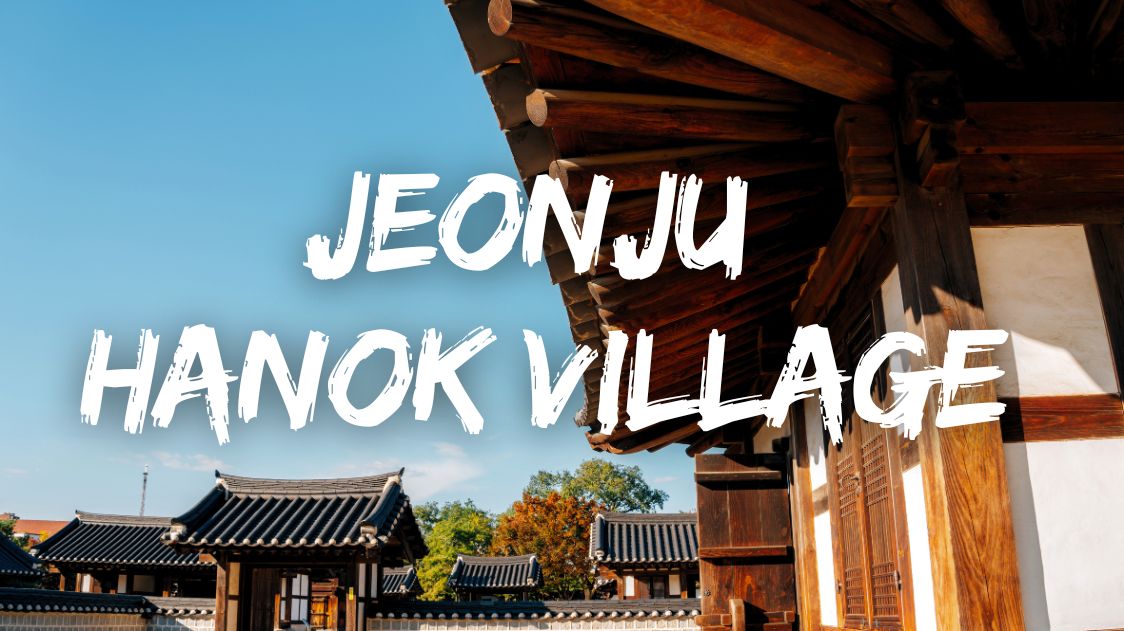
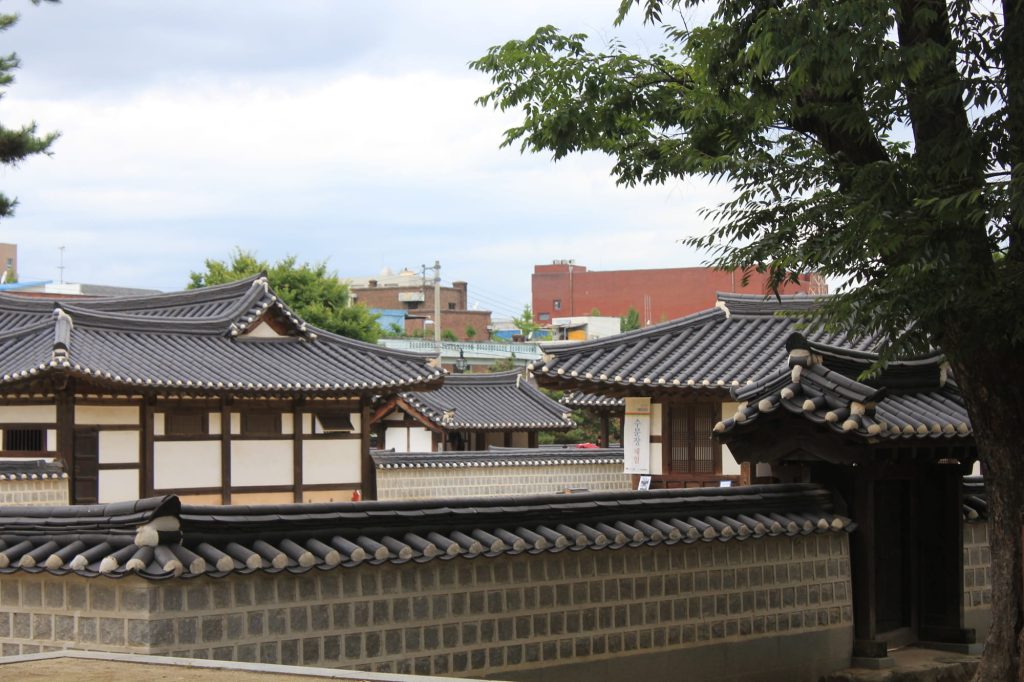
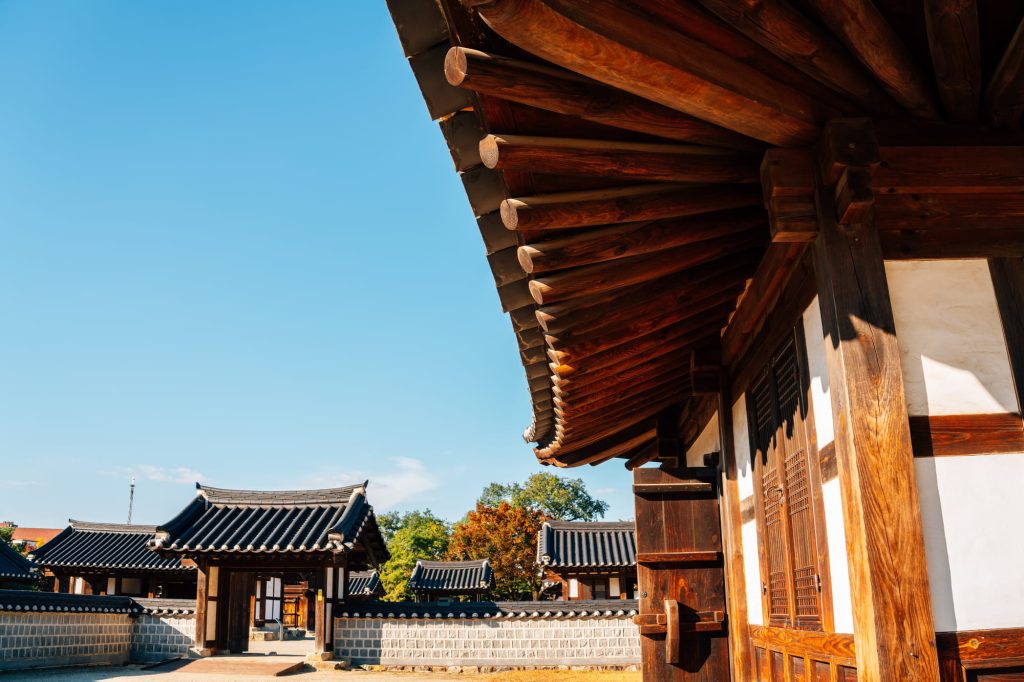
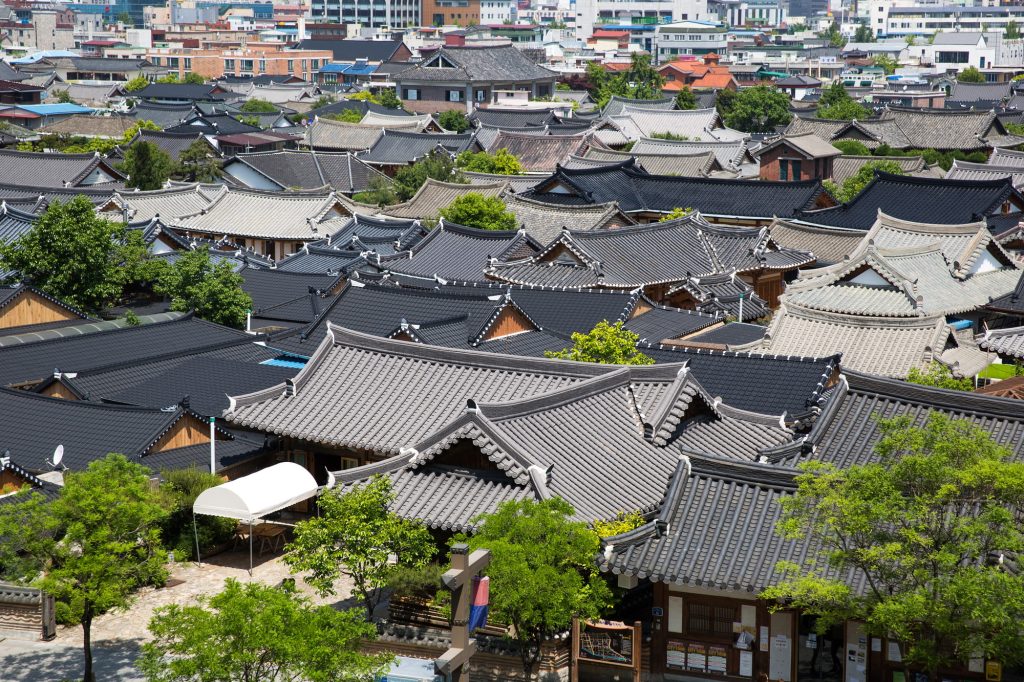
It’s also home to Korea’s largest traditional hanok village, a genuinely lived-in neighborhood of more than 700 tile-roofed houses, which sets it apart from the more manicured, museum-like hanok districts elsewhere in the country. This guide covers how to get there, what to actually eat, where to stay, and how to structure a one, two, or three-day visit.
Why Jeonju is worth the trip
Seoul’s Bukchon Hanok Village and Gyeongju’s historical sites both do the “traditional Korea” thing well, but Jeonju does something neither of them quite manages: it feels lived-in rather than preserved. The roughly 700 to 800 hanok structures packed into the village aren’t primarily a tourist attraction with a few residents left over — they’re a real neighborhood where people live, run guesthouses, operate craft shops, and cook, with tourism layered on top rather than the other way around. Walk two or three streets back from the main pedestrian lane, Taejo-ro, and the crowds thin out fast, leaving quiet lanes that look much as they would on any ordinary day.
The food is the other reason people make the trip, and it’s not a minor one. Jeonju-style bibimbap differs from Seoul’s version in ways that are immediately noticeable even to a casual eater — more individual side dishes (banchan), often twelve to fifteen of them, better quality rice, a raw egg yolk on top, and a locally produced gochujang with more depth than the national brands most restaurants elsewhere use. Kongnamul gukbap, a bean sprout and rice soup that’s the city’s defining breakfast dish, is the other essential order, and it’s the kind of simple, restorative dish that’s hard to find done this well anywhere else in Korea.
How to get to Jeonju from Seoul
By KTX (fastest): Trains run directly to Jeonju Station from both Seoul Station and Yongsan Station, no transfer required, taking approximately 1 hour 50 minutes. Standard seats cost roughly ₩22,500–₩28,000 one-way. Book through the Korail Talk app, the Korail website, or a platform like Klook if you’d rather book in English with a credit card before you leave home. Trains run frequently from early morning, and during peak travel weekends, booking a day or two ahead is worth doing even though seats don’t sell out as aggressively as they do on the Seoul–Busan route.
By express bus (cheapest): Buses depart from Seoul’s Honam Express Bus Terminal (near Gangnam) and take roughly 2 hours 30 to 40 minutes depending on traffic, with tickets starting around ₩10,800. Buses run close to hourly, making this a solid budget option that only costs you about 45 extra minutes over the train.
From Jeonju Station to the Hanok Village: a taxi costs roughly ₩5,000–₩7,000 and takes about 10 minutes. Local buses also connect the station to the village area, though for a first visit with luggage, the taxi is worth the small cost.
What to eat, and where the good places actually are
Jeonju bibimbap is the obvious starting point, and it comes in a few distinct forms worth knowing about before you order. The standard version (often just called bibimbap or “ju” bibimbap) mixes rice with a wide array of vegetables and seasoned meat. Dolsot bibimbap arrives in a hot stone bowl that keeps cooking the rice against the sides after it’s served, forming a crisp, slightly caramelized crust at the bottom that regular bibimbap doesn’t produce — scrape it up, it’s the best part. A yukhoe (beef tartare) version also exists for a more distinctive, stronger-flavored take.
Kongnamul gukbap is Jeonju’s other essential dish, traditionally eaten for breakfast, and it’s worth structuring at least one morning of your visit around finding a good bowl of it rather than treating it as an afterthought.
A practical tip that applies across the whole village: most restaurants directly on Taejo-ro, the main pedestrian street, are calibrated for tourist volume — decent, but with longer waits and prices that reflect the foot traffic. Restaurants two or three blocks off the main lane tend to have shorter lines and comparable, sometimes better, quality. Locals eat at these side-street spots for a reason.
Makgeolli bars are their own experience worth setting aside an evening for. Jeonju’s makgeolli culture is distinctive even within Korea — order a pot of the milky rice wine at one of the traditional makgeolli alleys and it typically arrives with an extensive, ever-changing spread of small side dishes included in the price, sometimes covering an entire table. It’s one of the better value-for-money experiences in the country and a genuinely social, unhurried way to spend a couple of hours.
For dessert or a snack to take home, Jeonju choco pie — filled with red bean or chestnut paste rather than the standard marshmallow — is the city’s answer to a portable, giftable souvenir, sold at several well-known bakeries around the hanok area.
What to see beyond the food
Gyeonggijeon Shrine houses a portrait of Taejo, the founder of the Joseon Dynasty, whose ancestral roots trace back to Jeonju — the reason the city holds such symbolic weight in Korean royal history. It’s one of the calmer, more contemplative spots in the village and worth visiting early in the day before the crowds build.
Jeondong Cathedral, a striking Romanesque-Byzantine brick church built in the early 20th century, sits at the edge of the hanok area and makes for a genuinely interesting architectural contrast against the tile roofs surrounding it.
Omokdae, a hilltop pavilion a short climb above the village, offers a panoramic view over the sea of hanok rooftops below and is one of the better spots for photos, especially in late afternoon light.
Nambu Market, particularly its night market section (open Friday and Saturday evenings), is worth a visit for street food and a livelier, more local commercial atmosphere than the hanok village’s main street.
Jaman Mural Village, a hillside neighborhood covered in colorful murals, sits just behind Omokdae and makes a good add-on for visitors who enjoyed Busan’s Gamcheon Culture Village and want a smaller-scale equivalent.
Hanbok rental shops are everywhere in the village, similar to Seoul’s Bukchon, and renting one for a few hours to walk the streets and take photos is a popular, reasonably priced activity — expect to pay roughly ₩15,000–₩30,000 depending on the shop and rental duration.
Where to stay
Staying inside a hanok guesthouse is close to the point of visiting Jeonju at all, and the village has a wide range of options, from simple family-run guesthouses to more polished boutique hanok stays with modern bathrooms and heated floors (ondol) built into the traditional structure. Expect to pay roughly ₩80,000–₩180,000 a night for a hanok stay depending on size and amenities, with more basic guesthouse rooms available for less.
Staying inside the village itself, rather than in a more generic hotel near the train station, is worth the modest premium — waking up inside a genuine hanok, hearing the village slowly come to life before the day’s crowds arrive, is a meaningfully different experience from commuting in each morning.
Suggested itineraries
One day (from Seoul, day trip): an early KTX out gives you a full day. Morning: Gyeonggijeon and the surrounding quiet lanes before crowds build. Midday: bibimbap lunch, ideally at a restaurant slightly off Taejo-ro. Afternoon: hanbok rental, a walk up to Omokdae, and the Jaman Mural Village. Evening train back to Seoul. It’s a full, satisfying day, though it doesn’t leave room for the makgeolli bars or an early kongnamul gukbap breakfast, both of which are genuinely worth experiencing.
Two days, one night: this is the practical minimum for actually settling into Jeonju’s pace rather than rushing through it. Day one covers the main sights and a bibimbap lunch; evening is for makgeolli bars and the Nambu Market night market if your visit lines up with a Friday or Saturday. Day two starts with kongnamul gukbap for breakfast in the quiet early morning village, before catching a midday or afternoon train back.
Three days: adds room for the national museum, a slower exploration of the Jaman Mural Village and Nambu Market without rushing, and simply more time sitting in the village’s many hanok-converted cafés, which is arguably the most Jeonju thing you can do with a spare afternoon.
Combining Jeonju with the rest of a Korea trip
Jeonju works well as a standalone weekend trip from Seoul, but it also sits reasonably close to other southwestern destinations if you’re building a longer, less Seoul-and-Busan-centered itinerary — it’s a practical gateway toward Jirisan National Park’s hiking trails, and within reach of the coastal areas around Buan by regional train and bus. For travelers splitting time between Korea’s two biggest cities, it also works as a logical stop-off: Jeonju sits roughly between Seoul and Busan geographically, though direct KTX connections between Jeonju and Busan require a transfer, so check current routing before assuming it’s a simple add-on to that specific leg.
A few practical notes
The village is free to enter and technically open at all times, since it’s a real neighborhood rather than a ticketed attraction — the only costs are what you spend on food, hanbok rental, and any specific paid sites like the national museum. Weekends bring noticeably heavier crowds than weekdays, and arriving before 10 a.m. or after 4 p.m. gives a meaningfully quieter experience of the main streets. A T-money card works on Jeonju’s local buses exactly as it does everywhere else in the country, useful for reaching Nambu Market or venturing slightly outside the immediate hanok area.
What a Jeonju trip actually costs
For a two-day, one-night trip from Seoul, mid-range budget:
- KTX round-trip: ₩50,000–₩56,000
- Hanok guesthouse (1 night): ₩100,000–₩150,000
- Food (roughly 4–5 meals plus snacks): ₩60,000–₩90,000
- Hanbok rental: ₩20,000–₩25,000
- Miscellaneous (museum entry, taxis, souvenirs): ₩20,000–₩30,000
Total: roughly ₩250,000–₩350,000 ($190–$265) per person, excluding shopping beyond souvenirs. Budget travelers staying in a basic guesthouse and eating mostly at the more affordable side-street restaurants can comfortably do the same trip for closer to ₩180,000–₩220,000.
Craft shops and things to bring home
Beyond the choco pies, Jeonju has a strong traditional craft scene worth setting aside time for even if you’re not planning to buy much. Hanji (traditional Korean mulberry paper) production has deep roots in the region, and several shops in and around the hanok village sell hanji goods — stationery, fans, small decorative items — made using techniques passed down for generations. Traditional wine and liquor shops selling regional makgeolli and soju varieties you won’t find in a Seoul convenience store are also worth a look if you want a souvenir with more local specificity than the standard tourist-market items.
How Jeonju compares to Korea’s other hanok destinations
| Jeonju Hanok Village | Bukchon (Seoul) | Gyeongju | |
|---|---|---|---|
| Scale | 700+ hanok, dedicated district | Smaller residential pocket within Seoul | Historical sites spread across the city |
| Atmosphere | Living neighborhood, food-focused | Residential, quieter, more photo-stop | Open-air historical, tomb complexes |
| Best for | Food, slow travel, an overnight stay | A half-day add-on to a Seoul itinerary | Ancient history, Silla-dynasty sites |
| Ideal trip length | 1–3 days | A few hours | 1–2 days |
Each does something the others don’t, and a longer Korea itinerary genuinely benefits from including more than one — Bukchon for convenience within a Seoul-based trip, Jeonju for depth and food, Gyeongju for history on a grander physical scale.
Jeonju by season
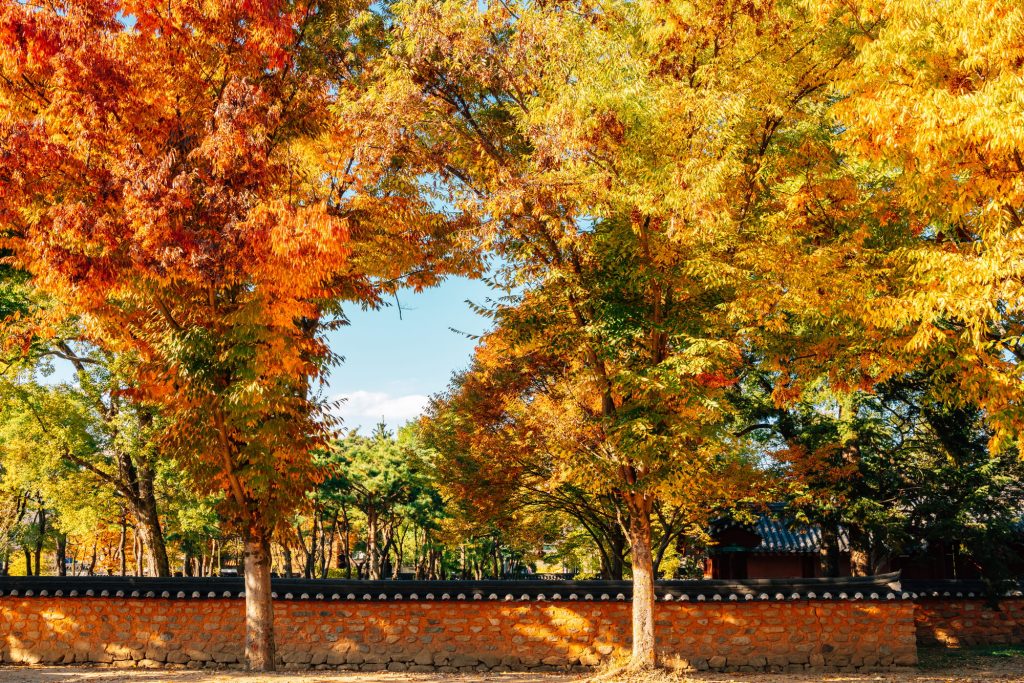
Spring brings mild temperatures well suited to walking the village’s streets for hours, along with cherry blossoms around the surrounding area, though Jeonju isn’t one of the country’s headline blossom-viewing destinations the way Jinhae or Seoul’s riverside parks are. Summer gets hot and humid in a way that makes the village’s many hanok-converted cafés genuinely appealing as air-conditioned rest stops between sightseeing. Autumn is arguably the best season for a visit — comfortable walking weather, and the tile roofs and surrounding hills take on the same warm color palette that makes Korean autumn scenery so photogenic elsewhere in the country. Winter is quieter and colder, but the reduced crowds and the appeal of hot kongnamul gukbap or a warming pot of makgeolli make it a reasonable off-season option for travelers prioritizing a low-key experience over ideal weather.
Nearby day trips if you have extra time
Travelers building a longer southwestern Korea itinerary around Jeonju have a few worthwhile options within reach. Jirisan National Park, one of Korea’s largest and most significant mountain ranges, is accessible from Jeonju by regional bus and offers hiking considerably less crowded than Seoraksan, along with several historic temples along its trails. The coastal area around Buan, including Byeonsan Peninsula National Park’s cliffs and beaches, is reachable by regional train and bus for travelers wanting a coastal contrast to the inland hanok village. Neither is a quick add-on to a short Jeonju trip, but both are realistic options if you’re spending three or more days in the region rather than doing a fast overnight visit.
Frequently asked questions
Is Jeonju worth visiting if I’ve already seen Bukchon Hanok Village in Seoul? Yes — they’re genuinely different experiences. Bukchon is a residential hanok neighborhood within a much larger modern city; Jeonju’s hanok village is an entire self-contained district built around the concept, with a scale, food culture, and slower pace that Bukchon, hemmed in by the rest of Seoul, doesn’t replicate.
How many days should I spend in Jeonju? One full day covers the essential sights and one great meal, but two days with an overnight stay is the practical minimum to properly experience the food culture — an early breakfast, an evening at a makgeolli bar, and the quiet morning atmosphere before the crowds arrive are all things a rushed day trip misses.
Is Jeonju good for solo travelers? Very much so. Guesthouse common areas in the hanok village tend to foster a social, low-key atmosphere among travelers, and the food-focused, unhurried pace of the city suits solo exploration well — it’s not a nightlife destination, but it rewards slow, independent wandering.
Can I do Jeonju as a day trip from Busan instead of Seoul? It’s possible but less convenient, since direct KTX connections typically require a transfer, pushing total travel time up. It works better as a stop on a longer multi-city itinerary than a quick day trip from Busan specifically.
What’s the best time of year to visit? Spring and autumn, for the same reasons they’re ideal across most of Korea — mild temperatures for walking the village’s streets, and comfortable conditions for sitting outside at cafés and makgeolli bars in the evening. Jeonju’s food-focused appeal, though, makes it a reasonable destination in any season, since much of what draws people there happens indoors or under cover regardless of weather.
Do I need to book a hanok guesthouse far in advance? For weekday stays, a few days’ notice is usually enough, but weekends — especially during spring and autumn — see the best-known and most photogenic hanok guesthouses book out one to two weeks ahead. If a specific property matters to you, book earlier rather than assuming availability closer to the date.
Is English widely spoken in Jeonju? Less than in Seoul, though the hanok village itself, being a major tourist destination, has enough English signage and menus at most restaurants to navigate comfortably. Venturing outside the immediate village area, such as to Nambu Market or further-flung neighborhoods, means relying more on a translation app and pointing at menu photos.
Jeonju doesn’t try to compete with Seoul’s scale or Busan’s coastline, and that’s exactly the appeal. It’s the version of Korea that existed before the KTX line and the 24-hour convenience stores reshaped everything else, still fully intact two hours from the capital, and worth building a dedicated trip around rather than squeezing in as an afterthought.