
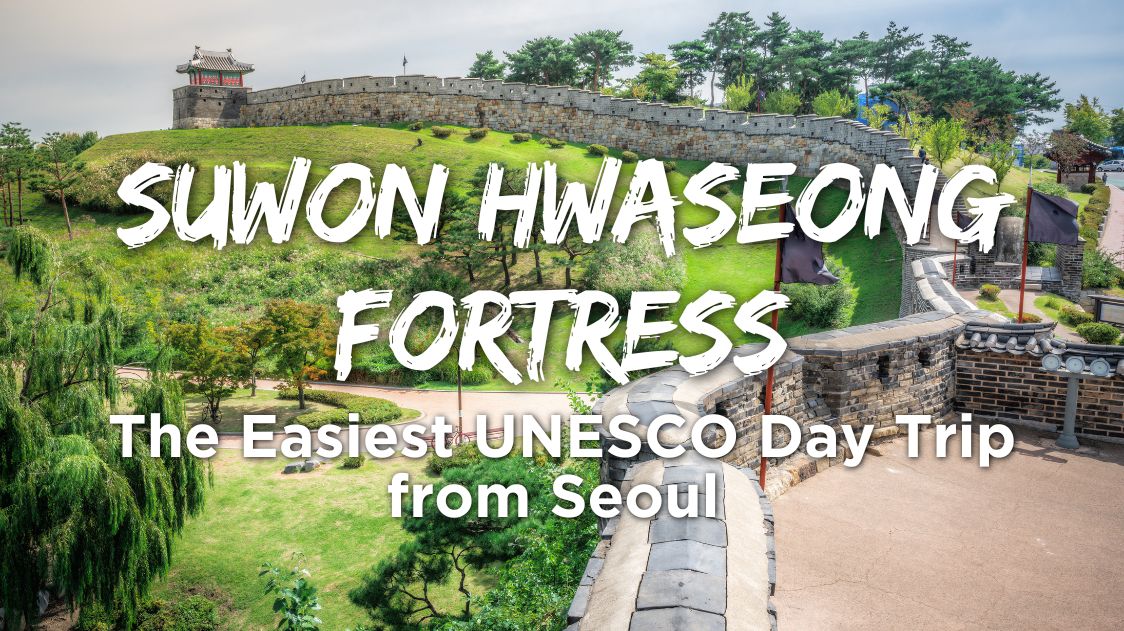
Most of Korea’s UNESCO World Heritage sites ask something of you to reach them — a KTX ticket, a bus transfer, a couple of hours minimum. Hwaseong Fortress in Suwon barely asks anything at all. It sits on Seoul’s own subway network, reachable on Line 1 in about an hour with a T-money card and no additional booking, which makes it one of the easiest genuinely significant historical sites to add to a Seoul-based itinerary without reworking your whole trip around it.
What you get for that minimal effort is a 5.7-kilometer fortress wall built in the late 18th century, recognized by UNESCO in 1997, and widely considered one of the finest examples of East Asian fortress architecture anywhere — a site that, unlike some heritage designations, genuinely earns the label rather than trading on it.
What Hwaseong Fortress actually is
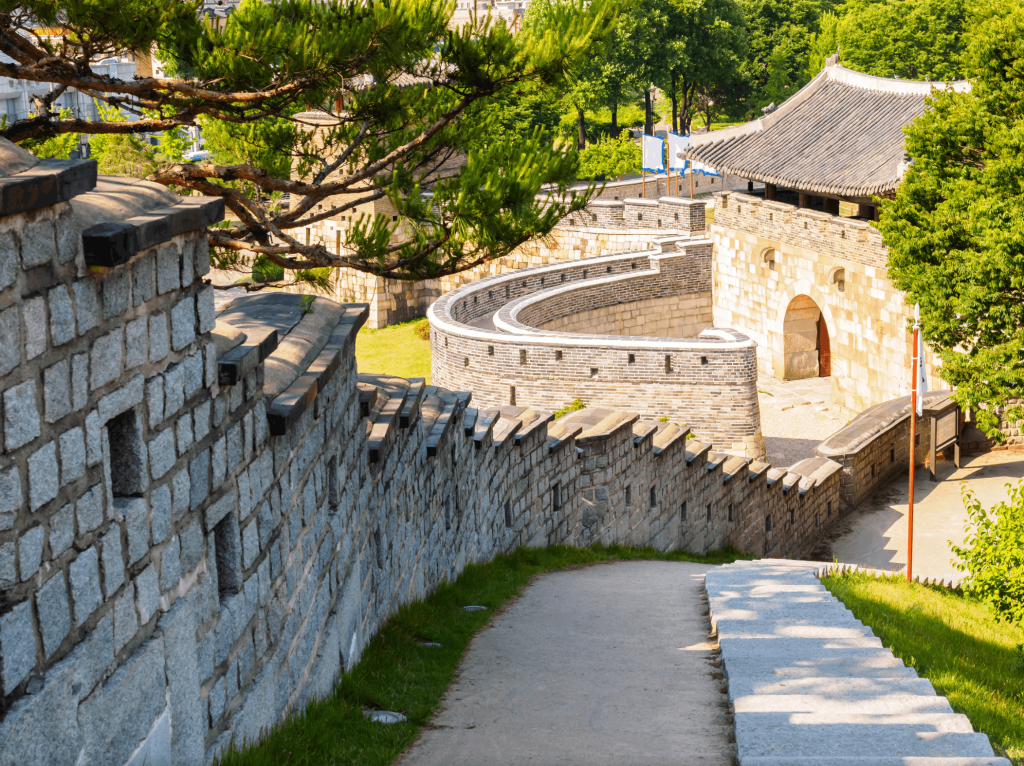
King Jeongjo of the Joseon Dynasty built Hwaseong Fortress between January 1794 and September 1796, both as a functional military stronghold and as a tribute to his father, Crown Prince Sado, whose tomb Jeongjo relocated to the Suwon area. The fortress represents a genuinely distinctive mix of Eastern and Western military architecture and engineering techniques for its era, incorporating design ideas that were unusually progressive for late 18th-century Korea.
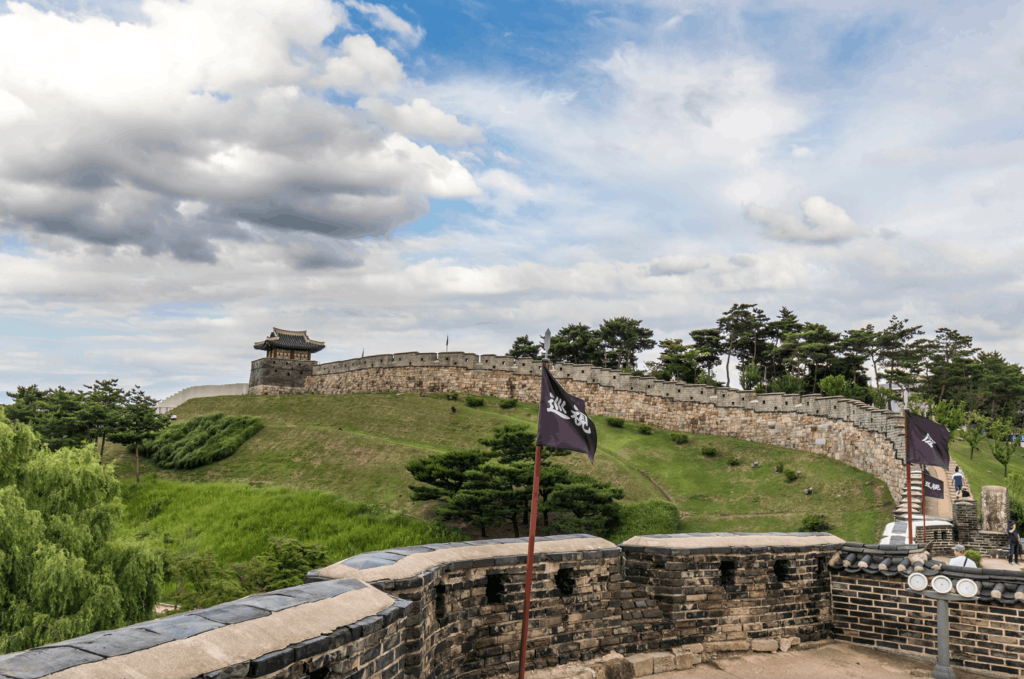
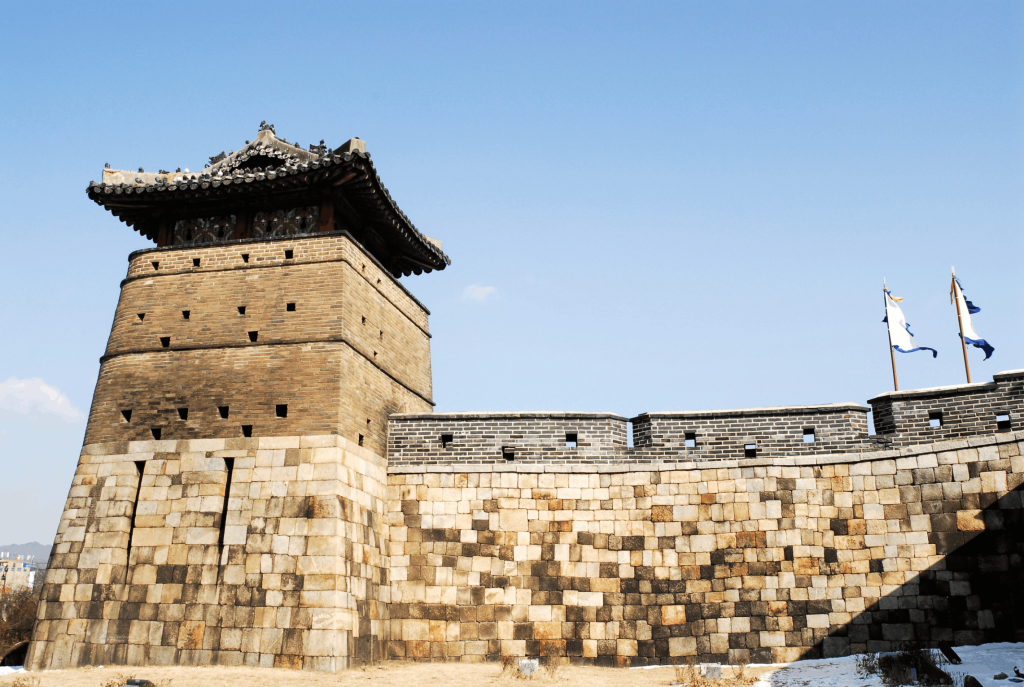
The wall stretches 5.7 kilometers around the old city center, connecting gates, watchtowers, command posts, and defensive structures across gentle hills, with much of the surrounding city having grown up around and alongside the fortress rather than displacing it. The site was partially damaged during the Korean War but has been carefully restored, which means what you’re walking today is a mix of genuine 18th-century stonework and thoughtful, historically-informed reconstruction — worth knowing going in, since it explains why some sections feel older and rougher than others.
Getting to Suwon from Seoul
By subway (cheapest, most straightforward)
Take Seoul Subway Line 1 directly to Suwon Station, a journey of roughly 50 minutes to an hour depending on the time of day, for a standard T-money fare of around ₩2,800. No transfers required if you’re starting from a Line 1 station.
By regular train
A Korail train from Seoul Station to Suwon Station runs somewhat faster than the subway, with fares between roughly ₩2,700 and ₩8,400 depending on the specific service. Note that the KTX itself bypasses Suwon entirely — this isn’t a KTX destination, and the regular Gyeongbu Line train is what you want.
Direct bus
Bus 1007 from Jamsil Station or bus 3000 from Gangnam Station both run directly to the fortress area without requiring a transfer at Suwon Station, a convenient option for travelers based in southern Seoul.
By car
The drive takes about an hour via the Seoul-Busan Expressway, with free and plentiful parking at the fortress. Not recommended for solo travelers or first-timers unfamiliar with driving in Korea, given the added complexity for what is otherwise a simple, well-connected public transit trip.
From Suwon Station to the fortress
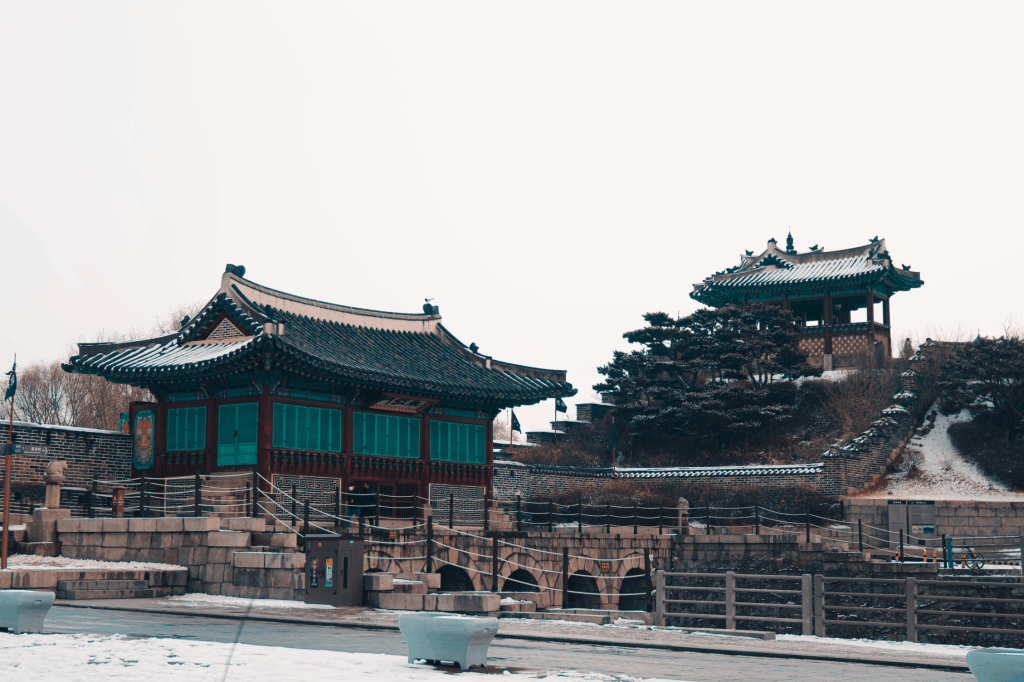
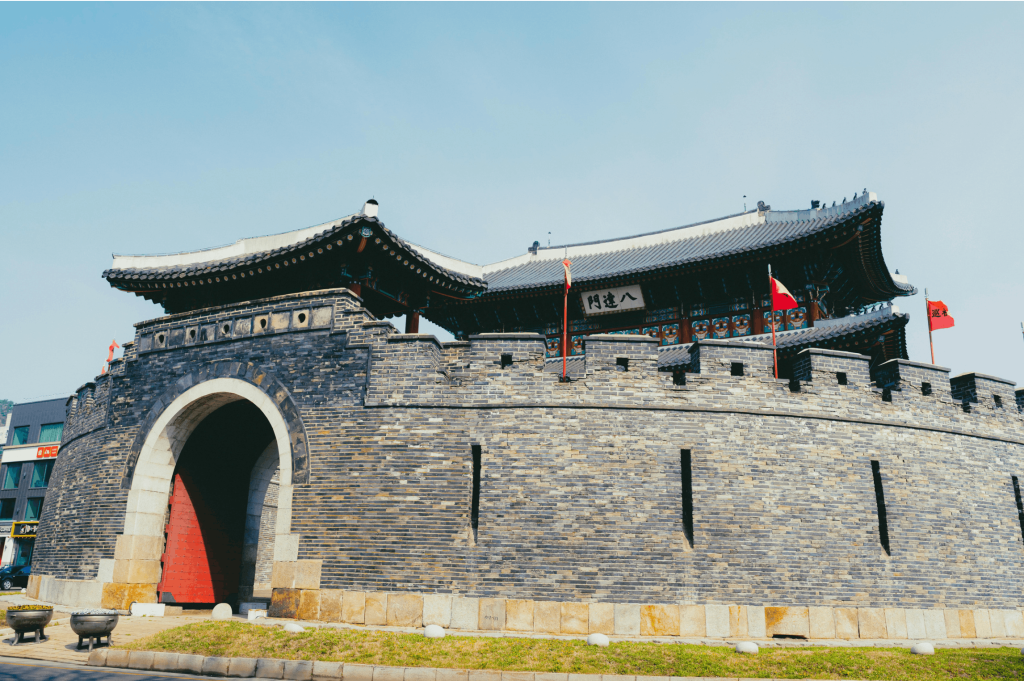
Once at Suwon Station, several local buses connect directly to the fortress area — buses 11, 13, 36, and 39 are commonly cited options, generally taking 10–15 minutes to reach Paldalmun Gate, the fortress’s south gate and the most logical starting point for a walking loop. A taxi covers the same distance in a similar time for a modest fare. Walking is also possible — the fortress sits roughly 1–2 kilometers from the station, about a 20-minute walk — though most visitors, especially those planning to walk a significant stretch of the fortress wall itself afterward, prefer to save their energy and take a short bus or taxi ride instead.
What to see and how much walking to plan for
The full 5.7-kilometer loop takes roughly 2–3 hours at a leisurely pace, but very few visitors walk the entire thing, and you don’t need to in order to get a genuine sense of the site. A realistic, satisfying visit covers one or two sections of the wall — commonly the stretch around Paldalmun Gate and up toward Janganmun Gate or Hwaseong Haenggung Palace — which can be done comfortably in an hour to ninety minutes, even at a relaxed pace with photo stops.
Hwaseong Haenggung Palace, the temporary royal palace where King Jeongjo stayed during his visits to Suwon, sits within the fortress grounds and is worth a separate stop — the buildings have been reconstructed rather than surviving in original form, but the layout and design give a clear sense of how royal officials operated during these ceremonial visits. Entry runs a modest additional fee on top of the fortress admission.
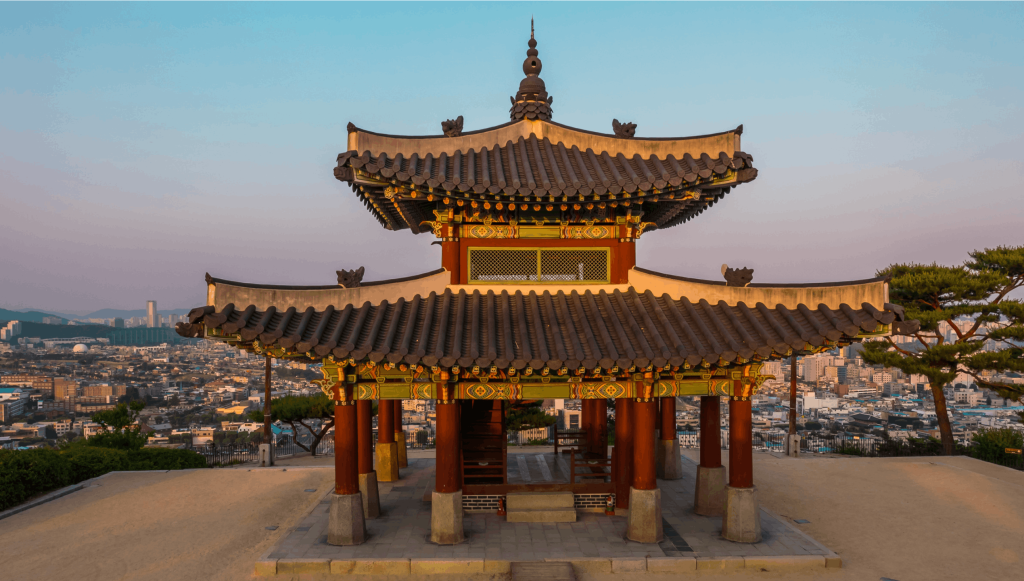
The watchtowers and command posts along the wall, particularly around the northern and eastern sections, offer some of the best views over both the historic core and the modern city surrounding it — a genuinely striking contrast between 18th-century stonework and the high-rise skyline beyond.
A trolley (small tourist tram) runs along parts of the fortress route and is worth considering on hot days or for visitors who want to cover more of the wall without the full walking commitment. It’s a low-cost, low-effort way to see a wider stretch of the fortress than a walking-only visit typically covers in the same amount of time.
Archery experiences are available at a few points along the fortress route, a popular add-on activity that plays into the site’s military history and gives an interactive break from straight sightseeing, particularly appealing for families or anyone visiting with kids.
Entrance fees and hours
Admission to the fortress walls themselves runs a modest fee, commonly cited around ₩1,500 for adults — genuinely inexpensive for a UNESCO World Heritage site of this scale. Hwaseong Haenggung Palace charges a similar modest separate fee, and combined tickets covering both are sometimes available at a small discount. The fortress is open year-round, though specific operating hours shift by season, so checking current hours before a visit — particularly if you’re planning an early morning or evening visit for photography — is worth doing rather than assuming a fixed schedule.
Beyond the fortress: what else Suwon offers
Suwon’s famous chicken street (Toechon-dong or similar chicken alleys) near the fortress is known for jjimdak and other chicken dishes, giving the city its own distinct food identity worth building a meal around during your visit.
Mural villages and cultural shopping streets in the neighborhoods surrounding the fortress add a modern, more casual counterpoint to the historical sightseeing, worth a wander if you have extra time beyond the core fortress visit.
Suwon’s broader city center, all within walking distance of the fortress itself, includes chic cafés, restaurants, and small museums that make it easy to extend a fortress visit into a fuller half-day or full-day trip without needing to venture far.
Suwon Hwaseong Fortress at night
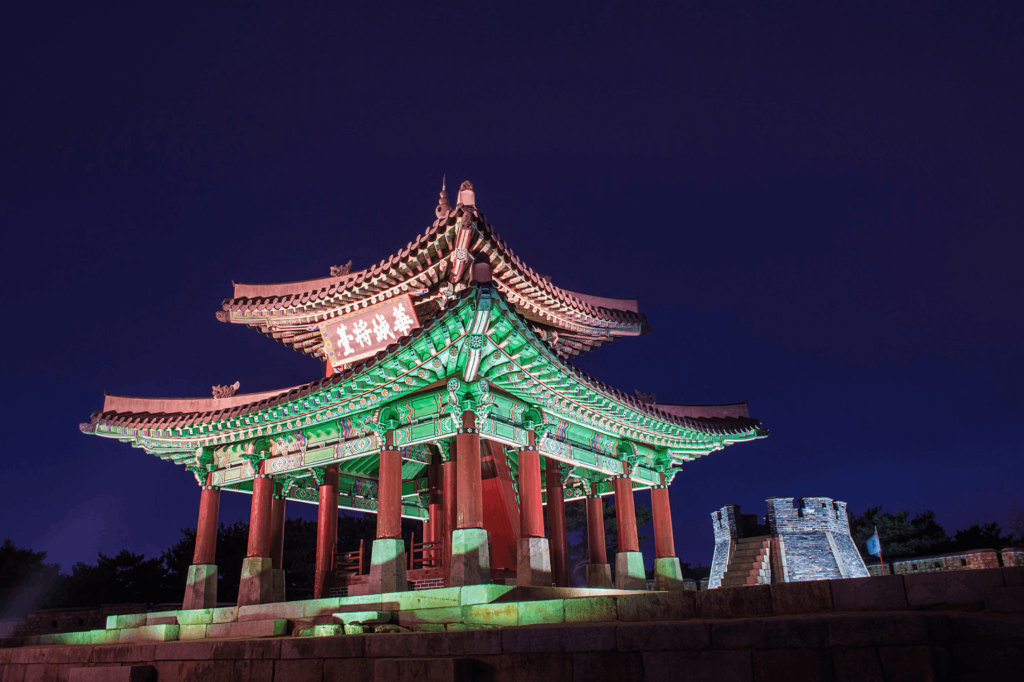
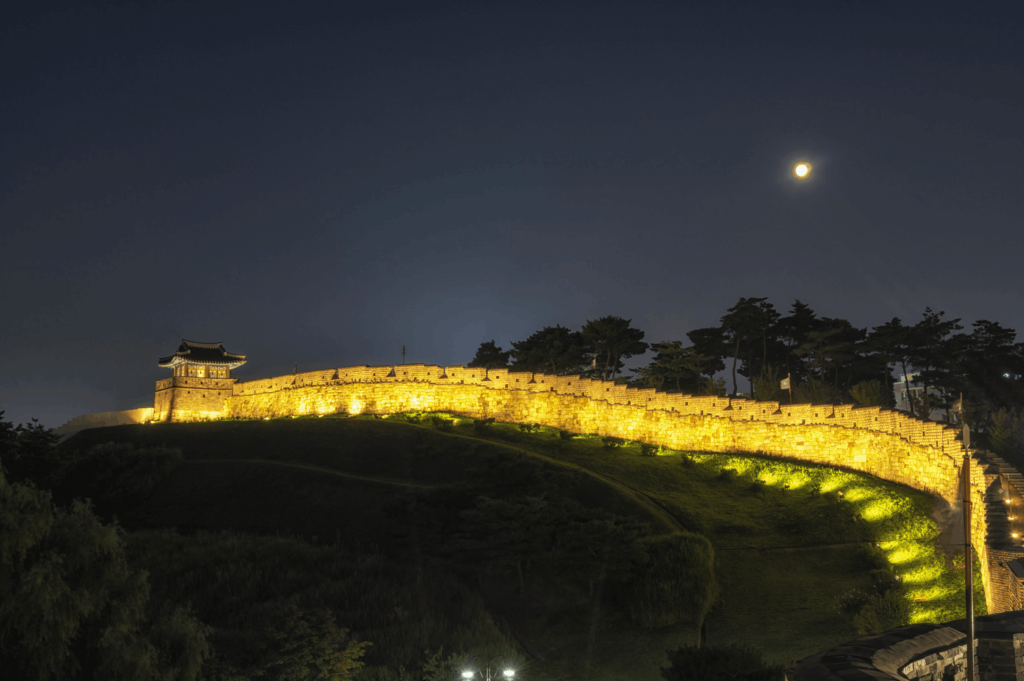
The fortress illuminates in the evening, and a night visit offers a genuinely different atmosphere from the daytime version — quieter, more atmospheric, with the lit-up gates and watchtowers standing out dramatically against the dark. Seasonal light festivals and cultural performances sometimes run in the evening as well, worth checking for during your specific travel dates, since these add a further layer to what’s already a strong nighttime visit even without a special event running.
Suggested visit strategies
A half-day trip
The most common and arguably most sensible way to visit — a morning or afternoon subway ride out, 2–3 hours covering the main fortress sections and Hwaseong Haenggung Palace, a meal at the chicken street, and back to Seoul the same day without feeling rushed.
A full-day trip
Adds time for the complete fortress wall loop, one of the mural villages, and a more leisurely pace throughout, worth considering for history enthusiasts or photographers who want more than the highlight-reel version.
Combined with another day trip
Given how quick and easy the subway connection is, some travelers pair a Suwon fortress visit with another nearby Gyeonggi-do destination on the same day, though this requires careful time management given how much there genuinely is to see at the fortress itself if you don’t want to rush it.
As an evening addition to a Seoul day
Since the subway ride is short and the fortress illuminates at night, a late-afternoon departure from Seoul, timed to catch both daylight and the evening lighting, is a reasonable way to fit Suwon in without dedicating an entire day to it.
What a Suwon day trip costs
For a half-day trip from Seoul:
- Subway round trip: roughly ₩5,600
- Fortress admission: ₩1,500
- Hwaseong Haenggung Palace admission: ₩1,500
- Local bus or short taxi at the Suwon end: ₩3,000–₩10,000
- Chicken street meal: ₩15,000–₩25,000
Total: roughly ₩25,000–₩45,000 ($19–$34) per person, making this one of the cheapest genuinely worthwhile day trips available from Seoul.
When to go
Spring (April–May) brings cherry blossoms along parts of the fortress grounds and comfortable walking temperatures. Autumn (September–October) offers similarly mild weather with the added visual appeal of autumn foliage against the stone walls — widely considered the best season for photography here, consistent with most of Korea’s outdoor heritage sites. Summer gets hot and humid enough that the trolley option becomes considerably more appealing than a full walking loop. Winter is cold but occasionally rewards visitors with a light snowfall that transforms the fortress into a quieter, strikingly different scene, worth considering for anyone prioritizing atmosphere and thin crowds over comfortable walking weather.
A little more history: why King Jeongjo built it
The story behind Hwaseong Fortress is more personal than most fortress histories, and it’s worth knowing before you visit, since it changes how you read the site. King Jeongjo’s father, Crown Prince Sado, died under tragic and politically fraught circumstances — confined by his own father, King Yeongjo, and ultimately dying as a result. When Jeongjo ascended the throne, one of his most significant acts was relocating his father’s tomb to Suwon and building Hwaseong, in part as a monument to his father’s memory and in part as a genuine strategic project, intended at various points to potentially become a new capital that would shift power away from the established aristocratic families entrenched in Hanyang (old Seoul). That plan never fully materialized, but the fortress itself survives as one of the most complete records of late Joseon-era architecture and military engineering, and UNESCO’s 1997 designation reflects both its structural achievement and its unusually well-documented construction history — the fortress’s construction was recorded in extraordinary bureaucratic detail, giving historians and restorers an unusually precise blueprint to work from during later reconstruction efforts.
Pairing Suwon with Everland
One detail that surprises a lot of first-time visitors: Everland, Korea’s largest theme park, sits only about 20–30 minutes from Suwon by bus or taxi, making a combined day of history and theme-park fun a genuinely practical option for families or groups with mixed interests. A typical combined approach involves a morning at Hwaseong Fortress — cooler temperatures, better light for photos, fewer crowds — followed by an afternoon and evening at Everland once the fortress visit wraps up. This pairing works particularly well for families traveling with kids who might not sustain interest in a multi-hour historical walk on its own, giving the day a clear structure that balances culture with entertainment.
How Hwaseong compares to Korea’s other historic fortresses and palaces
| Hwaseong Fortress (Suwon) | Seoul’s Grand Palaces (Gyeongbokgung etc.) | Namhansanseong (near Seoul) | |
|---|---|---|---|
| Distance from Seoul | ~1 hr subway | Within Seoul | ~1 hr subway/bus |
| Scale | 5.7 km fortress wall around a city | Palace complexes within Seoul | Mountain fortress, hiking involved |
| Character | Military architecture, walkable walls | Royal residence, formal court life | Combines fortress history with a substantial hike |
| Effort required | Low — flat urban walking, short subway ride | Very low — right in the city | Higher — genuine hiking involved |
Hwaseong sits in a useful middle ground: more substantial and less crowded than Seoul’s central palaces, but far less physically demanding than a mountain fortress like Namhansanseong. For visitors who’ve already covered Gyeongbokgung and want a different flavor of Joseon-era history without committing to a hiking-heavy day, Suwon is a natural next step.
Frequently asked questions
Is Suwon Hwaseong Fortress worth visiting if I only have a few days in Seoul? It’s one of the more defensible “extra day trip” choices precisely because it costs so little time and money relative to the payoff — a genuinely significant UNESCO site reachable on the regular subway network without a special ticket or advance booking. For a first-timer with only two or three days total, though, Seoul’s core sights should still take priority; Suwon fits best into a fourth or fifth day, or as a half-day add-on rather than a full dedicated day for a short trip.
Do I need to book anything in advance? No advance booking is required for the fortress walls or general access. Specific paid experiences like archery or occasional special exhibitions inside Hwaseong Haenggung Palace may have their own separate arrangements, worth checking if a specific activity is a priority.
How much of the fortress wall should I plan to walk? Even a 30-minute walk along one section gives a genuine sense of the site, according to guides familiar with the full route. A 1–2 hour walk covering two or three of the main gates and watchtowers is the realistic sweet spot for most visitors who want a satisfying visit without committing to the full 5.7 km loop.
Is Hwaseong Fortress suitable for visitors with mobility limitations? Sections directly around the more developed gate areas and Hwaseong Haenggung Palace are reasonably accessible, but the fortress wall itself involves inclines, uneven paths, and stairs in various sections, making a full wall walk difficult for visitors with significant mobility limitations. Sticking to the flatter areas around the main gates and palace grounds is the more realistic approach in that case.
Can I combine a Suwon trip with the DMZ, Nami Island, or other Seoul day trips? Not practically on the same day, given that each of these destinations sits in a different direction from Seoul and involves its own dedicated travel time. Suwon works best as its own half-day or full-day trip, or paired loosely with general Seoul sightseeing on a day when you’re not planning another major excursion.
Is Suwon a good add-on to a trip that already includes Everland? Yes, and it works well in either order — a morning fortress visit followed by an afternoon and evening at Everland, or the reverse if you’d rather start the day with the theme park. The two sit close enough together by bus or taxi that treating them as a single combined day trip is entirely practical rather than a stretch.
Is there an English audio guide or English-speaking tour available? Information boards throughout the fortress and at Hwaseong Haenggung Palace are provided in both Korean and English, and self-guided visits work well without additional assistance. Guided tour options, including English-language options, are also available for visitors who want more in-depth historical context than the on-site signage provides.
For the amount of effort required, Suwon Hwaseong Fortress offers one of the best returns of any day trip from Seoul — genuine UNESCO-recognized history, a manageable subway ride, and a low enough cost that it’s easy to justify even on a tight budget or a short remaining window in an otherwise packed Seoul itinerary.