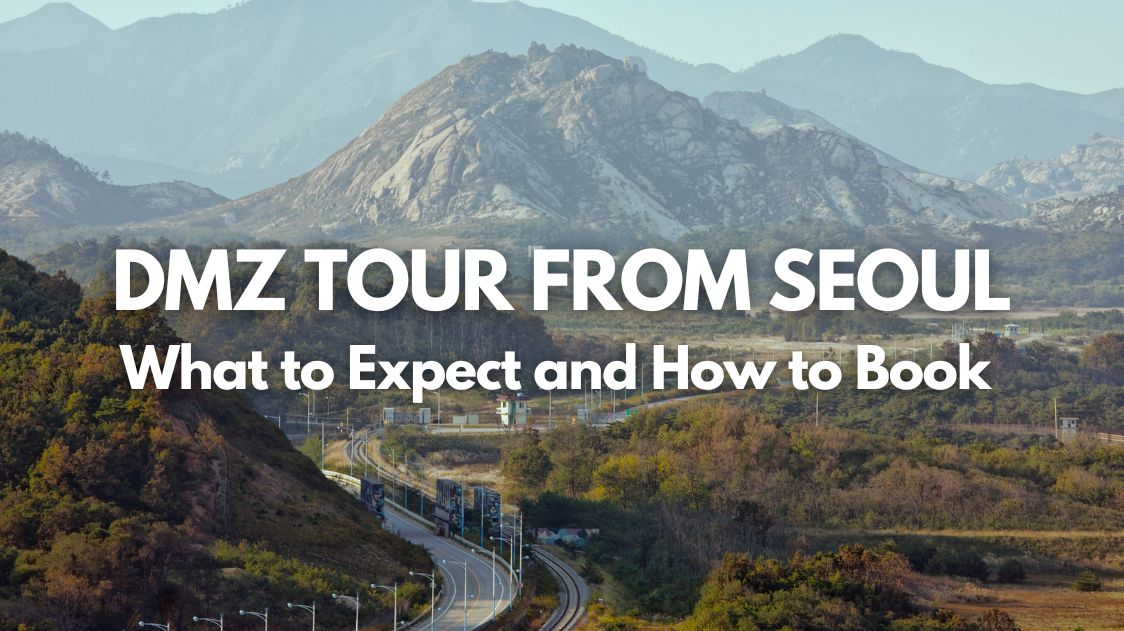
The Demilitarized Zone sits less than an hour from central Seoul, which is one of the stranger facts about visiting the city — a bus ride roughly the length of a commute takes you from a skyline of glass towers and coffee chains to the most heavily fortified border on earth, still technically part of an unresolved war. It’s consistently one of the most popular day trips booked from Seoul, and also one of the most misunderstood in terms of what you can actually see, how you book it, and what the experience is really like once you’re there.
What the DMZ actually is
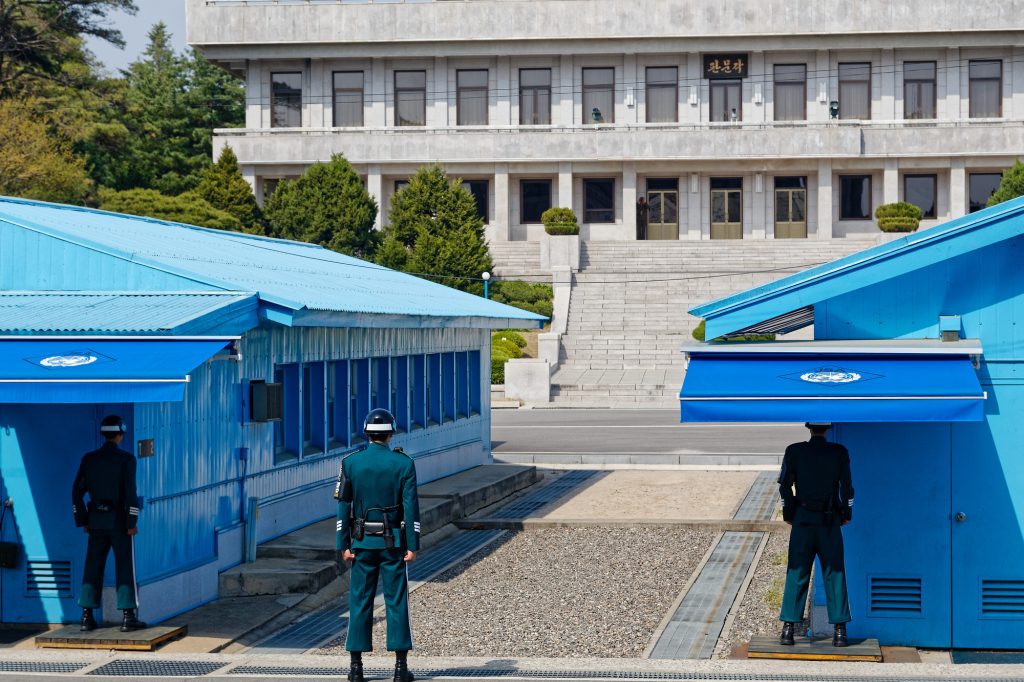
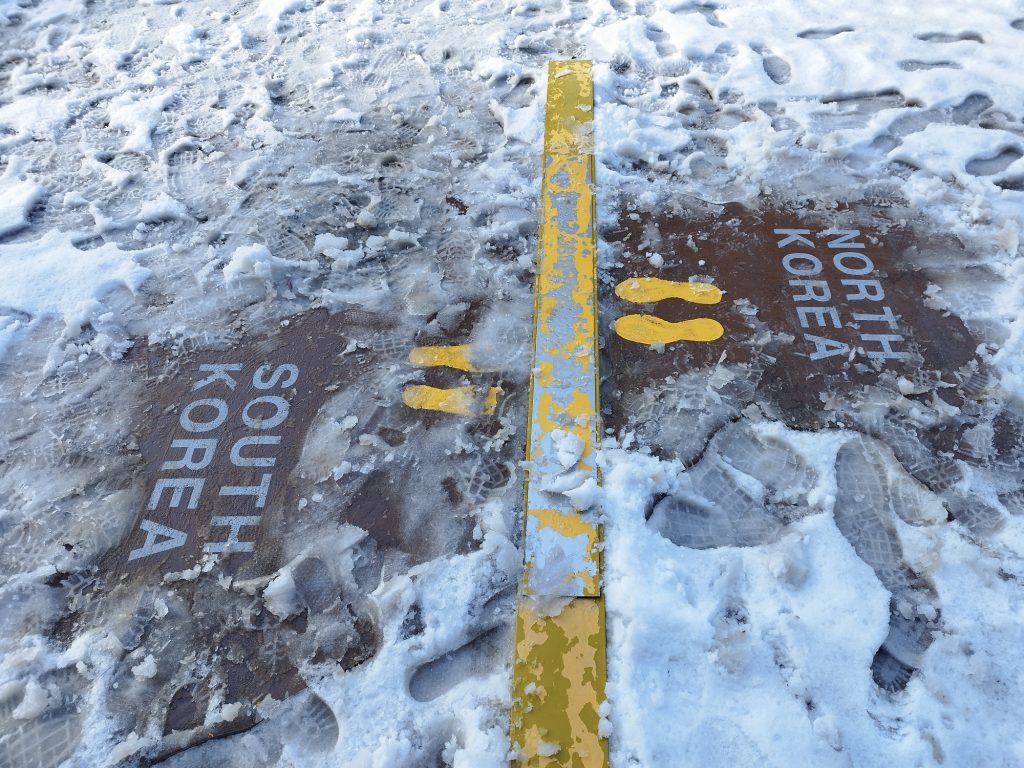
The Demilitarized Zone is a roughly 4 km wide buffer strip running the length of the Korean peninsula, established by the 1953 armistice that paused, but never formally ended, the Korean War. Despite the name, it’s one of the most heavily militarized borders in the world, lined with fencing, guard posts, and minefields on both sides. Within it sits the Joint Security Area (JSA), the single point where South and North Korean forces stand facing each other directly, and the site of the blue conference buildings seen in most photos of the border — the ones where the Military Demarcation Line runs straight through the middle of the room.
You cannot visit the DMZ independently. Access beyond the Civilian Control Line requires an authorized tour operator with military clearance, and JSA access specifically requires advance passport registration with the United Nations Command. This isn’t a bureaucratic formality you can talk your way around at the gate — bookings are checked against submitted passport details, and turning up without having gone through the process gets you turned away.
The two main tour types
Half-day DMZ tour (without JSA), roughly 5 hours.
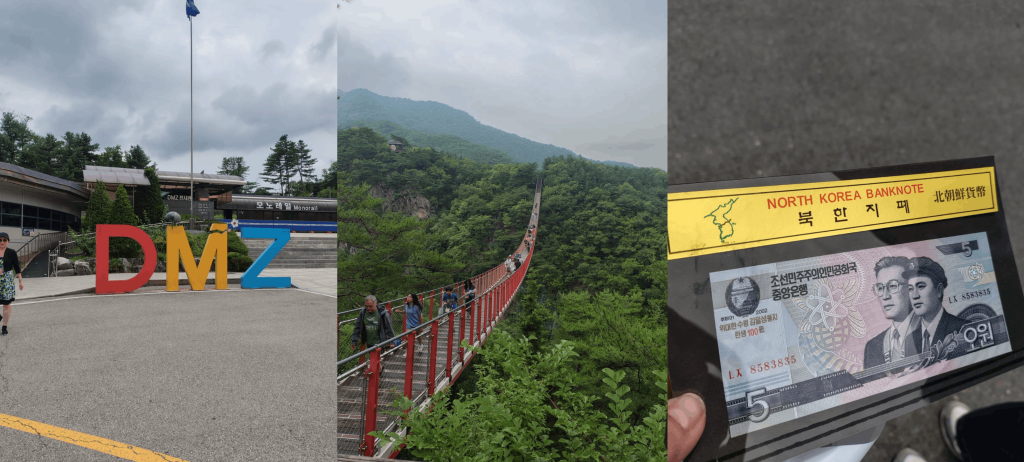
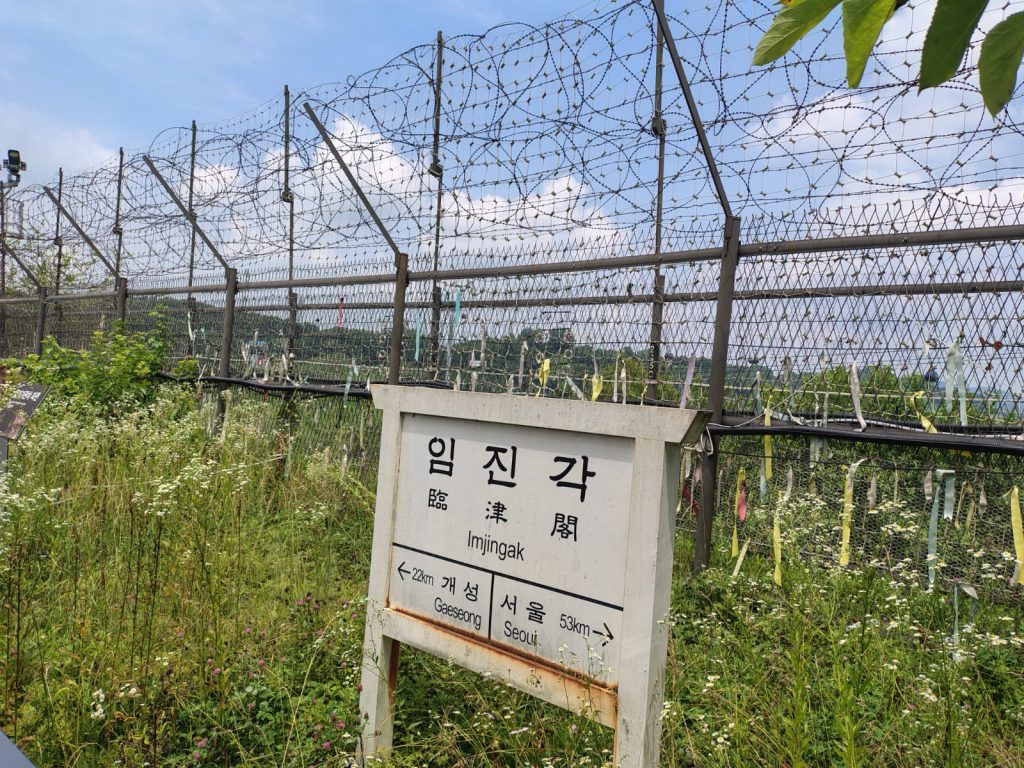
Covers Imjingak Park, the Third Infiltration Tunnel, and the Dora Observatory, sometimes with a stop at Dorasan Station — a train station built for a rail line to North Korea that has never operated. Departs Seoul around 8 a.m., returns by early-to-mid afternoon. Cost: roughly ₩55,000–₩75,000 ($40–$55) per person. No passport pre-registration required, and bookable with less advance notice than the full JSA tour, though still best booked a few days out during busy periods.
Full-day tour with JSA access, roughly 8 hours.
Adds a visit to the Joint Security Area itself — the closest most visitors will ever get to North Korean territory, standing meters from the demarcation line inside the conference room where the two sides face off. Cost: roughly ₩100,000–₩130,000 ($75–$98) per person. Requires advance booking, generally a minimum of 48–72 hours, with a full-color passport copy submitted for UN Command registration.
A handful of operators run more specialized itineraries — one notable version adds Camp Bonifas, the UN Command military post, and Camp Greaves, a former US military installation now partly repurposed as a cultural and exhibition space, for travelers who want a deeper dive into the military history beyond the standard stops.
What you actually see at each stop
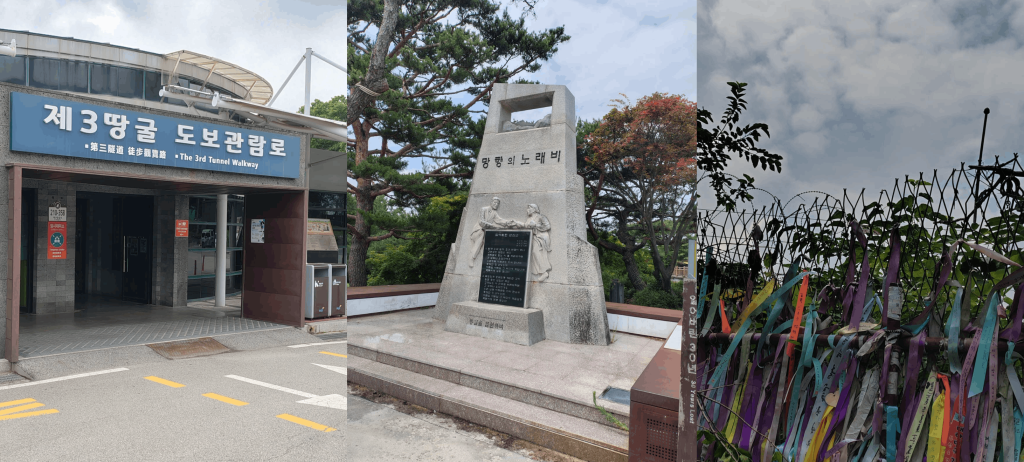
Imjingak Park
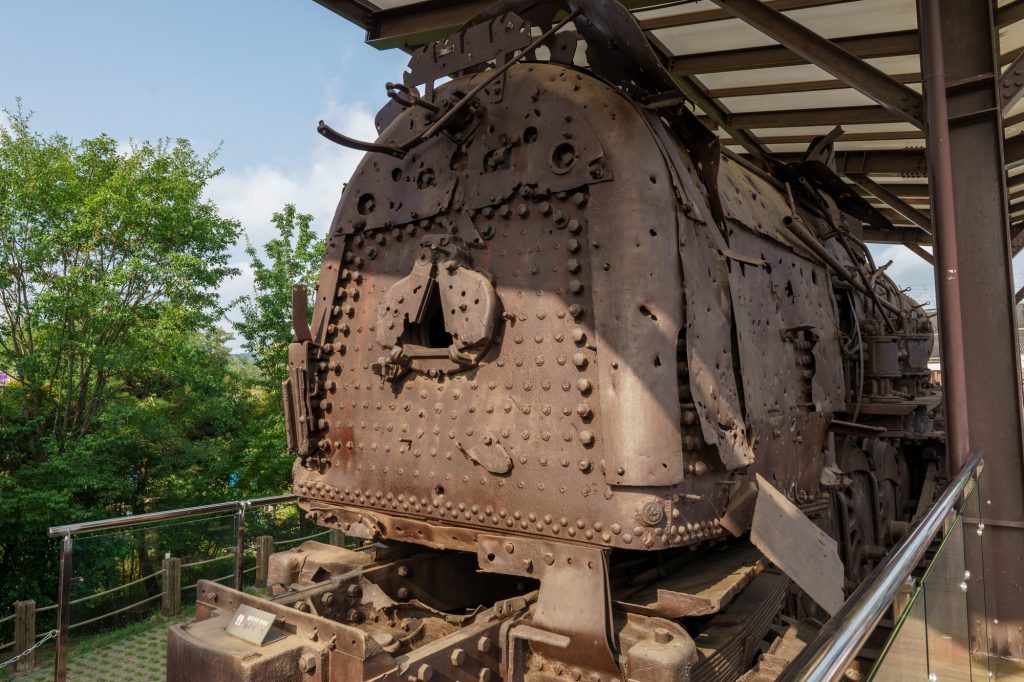
Functions as the gateway to the DMZ area and is freely accessible without a tour, reachable by regular train or bus from Seoul if you only want to see this part. It includes the Freedom Bridge, where nearly 13,000 prisoners of war crossed back into South Korea after the armistice, along with war memorials and a small amusement park that sits, somewhat jarringly, right alongside the war monuments.
The Third Infiltration Tunnel
Is one of at least four tunnels discovered running beneath the DMZ, believed to have been dug by North Korea as a potential invasion route — a claim North Korea has denied, despite fairly compelling evidence pointing the other way. This particular tunnel was discovered in October 1978 and, unlike the second tunnel both sides acknowledge finding jointly, remains one of the more disputed discoveries. Visitors descend via a monorail or on foot down a genuinely steep slope to walk a section of the tunnel itself — worth knowing if claustrophobia or mobility issues are a concern, since the walk back up is a real climb.
Dora Observatory
Offers a view across the DMZ into North Korean territory, including, on a clear day, the outskirts of Kaesong and a North Korean “propaganda village” visible in the distance. Visibility depends heavily on weather; a hazy day can mean a fairly underwhelming view through the coin-operated binoculars.
Dorasan Station
Included on some but not all itineraries, is a genuinely strange place to visit — a modern, fully built train station with a platform, ticket gates, and signage pointing toward Pyongyang, constructed for a rail connection that has never actually run a passenger service. It stands as a physical monument to a reunification that hasn’t happened yet.
The JSA (Joint Security Area)
On tours that include it, is the section most people picture when they think of the DMZ — the blue UN buildings straddling the border, with South Korean and, at times, North Korean soldiers standing in view of each other. Visitors typically get a small window of time inside one of the conference buildings, standing on the north side of the room while technically remaining, briefly, on the North Korean side of the border. Security briefings are thorough, photography rules are strict and enforced on the spot, and the tone of the visit is noticeably more serious than the other DMZ stops.
Booking rules and what to bring
Passport is mandatory, non-negotiable, for every DMZ tour, and specifically required in physical form for JSA — a photo on your phone doesn’t count. Bring the same passport used for registration.
Nationality restrictions apply to JSA tours specifically. A number of countries are excluded from JSA access due to diplomatic and security arrangements, a list that has included, depending on the operator and current policy, nationals of China, Russia, several Middle Eastern and Southeast Asian countries, and others. This changes periodically, so it’s worth checking directly with your chosen operator before booking rather than assuming based on outdated information, since restrictions have shifted over the past few years.
Minimum age requirements typically set the cutoff at 11 or 12 years old for JSA tours specifically, though the standard half-day DMZ tour without JSA is generally more relaxed on age.
Dress code is strict and enforced, particularly for JSA, to avoid any appearance of political messaging or disrespect in what is, functionally, still an active military zone. Banned items generally include: sleeveless shirts, tank tops, shorts, short skirts, ripped jeans, leggings, sandals, flip-flops, and anything with a military-style pattern or print. Closed-toe shoes and reasonably modest, conservative clothing are the safe default.
Booking windows: the standard half-day DMZ tour is often bookable with just a day or two of notice, sometimes even same-day depending on availability. JSA tours need real lead time — 48 to 72 hours minimum for the passport registration process, and longer during peak travel seasons (spring and autumn) when demand is highest. Tours generally don’t run on Mondays, national holidays, or unscheduled military training days, and JSA access specifically can be suspended entirely during periods of heightened inter-Korean tension — worth checking current status when booking rather than assuming it’s automatically available.
Where tours depart from
Most DMZ and JSA tours pick up from central Seoul locations — common departure points include hotels near City Hall, the area around Itaewon and Noksapyeong stations, and Gwanghwamun. Confirm your specific meeting point when booking, since it varies by operator and sometimes by specific tour date, and arrive with a few minutes to spare; buses generally don’t wait for latecomers given the tight security-clearance schedule for JSA access.
A quick comparison of the two main tour types
| Half-day DMZ | Full-day DMZ + JSA | |
|---|---|---|
| Duration | ~5 hours | ~8 hours |
| Price | ₩55,000–₩75,000 | ₩100,000–₩130,000 |
| Booking lead time | 1–2 days generally fine | 48–72 hours minimum |
| Passport registration | Not required | Required in advance |
| Minimum age | Usually flexible | Typically 11–12+ |
| Sites included | Imjingak, Third Tunnel, Dora Observatory | All of the above, plus JSA |
| Suspension risk | Low | Higher, tied to inter-Korean relations |
A little more history, for context on the ground
The armistice signed in July 1953 stopped the fighting but never became a formal peace treaty, which is the technical reason the two Koreas remain, on paper, still at war more than seven decades later. The DMZ itself was drawn roughly along the final front line of the conflict rather than the original pre-war border at the 38th parallel, which is why it zigzags rather than running perfectly straight across the peninsula. Ironically, the total absence of human development inside the zone for over 70 years has turned it into one of the most significant accidental wildlife habitats in East Asia — cranes, deer, and other species not commonly seen elsewhere on the peninsula have thrived in the buffer strip precisely because no one has been able to build on or farm it. A few tours and documentaries have started highlighting this ecological side of the DMZ alongside its military history, which adds an unexpectedly hopeful note to an otherwise heavy day.
Photography and etiquette tips
Bring a zoom lens if photography is a priority, particularly for the view from Dora Observatory, where the most interesting details — guard posts, the propaganda village, occasional movement on the North Korean side — sit well beyond what a phone camera or a standard lens can capture clearly. At the JSA specifically, follow your guide’s instructions on timing precisely; photography windows are brief and clearly bounded, and guides will tell you exactly when to put cameras away. Avoid any gestures, gestures toward North Korean personnel, or raised voices near the demarcation line — briefings cover this in detail, and it’s taken seriously by both the tour operators and the military personnel present.
What it costs, and what’s included
Prices cluster fairly tightly across reputable operators:
- Half-day DMZ (no JSA): ₩55,000–₩75,000 ($40–$55)
- Full-day DMZ with JSA: ₩100,000–₩130,000 ($75–$98)
- Extended tours with Camp Bonifas or Camp Greaves: generally priced similarly to or slightly above the standard JSA tour, depending on inclusions.
Most tours include hotel or central-Seoul pickup, transportation, an English-speaking guide, and entrance fees to the sites visited. Lunch is included on some tours and excluded on others — check the specific listing, since this is one of the more inconsistent details between operators. A number of tour companies now specifically advertise “no forced shopping stops,” which tells you something about an older pattern in the industry where DMZ tours doubled as ginseng or duty-free shopping detours; it’s worth checking reviews for this if you want to avoid it.
If you’d rather skip the tour operator and go independently as far as the rules allow, it’s possible to reach Imjingak on your own by train or bus and buy a same-day ticket for the visitor center’s own tour of the accessible sites (Third Tunnel, Dora Observatory) for around ₩12,000 for a standard adult ticket. The catch is that tickets are sold first-come, first-served starting around 9 a.m., tour buses tend to arrive and claim spots before individual visitors do, and missing out means a long wait or no visit at all that day. For most visitors, the extra cost of a pre-booked tour buys a meaningful amount of certainty.
What the day actually feels like
The tone shifts noticeably as the day goes on. Imjingak feels almost like any other Korean tourist site — memorials, a gift shop, families taking photos. By the time you’re descending into the Third Tunnel or standing at Dora Observatory scanning the North Korean landscape through binoculars, the atmosphere sharpens considerably. Guides tend to be well-informed and willing to answer pointed questions, and most build in a fair amount of historical context about the Korean War and the decades since, not just narration of what you’re looking at.
The JSA portion, for those doing the full-day tour, is different again — briefings are conducted with more formality, groups move as a unit under close direction, and there’s a genuine, if brief, sense of being somewhere with real stakes rather than a museum reconstruction of one. Several visitors describe it as the most memorable single stop on an entire Korea trip, precisely because so little about it feels staged for tourism, despite it clearly being a well-organized tourist operation at the same time.
Combining a DMZ visit with the rest of a Seoul itinerary
A DMZ tour, whichever version you choose, takes up the better part of a day, and most experienced Seoul visitors build it in as a dedicated day rather than trying to squeeze other sightseeing around it — the early departure and set schedule don’t leave much slack. It fits naturally into a 4-day-or-longer Seoul itinerary, and pairs logically with a slower, café-and-neighborhood-focused day either side of it to balance the intensity. If you’re building a broader multi-day plan, our Seoul 3-Day Itinerary and Best Day Trips from Seoul guides cover how a DMZ day slots in alongside the city’s other major sights.
Frequently asked questions
Is it safe to visit the DMZ? Yes, in the sense that matters practically — millions of tourists visit annually without incident, and tours are run under strict UN and South Korean military coordination. Access is restricted precisely because of the area’s sensitivity, which functions as a safety measure rather than a warning sign. The main practical risk is a tour being cancelled or JSA access being suspended around periods of political tension, not personal danger while on the tour.
Can I take photos? At most stops, yes, though specific restrictions apply at the Third Tunnel (generally no photography underground) and at certain points within the JSA, where guides give explicit instructions about where and when photography is permitted. Ignoring these instructions on the spot is taken seriously and can result in confiscation of the photo or removal from the tour.
Do I need a visa or special permit to visit Korea to go on this tour, beyond a normal tourist visa? No separate visa is required. The passport registration process for JSA is specific to that tour and separate from Korea’s general entry visa requirements.
Is the DMZ tour worth it if I only have three or four days in Seoul? It’s a genuine tradeoff — a full day is a meaningful chunk of a short trip. Most travelers who’ve done both a short and a longer Seoul trip say it’s worth prioritizing over one additional day of general city sightseeing, given how distinct the experience is from anything else in the itinerary, but it comes down to personal priorities.
What happens if the JSA is closed on my travel dates? Operators typically offer a refund, a rebooking, or a downgrade to the half-day DMZ-only tour without JSA. It’s worth confirming a specific operator’s policy before booking if your dates are close to the trip and you’re relying specifically on JSA access rather than the broader DMZ visit.
Is the DMZ tour appropriate for children? The half-day tour is generally fine for families, though the historical content skews more toward adults and older children who can engage with the subject matter. JSA tours specifically restrict entry to children around 11 or 12 and older, both for the age-related rule and because the tone and pace of that portion suits older visitors better.
Can I bring a backpack or bag on the tour? Small bags are generally fine at Imjingak, the Third Tunnel, and Dora Observatory. At the JSA specifically, bag restrictions tighten, and large backpacks, tripods, and certain camera equipment may need to be left on the tour bus during the security briefing and the walk through the conference building — your guide will give a precise rundown of what’s allowed before you disembark.
How far in advance should I book during peak season? During April and October, when demand for every Seoul day trip climbs, book a JSA-inclusive tour at least a week ahead if your travel dates are fixed, since slots can fill up faster than the stated 48–72 hour minimum would suggest. The half-day DMZ-only tour is generally easier to secure on shorter notice even in peak months.
Few day trips from any major city compress this much history, tension, and genuine strangeness into a single morning and afternoon. Whether you choose the shorter tour or go all the way to the JSA, it’s consistently one of the experiences visitors remember most clearly from a trip to Korea, long after the palaces and markets have blurred together.