The question comes up in almost every Korea travel forum, and the honest answer is that it depends less on the country than most people assume. South Korea has one of the widest gaps between what a careful traveler spends and what a careless one spends of any country in Asia. A backpacker sleeping in a Hongdae guesthouse and eating at convenience stores can get by on around 60,000 won a day. A couple staying in a five-star hotel near Gwanghwamun and eating at hanwoo restaurants every night can spend that much before lunch. Both of them will tell you, accurately, what Korea “costs.”
This guide breaks the numbers down by category rather than giving you one vague average, because averages are close to useless for planning an actual trip. Prices below reflect 2026 rates in Korean won, with rough USD conversions at roughly ₩1,330 to the dollar — check the current rate before you travel, since it does move.
The short version
For a one-week trip excluding international flights, plan on:
- Backpacker: $450–$650 (₩600,000–₩860,000)
- Mid-range: $900–$1,400 (₩1,200,000–₩1,860,000)
- Comfortable / first-timer with some splurges: $1,600–$2,400 (₩2,100,000–₩3,200,000)
These figures cover accommodation, food, local transport, and a normal amount of sightseeing and shopping. They do not include flights into Korea, which we’ll get to separately, since that number varies enormously by where you’re flying from and when you book.
Why Korea is cheaper than people expect
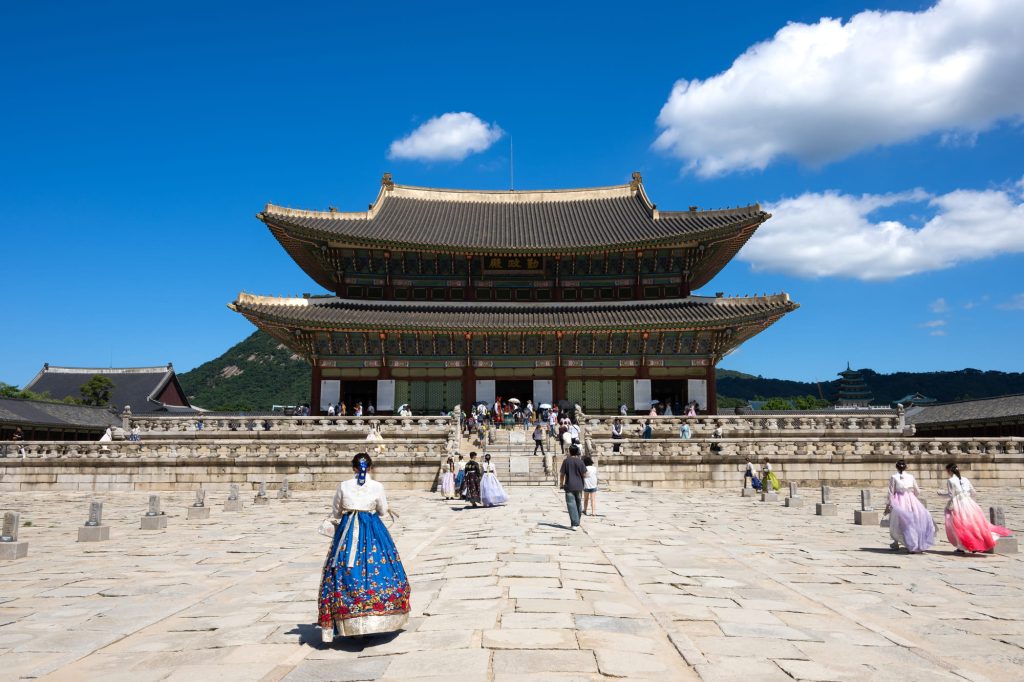
Most first-time visitors arrive expecting Tokyo-level or Singapore-level prices and are pleasantly surprised. Public transport is inexpensive by any international standard — a subway ride across Seoul costs about ₩1,550, and a KTX high-speed train from Seoul to Busan, a 325 km journey, runs somewhere between ₩45,000 and ₩60,000 depending on the train and how far ahead you book. Restaurant meals at local spots are genuinely affordable, and the convenience store culture (CU, GS25, 7-Eleven, Emart24 — they’re everywhere and open 24 hours) means you can eat a decent meal for under ₩5,000 almost anywhere in the country.
What pushes budgets up is accommodation in Seoul, and to a lesser extent Korean BBQ dinners, which are wonderful but not cheap once you’re ordering premium cuts and soju for the table. If you’re comparing notes with a friend who visited Japan, the general rule holds: Korea tends to run about 10–20% cheaper than Japan for equivalent quality, mostly because domestic transport and mid-range hotels cost less. Flights and five-star hotels land in roughly the same range in both countries.
Flights: usually your single biggest expense
For a lot of travelers, especially those flying from North America, Europe, or Australia, the flight itself outweighs everything else in the trip combined. Round-trip fares to Incheon (ICN) vary hugely by origin and season:
- From the US West Coast: roughly $700–$1,100 in economy during normal periods, climbing past $1,400 around cherry blossom season (April) and Chuseok (a major Korean holiday in September or October, depending on the lunar calendar).
- From Europe: typically $800–$1,300, often with a layover through the Middle East or Southeast Asia.
- From Southeast Asia and Australia: frequently under $500 thanks to competitive budget-carrier routes.
Booking three to four months ahead generally saves you a meaningful amount — often $150–$300 — compared to booking a few weeks out. If your dates are flexible, flying into Incheon on a Tuesday or Wednesday and avoiding the days immediately around major Korean holidays will also keep prices down.
Accommodation: where your budget style actually shows up
This is the category with the widest spread, and it’s the one place where your choice of neighborhood matters almost as much as your choice of hotel star rating. Seoul areas like Myeongdong, Hongdae, and Itaewon have the deepest inventory of budget-to-mid-range options; staying near Gangnam or Cheongdam pushes prices up regardless of the property’s actual quality.
Hostels and guesthouses: ₩25,000–₩55,000 ($19–$41) per night for a dorm bed, or ₩60,000–₩110,000 ($45–$83) for a private room in a guesthouse. Hongdae and Myeongdong have the best selection for solo travelers.
Budget hotels (2–3 star, business hotel style): ₩70,000–₩130,000 ($53–$98) per night. Korean business hotels punch well above their category — clean, efficient, often better maintained than a similarly priced “boutique” option elsewhere.
Mid-range hotels (3–4 star): ₩150,000–₩260,000 ($113–$196) per night.
Hanok stays (traditional Korean houses, often in Bukchon): ₩180,000–₩350,000 ($135–$263), and worth at least one night for the experience even if you’re otherwise on a budget.
Luxury (5-star, Signiel, Josun Palace, Four Seasons and similar): ₩450,000 and up, with the sky effectively the limit — suites at the top properties run past ₩2,000,000 a night.
A practical note: hotel prices in Seoul swing 40–100% between low season (January–February, excluding Lunar New Year) and peak season (April and October). If your travel dates are flexible, this is the single biggest lever you have for cutting a Korea trip’s cost.
Food: the good news category
Korea is genuinely one of the more food-budget-friendly countries in East Asia, and the range of price points is enormous without a corresponding drop in quality at the bottom end.
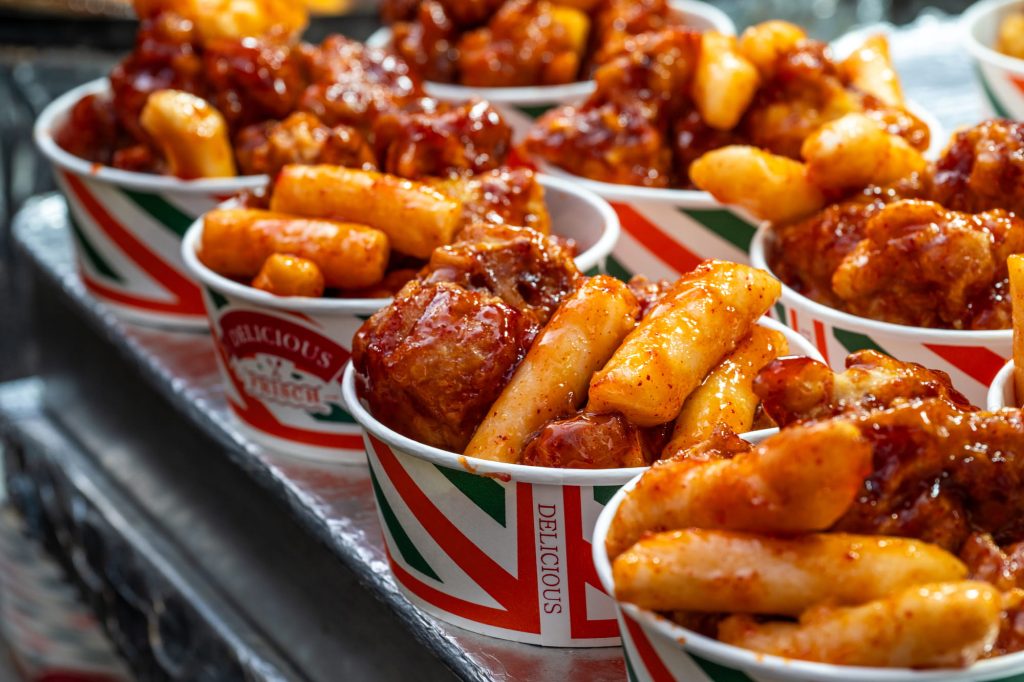
- Street food and convenience stores: ₩3,000–₩7,000 per item or meal. A tteokbokki portion, a triangle kimbap, a convenience store dosirak (boxed meal) — this is where solo backpackers keep costs down without eating badly.
- Casual sit-down restaurants: ₩8,000–₩16,000 per person for dishes like bibimbap, kimchi jjigae, or a bowl of naengmyeon.
- Korean BBQ: ₩15,000–₩25,000 per person for standard pork belly (samgyeopsal) at a normal neighborhood spot; ₩35,000–₩60,000 per person if you’re ordering premium Korean beef (hanwoo) at a nicer restaurant. Add soju (around ₩4,000–₩5,000 a bottle) and this is where an evening can quietly become the most expensive meal of the trip.
- Cafés: ₩5,000–₩8,000 for a coffee, more at the well-known view cafés in areas like Seongsu or Hannam.
- Fine dining, including several Michelin-listed restaurants in Seoul: ₩80,000–₩250,000+ per person for tasting menus.
A realistic daily food budget for someone eating a mix of street food and casual restaurants, with one nicer meal every couple of days, is ₩30,000–₩45,000 ($23–$34) per person.
Getting around: cheap, and cheaper with the right card
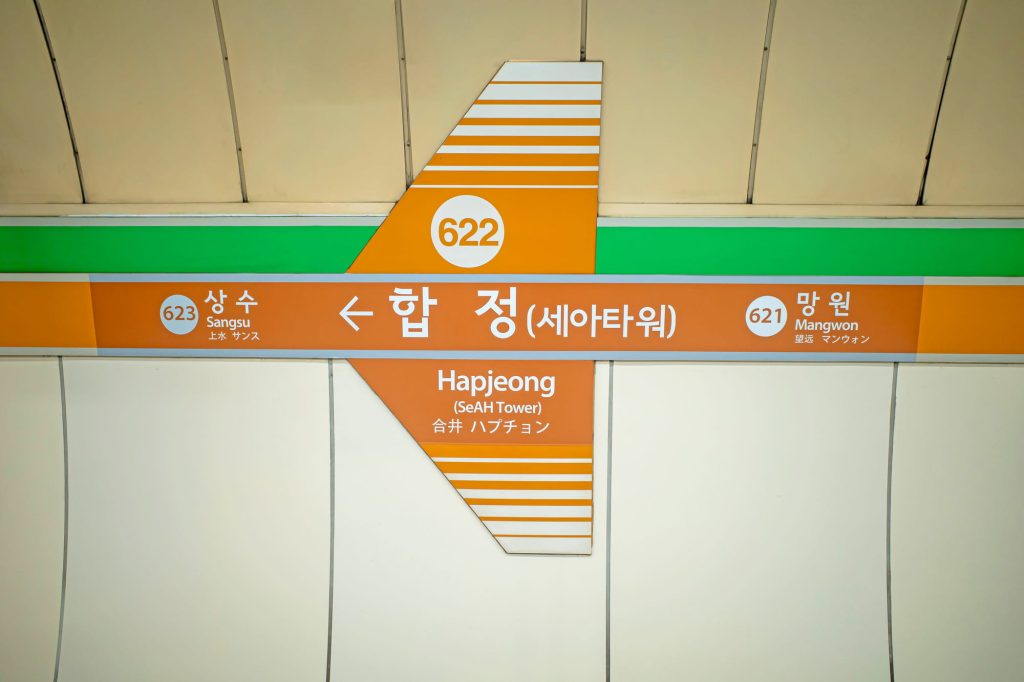
Buy a T-money card on day one — it’s sold at any convenience store for ₩2,500–₩4,000 and works on subways, buses, and most taxis across the entire country, not just Seoul. A single subway ride with T-money costs ₩1,550, and transferring between bus and subway within 30 minutes doesn’t cost you a second base fare, only the distance difference. For a week-long trip, loading ₩35,000–₩50,000 onto the card comfortably covers daily transit.
If you’re planning to ride the subway constantly and stay only in Seoul, the Climate Card offers short-term tourist passes (1, 3, 5, and 7-day options) that can work out cheaper than paying per ride if you’re taking more than 10–12 trips in that window.
Intercity travel adds up depending on how far you range:
- KTX Seoul–Busan: ₩45,000–₩60,000 one-way.
- KTX Seoul–Gyeongju (via Singyeongju): roughly ₩45,000 one-way.
- Intercity or express buses, often 20–30% cheaper than KTX for the same route, if you don’t mind the extra hour or so.
- Taxis in Seoul: base fare around ₩4,800 for the first 1.6 km, then roughly ₩100 per 131 meters after. Cross-city taxi rides typically run ₩10,000–₩20,000, which is reasonable for groups of three or four splitting the fare but adds up fast for solo travelers.
Attractions, activities, and the things people forget to budget for
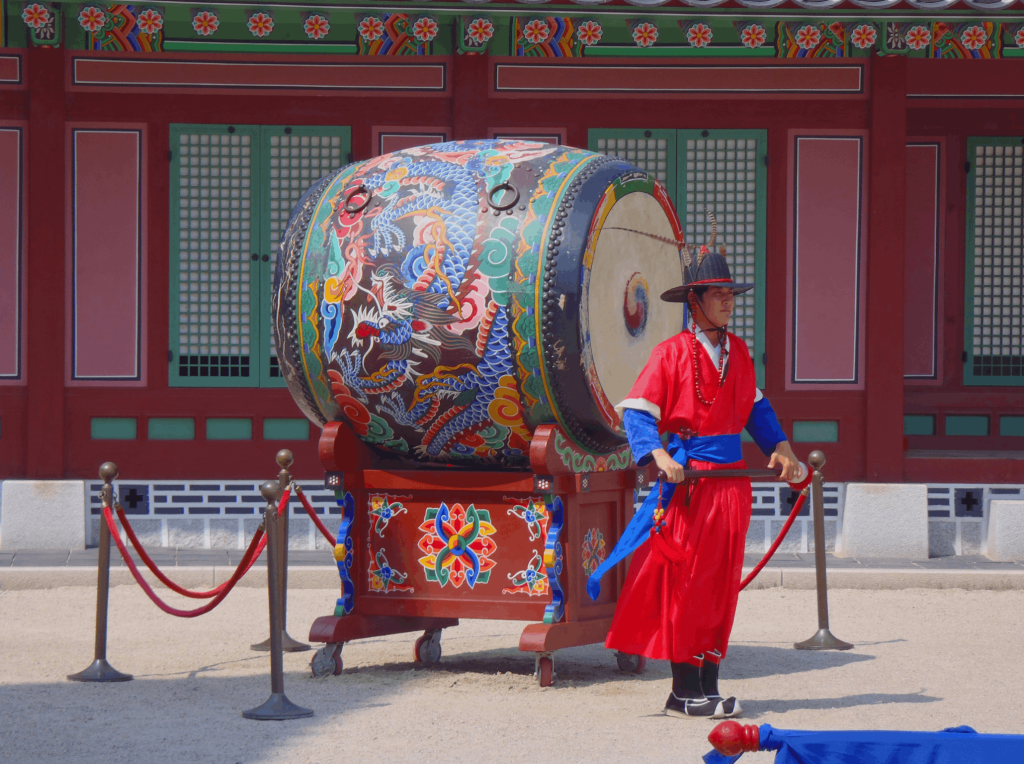
Most of Seoul’s palaces — Gyeongbokgung, Changdeokgung, Deoksugung — charge modest entry fees of ₩1,000–₩3,000, and several offer free entry if you’re wearing a hanbok, which is one reason hanbok rental shops around Bukchon do such steady business. Museums are similarly inexpensive, often free.
Where costs jump: guided tours. A DMZ day tour with JSA access runs ₩100,000–₩130,000 per person; without JSA, expect ₩50,000–₩75,000. A cooking class runs ₩50,000–₩90,000. Theme parks like Everland or Lotte World charge ₩60,000–₩80,000 for a day pass. None of these are essential, but most itineraries include at least one or two, and it’s easy to underestimate how quickly ₩50,000-here, ₩80,000-there adds up over a week.
Shopping is its own category entirely and genuinely optional, but K-beauty products, Korean fashion, and electronics are common enough purchases that they’re worth a separate line in your budget — see our Korea Tax Refund Guide for how to claim back a portion of what you spend, since the VAT refund on eligible purchases over ₩15,000 is one of the easiest ways to recover money you’re already spending.
Sample budgets: 3, 5, and 7 days in Seoul
3 days, mid-range, solo traveler: Accommodation (2 nights, mid-range hotel): ₩360,000 Food: ₩100,000 Transport: ₩25,000 Activities and one guided tour: ₩90,000 Total: roughly ₩575,000 ($430), excluding flights
5 days, mid-range, couple (costs per person): Accommodation (4 nights, split two ways): ₩350,000 Food: ₩180,000 Transport: ₩40,000 Activities, including one day trip: ₩130,000 Total: roughly ₩700,000 per person ($525), excluding flights
7 days, mid-range, including one KTX day trip to Busan or Gyeongju: Accommodation (6 nights): ₩900,000 Food: ₩280,000 Transport, including KTX round trip: ₩150,000 Activities: ₩180,000 Total: roughly ₩1,510,000 ($1,135), excluding flights
These numbers assume a comfortable but not extravagant pace — one Korean BBQ dinner every two or three days, a mix of subway and the occasional taxi, and a couple of paid attractions or tours worked into the itinerary.
Regional cost differences: Seoul vs Busan vs Jeju vs Gyeongju
Seoul sets the reference price in most people’s minds, but it’s also the most expensive city in the country by a clear margin, and the gap is worth planning around if your itinerary covers more than one region.
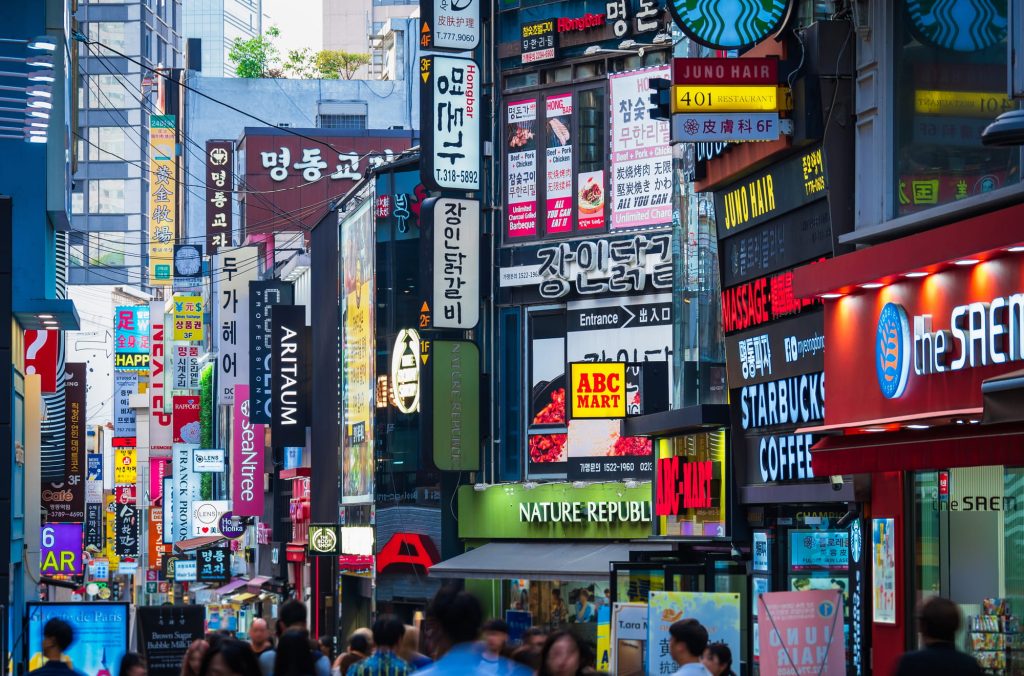
Busan runs roughly 15–20% cheaper than Seoul on accommodation, largely because there’s more supply relative to demand outside of peak beach season (July–August), when Haeundae and Gwangalli hotel prices spike sharply. Food costs are similar to Seoul, though the seafood at Jagalchi Market is arguably better value for the quality. If your trip includes both cities, it’s worth reading our Seoul vs Busan comparison and our breakdown of how to get from Seoul to Busan to plan the transport leg efficiently.
Gyeongju, the old Silla-dynasty capital, is noticeably cheaper across the board — hotels, food, and attractions all run 20–30% below Seoul prices, and many of the historical sites (Cheomseongdae, the Daereungwon tomb complex) are free or nearly free to enter.
Jeju Island is the outlier: flights and car rental push costs up, but once you’re on the ground, food and accommodation outside the resort strips are comparable to mainland prices. A rental car is close to essential on Jeju, since public transport doesn’t cover the island well, and adds roughly ₩50,000–₩80,000 a day depending on the vehicle and season, plus fuel.
The practical upshot: a two-city or three-city itinerary that includes a couple of days outside Seoul usually pulls your average daily cost down, not up, even after accounting for the KTX or bus fare to get there.
Extra costs first-timers forget to budget for
A few line items don’t show up in most budget breakdowns but reliably appear on real trips:
eSIM or SIM card: ₩15,000–₩35,000 for a data-only eSIM covering a week to ten days, or a bit more for a physical SIM with a Korean phone number. Airport pickup counters at Incheon also rent pocket WiFi devices for a similar daily rate, which makes sense for groups sharing one device.
Travel insurance: varies enormously by provider and home country, but budget $30–$80 for a one to two week trip if you don’t already have annual coverage. Not legally required, but worth having given how easy it is to twist an ankle on Busan’s hills or Seoul’s palace grounds.
Luggage storage: coin lockers at major stations and subway stops run ₩2,000–₩4,000 for a few hours, useful on days when you check out of a hotel before an evening flight.
Airport transport: the AREX express train from Incheon to Seoul Station costs ₩11,000 one-way and takes 43 minutes; the AREX all-stop train is cheaper (₩4,750) but slower. A limousine bus to central Seoul runs ₩18,000–₩19,000. A taxi is ₩60,000–₩80,000 depending on traffic and destination. See our Incheon Airport to Seoul guide for the full comparison.
Convenience and impulse spending: the sheer density of convenience stores, dessert cafés, and street food stalls in Seoul means most travelers spend more on small, unplanned purchases than they expect — a coffee here, a hotteok there. It rarely breaks a budget, but padding your daily food estimate by 10–15% for this is realistic.
A note for families and small groups
Traveling with kids changes the math less than you’d think, since most Korean attractions and transport offer child discounts, and hotel rooms sized for families are widely available without a dramatic price jump over a standard double. The bigger factor is pace: families typically build in more downtime and fewer paid tours per day, which tends to offset the extra cost of a larger hotel room. A family of four traveling mid-range should budget roughly 2.5–3x a solo mid-range budget rather than a full 4x, largely because accommodation doesn’t scale linearly and several attractions charge per family rather than strictly per head.
Money-saving habits that actually move the needle
Traveling in the shoulder seasons (late May–early June, or November) rather than peak April and October cuts accommodation costs by 25–40% with only a modest tradeoff in scenery. Eating your main meal of the day at lunch rather than dinner is often 20–30% cheaper at the same restaurant, since many places run lunch specials. Convenience store meals are not a downgrade the way they might be elsewhere — CU and GS25 have genuinely decent prepared food, and locals eat there too. And skipping one or two of the “must-do” paid tours in favor of a free walking tour or a self-guided palace visit rarely costs you much in experience.
What tipping, cards, and cash actually look like
There is no tipping culture in Korea. Restaurants and cafés don’t expect it, and leaving cash on the table sometimes just confuses staff, who will chase you down to return it. Card payments are accepted almost everywhere, including small vendors, though a handful of traditional markets and street food stalls remain cash-preferred. Bringing around ₩50,000–₩100,000 in cash for a week-long trip, on top of a card for everything else, covers the gaps comfortably. ATMs at convenience stores (particularly those with the Global ATM logo) reliably accept foreign cards, though not every ATM in Korea does — bank-branch ATMs and 7-Eleven ATMs are the most consistent.
Is South Korea more expensive than Japan?
This comes up constantly, and the short answer is: generally, no. Seoul runs roughly 8–12% cheaper than Tokyo for day-to-day expenses like food, local transport, and attraction entry, though hotel prices land in a similar range in both cities. Domestic high-speed rail is noticeably cheaper in Korea — a KTX ticket costs less than an equivalent Shinkansen fare for a comparable distance. Where the two countries roughly match is international flights and five-star accommodation.
Frequently asked questions
How much money do I need for a 10-day trip to South Korea? For comfortable mid-range travel — 3-star hotels, a mix of street food and sit-down restaurants, a couple of paid attractions — budget $1,300–$1,900 excluding flights. Backpackers can manage $700–$950 over the same period.
What’s the cheapest time of year to visit Korea? January and February, outside of Lunar New Year. Flights run 30–50% cheaper than during April or October, and hotel rates drop by a similar margin. The tradeoff is genuinely cold weather, which shifts the trip more toward museums, cafés, and indoor markets than outdoor sightseeing — though it also makes it the best season for a ski trip if that’s on your list.
Is tipping expected anywhere in Korea? No, not at restaurants, bars, taxis, or hotels. Some high-end hotels add a service charge automatically to the bill, but that’s built into the listed price, not an extra you need to add yourself.
Do I need cash, or can I use my card for everything? Cards work almost everywhere in cities. Carrying some cash is still useful for smaller traditional markets, some street food stalls, and as a backup, but you won’t be caught out relying mainly on a card.
Is it cheaper to book tours in advance or in Korea? For most day tours and activities, prices are the same whether you book from home or after you land, though popular slots — the DMZ tour especially — sell out days in advance during peak season, so booking ahead is about availability more than price. Palace and museum tickets are cheapest bought on-site, since there’s rarely any online booking markup to avoid in the first place.
How much should I set aside for shopping? This is the most personal number in the whole budget. Someone doing a focused K-beauty haul at Olive Young can easily spend ₩200,000–₩400,000 without trying hard, while someone uninterested in shopping might spend closer to ₩50,000 on souvenirs for the whole trip. If skincare or fashion shopping is a trip priority, it’s worth reading our K-Beauty shopping guide before you go, since knowing which products and stores are worth the trip prevents a lot of the impulse overspending that tends to happen in Myeongdong.
A Korea trip can genuinely be built around almost any budget without feeling like a compromise — the country’s mid-range default (a decent hotel, good food, cheap transit) is simply better value than most people expect walking in. The version of the trip that gets expensive is the one where every dinner is Korean BBQ and every hotel is five-star, which is a fine way to travel if that’s the plan, but it’s a choice, not a requirement.