
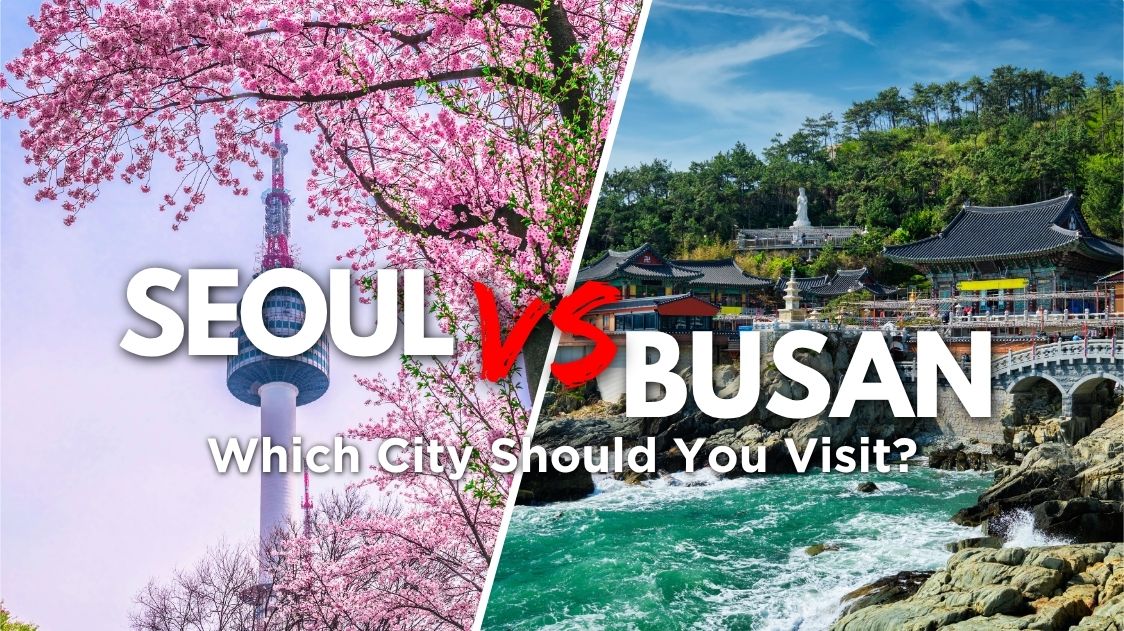
Most first-time visitors to South Korea arrive planning to see Seoul and wonder if they should add Busan. The answer is almost always yes: but the more useful question is whether Busan deserves equal billing rather than a quick two-night appendix at the end of a Seoul trip.
This guide compares the two cities honestly: what each does well, what it does not, and how to decide which deserves more of your time based on what you are actually looking for.
Exchange rates June 2026: ₩1,500 = $1 USD / ₩1,680 = €1 EUR
The Short Answer
Go to Seoul if: You are visiting South Korea for the first time and want the full range: history, culture, food, nightlife, K-beauty, and modern urban life in one city.
Go to Busan if: You want the ocean, a more relaxed pace, exceptional seafood, and a city that has its own distinct identity rather than feeling like a smaller version of Seoul.
Do both if: You have five or more days. The KTX takes 2 hours 30 minutes between the two cities. Doing Seoul first and Busan second (or vice versa) is the standard Korea itinerary for a reason: the contrast between the two cities is part of what makes a trip to Korea interesting.
Size and Scale
Seoul is the 25th largest metropolitan area in the world by population: approximately 9.7 million in the city proper, 25 million in the greater metropolitan area. It is one of the densest cities in Asia, with 23 subway lines and an urban footprint that takes over an hour to cross by transit.
Busan has a population of approximately 3.3 million and a completely different physical character. Where Seoul is landlocked and spread across a broad plain, Busan is squeezed between mountains and the sea. The city runs in narrow valleys between ridges, with neighbourhoods stacked up hillsides that fall directly into the Korea Strait. It is a city of views, textures, and verticality.
The practical implication: Seoul requires planning to see efficiently. Busan rewards wandering.
Location and Setting
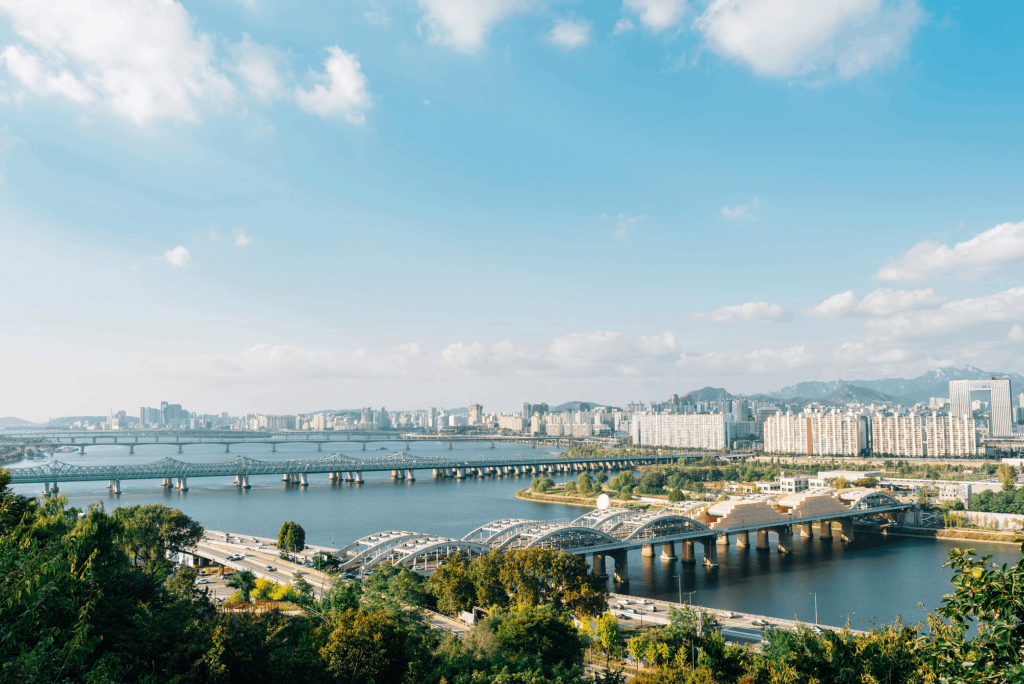
Seoul sits in the northwest of South Korea, 50 kilometres from the North Korean border. The Han River runs through it east to west. Mountains ring the city: Bukhansan to the north, Namsan at the centre, Gwanaksan to the south: but they are backdrop rather than presence. The city is enormous and flat in its commercial core.
Busan sits at the southeastern tip of the peninsula where the Korean peninsula meets the Korea Strait. The coast is the defining feature: Haeundae Beach, Gwangalli Beach, the cliff-lined headlands of Taejongdae, the tidal fishing village of Dadaepo. The mountains do not frame the city from a distance: they push through it. Gamcheon Culture Village is built directly into a hillside. The ridge trails above Haeundae give views of the sea on one side and the city below on the other.
If natural setting matters to you, Busan wins. Seoul’s setting is impressive from a historical standpoint, but it is not a beautiful city in the way that Busan, Hong Kong, or Sydney are beautiful cities.
History and Culture
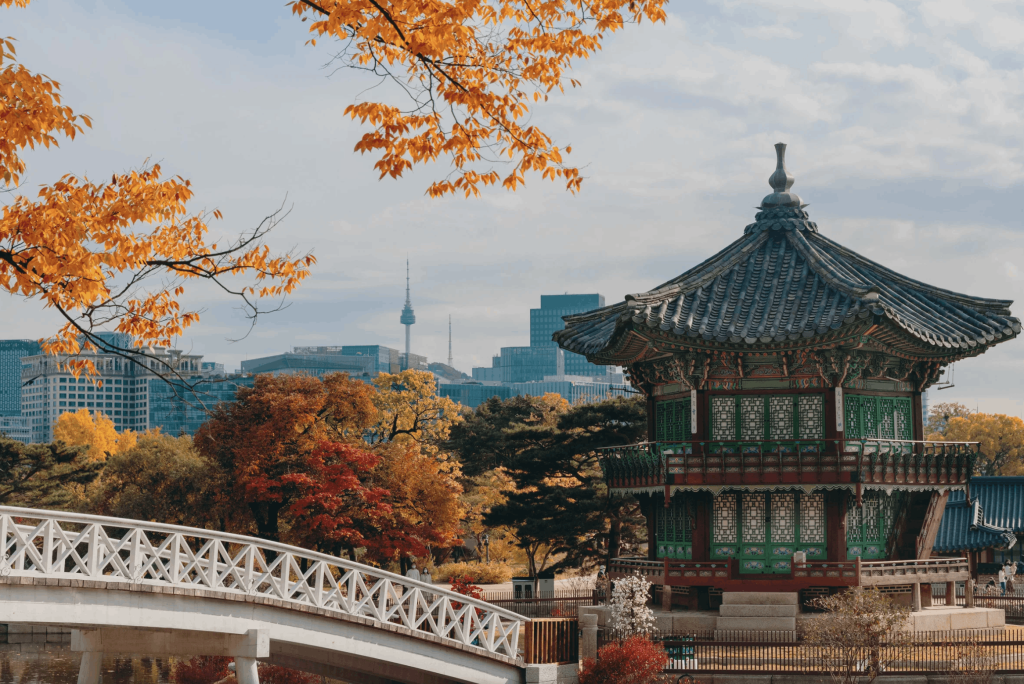
Seoul is the more historically significant of the two. As the capital of the Joseon Dynasty from 1392 to 1897 and the current capital of South Korea, it holds the major palaces (Gyeongbokgung, Changdeokgung), the royal tombs, and the institutional collections that come with 600 years as the seat of government. The National Museum of Korea, the National Folk Museum, and the National Palace Museum are all here. Bukchon Hanok Village and Insadong preserve a readable layer of traditional urban life within what is otherwise a thoroughly modern city.
Busan’s historical identity is different: it is the city Korea escaped to. During the Korean War (1950–53), Busan was the last city not to fall to North Korea and served as the temporary capital. The UN Memorial Cemetery, the only UN cemetery in the world, is here. The city rebuilt itself rapidly after the war and has the slightly improvised, rough-edged character of a place that grew fast under pressure.
Busan does not have palaces or ancient monuments in the Seoul sense. Its history is visible in a different way: the informal density of Gamcheon, the fishing culture of Jagalchi Market, the memorial infrastructure of the war period.
Food
This is the comparison that generates the most argument and the most genuine regional pride.
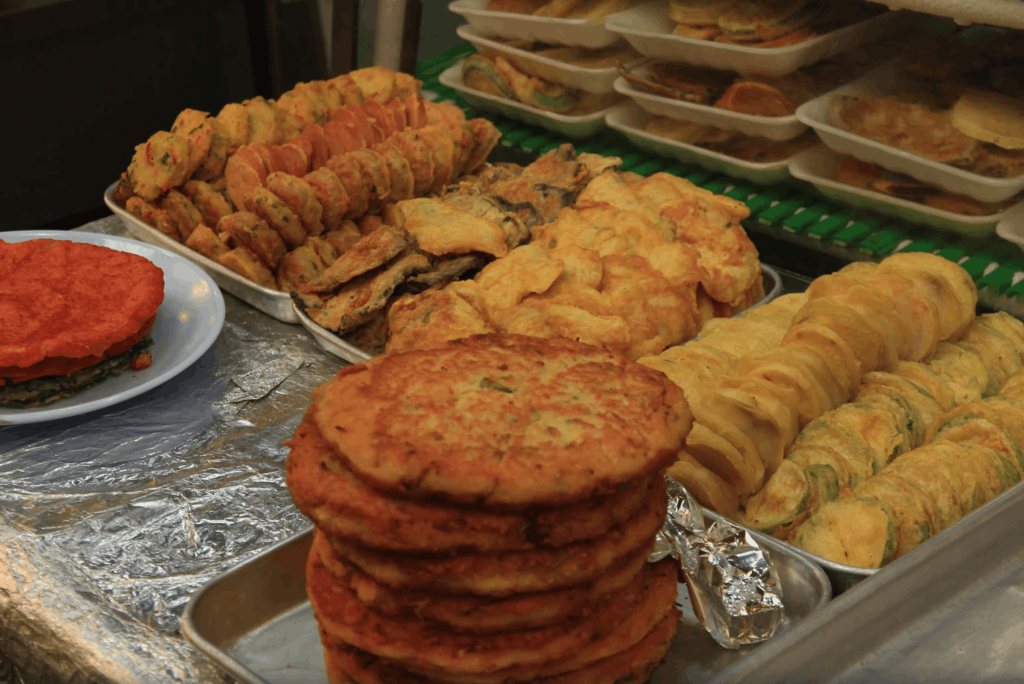
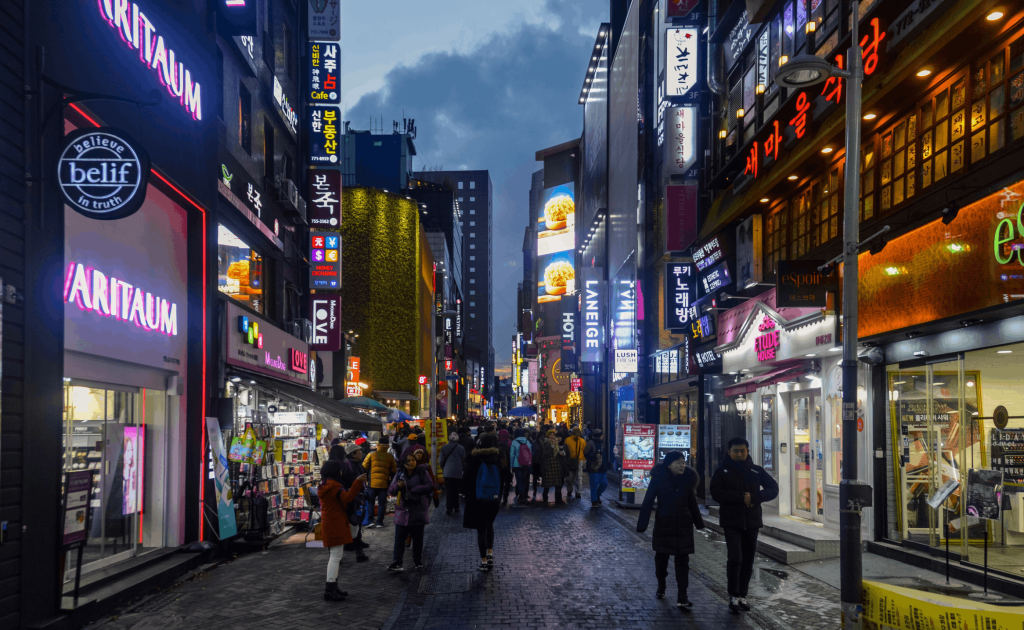
Seoul has the variety. Every regional Korean cuisine, every international cuisine, every price point from ₩3,000 street food to ₩300,000 tasting menus exists here. The concentration of Michelin-starred restaurants is high. The street food culture in Myeongdong, Gwangjang Market, and the university districts is excellent. The food is good and the options are limitless.
Busan has the identity. The city’s food culture is built around the sea in a way that Seoul’s is not: raw fish (hoe) prepared at Jagalchi Market, giant portions at the coastal seafood restaurants, dwaeji gukbap (pork rice soup, a Busan invention eaten at 24-hour restaurants), ssiat hotteok (seed-filled sweet pancakes unique to Busan, sold at BIFF Square), milmyeon (cold wheat noodles, another Busan original). Eating in Busan feels more specific. The dishes you are eating came from here.
If you eat fish, Busan. If you want maximum variety, Seoul. If you want the most interesting single meal of a Korea trip, Jagalchi Market in Busan: pick a live fish or crab from the tank on the ground floor, have it prepared upstairs, eat it at a folding table overlooking the port.
Author’s Tip: Dwaeji gukbap is the dish that best explains Busan. A milky pork bone broth with tender slices of pork, served with rice and kimchi, available 24 hours at the unpretentious restaurants around Seomyeon and Nampodong. It costs ₩9,000–₩12,000 (~$6–$8 / €5.35–€7.15) and it is the meal you think about on the flight home.
Beaches
Seoul has no beaches. Busan has some of the best urban beaches in Asia.
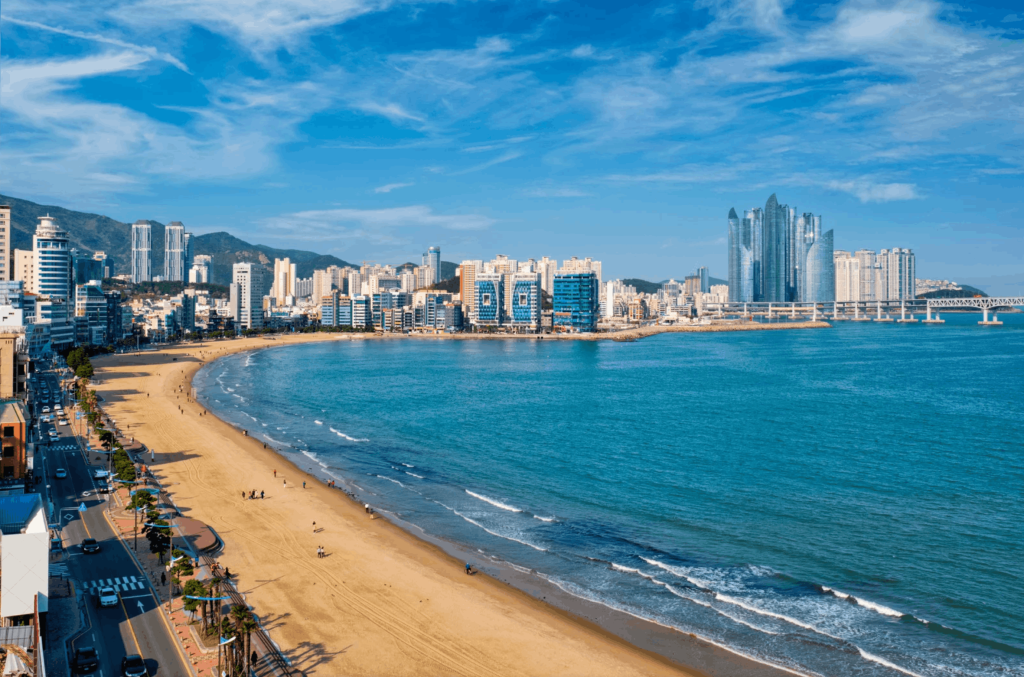
Haeundae Beach is South Korea’s most famous stretch of sand: 1.5 kilometres of pale sand backed by high-rises, surrounded by seafood restaurants, and packed with Koreans from June through August. It is a proper beach in a way that most Asian city beaches are not.
Gwangalli Beach is what locals prefer: shorter, with a better view (the Diamond Bridge is directly offshore and illuminates dramatically at night), and a livelier bar and restaurant scene on the esplanade behind it. Best visited at night.
Songjeong Beach is the quieter alternative: 30 minutes north of Haeundae, smaller, with a strong surf culture and a more local crowd.
If beach access is a priority, it is not a close competition. Busan wins by default.
Nightlife
Seoul’s nightlife is centred on Hongdae (live music, indie bars, university energy), Itaewon and Hanam-dong (international bars, cocktail focus, diverse crowd), and Gangnam (upscale clubs and late-night dining). It runs late: the subway stops at midnight but taxis and night buses fill the gap, and most clubs do not start properly until 01:00.
Busan’s nightlife is concentrated in Seomyeon (Busan’s downtown entertainment district, densely packed with bars, karaoke, fried chicken restaurants), Gwangalli (beachfront bars with the bridge view), and Haeundae (resort-area nightlife, more international in summer). Less frenetic than Seoul’s peak districts but more relaxed and, in summer, genuinely good.
Seoul for serious nightlife. Busan for a comfortable evening that does not require planning.
Getting Around
Seoul requires the subway. The network is excellent: 23 lines, English signage throughout, trains every 3–5 minutes, connects virtually everything. But the city is large enough that a day of sightseeing involves multiple metro trips and real transit time between sites.
Busan has four subway lines and a light rail. Within central Busan (Seomyeon, Nampodong, Nampo, Haeundae), the subway is efficient. Between some of the more spread-out sites: Taejongdae, Haedong Yonggungsa, Gamcheon: taxis are more practical. Busan is smaller and more physically dramatic, which means some of the best things to do require going up hills that the subway does not serve.
Practicalities: Accommodation and Cost
Seoul accommodation runs across a wide price range. Budget hostels from ₩20,000–₩40,000/night (~$13–$27 / €12–€24); mid-range business hotels ₩100,000–₩200,000/night (~$67–$133 / €60–€119); luxury from ₩350,000/night (~$233 / €208) upward.
Busan runs approximately 20–30% cheaper than Seoul for equivalent accommodation. A mid-range hotel that would cost ₩150,000/night in Seoul costs ₩100,000–₩120,000/night in Busan. The beach areas (Haeundae, Gwangalli) are more expensive in summer; the centre (Seomyeon, Nampo) is better value year-round.
How Many Days Does Each City Need?
Seoul: Three days minimum to cover the main highlights at a comfortable pace. Five days for a more complete experience including neighbourhoods like Seongsu-dong, Hongdae, and a day trip. More if you want depth in any single area.
Busan: Two days covers the essential sights: Gamcheon, Haedong Yonggungsa, Jagalchi Market, a beach, BIFF Square, a night out on Gwangalli. Three days is better and allows Taejongdae, Haeundae Blueline Park, and the fish market at a slower pace.
Who Should Prioritise Seoul
- First-time visitors to South Korea
- Travellers interested in Korean history and palace architecture
- K-beauty shoppers who want maximum product selection
- Anyone whose trip includes Gyeongju, Jeonju, or the DMZ (better transport connections)
- Short trips of three to four days (more to see per day, better transit between sites)
Who Should Prioritise Busan
- Travellers who want the ocean and coast as part of the experience
- Food travellers with a focus on seafood
- Anyone who finds very large cities overwhelming
- Travellers on their second or third visit to Korea
- People doing the Seoul-Gyeongju-Busan route (Busan is the natural endpoint)
The Ideal Korea Itinerary
For a first visit of seven to ten days:
7 days: 4 days in Seoul, 3 days in Busan. KTX between the two (2 hours 30 minutes). Optional one-night stop in Gyeongju on the way south.
10 days: 4 days Seoul, 2 days Gyeongju, 4 days Busan. This is the route most repeat visitors wish they had done the first time.
Short trip (4–5 days): Seoul only, with a possible day trip to Suwon or Nami Island. Busan is doable as a day trip from Seoul (KTX leaves at 07:00, arrive 09:30, full day, return by 21:00) but it does not do justice to the city.
When to Visit: Seoul vs Busan by Season
The best time to visit each city differs slightly: Busan’s coastal position gives it milder winters and more humid summers than Seoul.
Spring (March to May)
Both cities are at their most photogenic. Cherry blossoms peak in late March to mid-April: Seoul’s Yeouido Park and the path along the Cheonggyecheon stream are the famous spots; Busan’s Nakdong River banks and the grounds of UN Memorial Cemetery are less crowded alternatives. Temperatures are comfortable for walking (10–20°C), the skies are clear, and neither city is at maximum tourist density yet.
Spring is the most popular season for both cities. Book accommodation 4–6 weeks ahead for mid-April visits.
Summer (June to August)
Seoul in summer is hot and humid (28–35°C) with a monsoon period running late June to late July. The heat is manageable with the right itinerary: mornings for outdoor sites, afternoons in air-conditioned museums or shopping. The Han River parks are busy with locals cycling and picnicking.
Busan in summer is better suited to the heat because the sea breezes and beach access give it a release valve Seoul does not have. Haeundae and Gwangalli beaches are packed but functional. The water temperature in the Korea Strait reaches 24–26°C in August: genuinely swimmable. Summer is Busan’s peak season and accommodation prices reflect it.
Autumn (September to November)
The best season for both cities. Temperatures settle between 10–22°C, skies are clear, and the foliage turns from mid-October. Bukhansan in Seoul and the ridge walks above Haeundae in Busan are particularly good in October. Gyeongju, a natural day trip from Busan, is at its most beautiful.
Autumn is also when both cities host their biggest events: the Busan International Film Festival (BIFF) runs in early October, bringing international attention and significantly inflated hotel prices. Seoul’s various cultural events in the palace grounds run through October.
Winter (December to February)
Seoul in winter is genuinely cold: temperatures regularly drop below -5°C and occasionally reach -15°C with wind chill. The upside is that accommodation prices drop 30–50%, the major sites are uncrowded, and the palaces under snow are among the more striking images in Korean travel photography. Pack properly.
Busan in winter is milder than Seoul: temperatures usually stay between 1–10°C. The sea moderates the worst of the cold. Haedong Yonggungsa Temple at dawn in winter, with mist over the water and almost nobody there, is the best version of the site. Winter is the best time to get Busan’s most popular spots to yourself.
Accommodation: How the Two Cities Compare
Seoul accommodation zones
Myeongdong / Jongno: Tourist-central. Most convenient for palace access and major sightseeing. Hotels from budget guesthouses (₩40,000–₩60,000/night/~$27–$40/€24–€36) to Lotte Hotel Seoul and Four Seasons (₩350,000–₩600,000/night/~$233–$400/€208–€357).
Hongdae: Best value in Seoul for quality. Mid-range hotels ₩80,000–₩150,000/night (~$53–$100/€48–€89), budget hostels ₩25,000–₩45,000/night (~$17–$30/€15–€27). Direct AREX All-Stop connection to Incheon Airport.
Gangnam: Upmarket base for restaurants and shopping. Mid-range ₩150,000–₩250,000/night (~$100–$167/€89–€149). Josun Palace, Park Hyatt, Andaz from ₩280,000–₩700,000/night (~$187–$467/€167–€417).
Busan accommodation zones
Haeundae: Beachfront area, most convenient for the beach and Blueline Park. Summer prices spike significantly. Mid-range ₩120,000–₩200,000/night (~$80–$133/€71–€119). Significant premium in July–August.
Seomyeon: Busan’s downtown entertainment hub. More central, better subway access. Mid-range ₩80,000–₩140,000/night (~$53–$93/€48–€83). Better value than Haeundae year-round.
Nampo / Gwangbok-ro: Budget-friendly, near Jagalchi Market and BIFF Square. Budget guesthouses ₩30,000–₩60,000/night (~$20–$40/€18–€36). Less polished but good location for the market and coastal areas.
Getting Between Seoul and Busan
The KTX high-speed train is the standard connection: 2 hours 30 minutes from Seoul Station to Busan Station on the fastest services, from approximately ₩59,800 (~$40/€36) one-way. Express buses take 4–4.5 hours and cost ₩23,000–₩34,000 (~$15–$23/€13–€20). Flights from Gimpo to Gimhae take 55 minutes in the air but are slower door-to-door than the KTX once airport transfers are included.
For a full comparison of every option with current prices, see the Seoul to Busan transport guide.
Day Trips: What Each City Offers
From Seoul
The network of day trips from Seoul is extensive: Suwon Hwaseong Fortress (30 minutes), Nami Island (1.5 hours), Bukhansan National Park (40 minutes by subway), Jeonju (1 hour 45 minutes by KTX), Gyeongju (2 hours by KTX). The subway and KTX connectivity makes most of central Korea accessible without an overnight.
Full list: Best Day Trips from Seoul
From Busan
Busan’s day trip options are more focused. Gyeongju (50 minutes by KTX) is the most compelling: UNESCO World Heritage sites, royal tomb parks, and temple architecture within easy reach of Busan Station. Tongyeong (1.5 hours by bus) is the most beautiful coastal city in Korea that most visitors miss. Geoje Island (1.5 hours) has some of the best island scenery on the south coast.
FAQ
Is Seoul or Busan better for first-time visitors? Seoul. The concentration of sights, cultural context, and variety makes it the more complete introduction to South Korea. Add Busan on subsequent visits or if you have five or more days on a first trip.
Is Busan worth visiting if I only have one week? Yes, if you use the KTX efficiently. Four days in Seoul and three in Busan is a tight but workable week. Do not try to do both cities in less than five days total.
Which city has better food? Depends on what you are looking for. Seoul has more variety and more fine dining. Busan has more identity: specific dishes that come from here and taste better here than anywhere else. Most travellers who visit both prefer Busan’s food.
Is Busan more affordable than Seoul? Generally yes, 20–30% cheaper for accommodation and comparable for food.
Can I visit both cities in one day? Technically yes: the KTX makes a same-day round trip feasible. But a single day in Busan is not enough time to understand what makes it different from Seoul.
All prices verified June 2026. Exchange rates: ₩1,500 = $1 USD / ₩1,680 = €1 EUR.
👉 Seoul 3-Day Itinerary: Best Route for First-Time Visitors
👉 Best Things to Do in Busan 2026