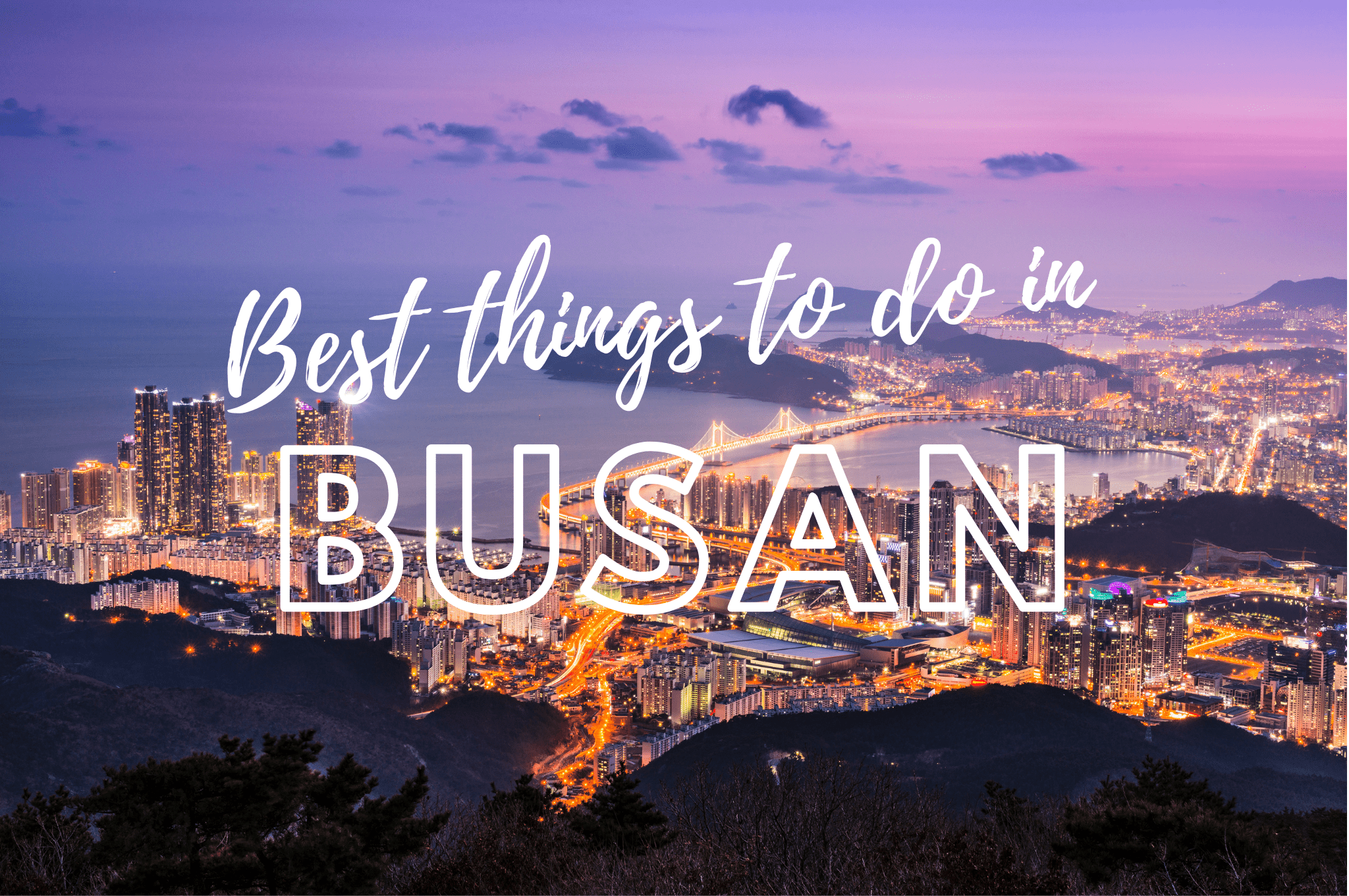
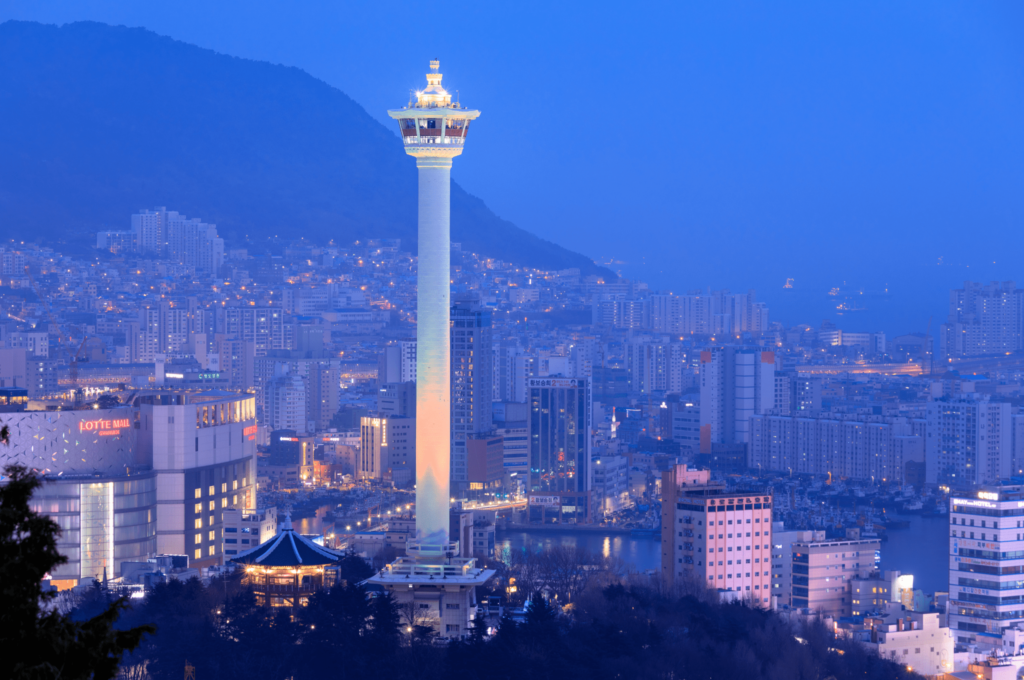
Having made over fifteen separate trips to South Korea’s southern port city over the past decade, I’ve watched Busan shift from a gritty industrial harbour into one of Asia’s most compelling coastal destinations. Travellers often treat it as a quick add-on to a Seoul itinerary, but Busan deserves better than that. Where Seoul feels vertical, relentless, and high-pressure, Busan is sprawling, breezy, and unapologetically itself: a city where jagged mountain ranges drop straight into the East Sea, producing a patchwork of hillside art villages, chaotic fish markets, and neon-lit beachfront avenues.
This guide cuts through the usual listicle approach to give you a practical, honest look at what’s actually worth your time, whether you have half a day or a full week.
Best Time to Visit Busan
When you come directly shapes which version of Busan you experience. The city’s position on the coast gives it milder winters than Seoul, but summer brings real trade-offs.
Spring (April to May)
Early April is spectacular but busy. The cherry blossoms along Dalmaji-gil come out in force, and temperatures sit at a comfortable 14°C to 19°C. It’s probably the most photogenic the city looks all year. If you’re coming for the blossoms specifically, keep an eye on the forecast: the peak window is narrow, usually seven to ten days, and it varies by a week or more depending on the year.
Autumn (October to November)
My favourite time to visit, without question. The skies are clear, rainfall drops to its annual low, and early October brings the Busan International Film Festival (BIFF), one of Asia’s most prominent film events. In 2026, BIFF runs from October 6 to 15. Daytime temperatures average around 16–18°C, light jacket weather, nothing more. The outdoor screenings along the coast run through early October, and the evening sea breeze is actually enjoyable rather than something to escape from.
Summer (June to August)
Summer is a trade-off. The beach areas come alive with night markets and outdoor events, but prices spike during South Korea’s peak holiday season and the humidity makes walking around exhausting. The Jangma monsoon runs from late June through late July, and August brings late-summer typhoon risk from the Pacific. If you visit in summer, keep an eye on the forecast and build flexibility into your days.
Author’s Take: If you have flexibility, aim for the first two weeks of October. You catch the tail end of BIFF, the evening ocean breeze is actually enjoyable rather than sweltering, and outdoor screenings along the coast are still running. It’s probably Busan’s best two weeks of the year.
Top Things to Do
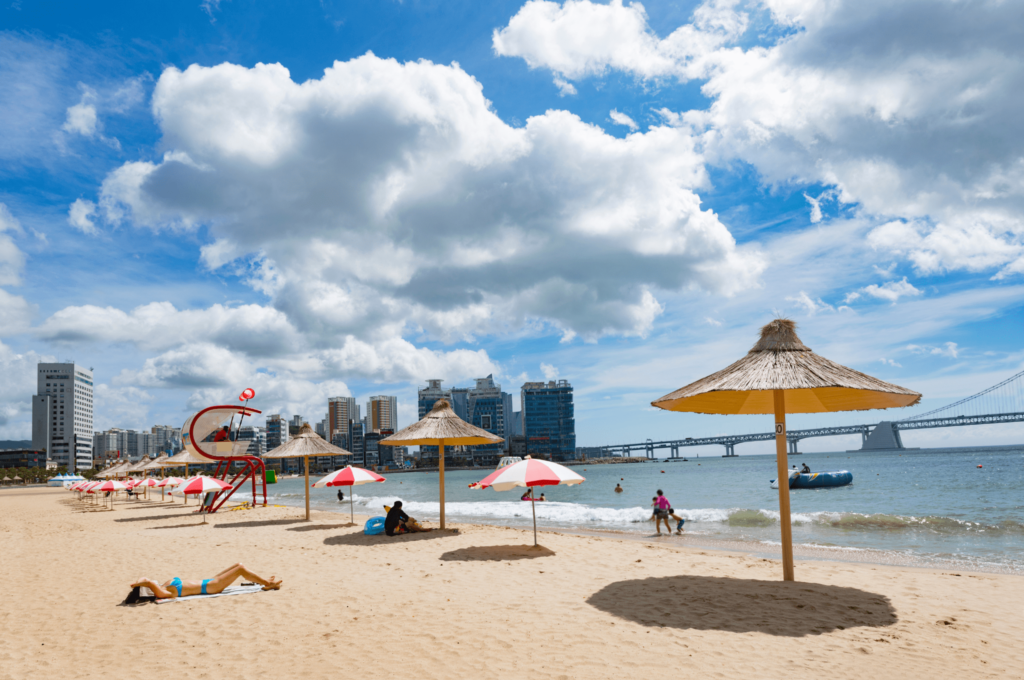
Beaches & Coast
Haeundae Beach: South Korea’s most famous stretch of sand, running roughly 1.5 kilometres with a backdrop of high-rise hotels and the LCT tower complex. The main strip gets crowded fast in summer, on peak weekends it can feel more like a human parking lot than a beach, but walking east toward Mipo, where the beach meets the fishing village, gives you a quieter version of the same scenery.
The Haeundae Blueline Park runs two separate attractions along the old coastal railway line from Mipo toward Cheongsapo and Songjeong. The Sky Capsule, small elevated pods that glide above the track with open ocean views, costs around ₩40,000–₩50,000 (~$27–$33 / €23–€29) per capsule for up to four people, depending on the number of passengers. The Beach Train is a separate ground-level service along the same route, cheaper and more casual. Both book out during peak season, reserve online in advance rather than turning up and hoping. To reach Mipo Station, take Line 2 to Jung-dong Station (exit 7) and walk about 15 minutes along the coast.
Gwangalli Beach: If Haeundae is for the daytime, Gwangalli is built for evenings. The beach faces the Gwangan Bridge (Gwangandaegyo) directly, and the view after dark, with the bridge lit up and the city reflected on the water, is one of the better free sights in Korea. Gwangalli runs a drone light show on Saturday evenings, typically twice a night: March to September at 20:00 and 22:00; October to February at 19:00 and 21:00, weather permitting. Check the current schedule on the Busan Tourism Organisation website before planning your evening around it, as dates can shift for public holidays and special events. The beach itself is narrower than Haeundae and the cafes and restaurants lining the strip are consistently better.
Songdo Beach & Marine Cable Car: Korea’s first officially designated public beach, Songdo has solid family infrastructure and a genuinely scenic cable car. The Busan Air Cruise runs 1.62 kilometres from Songdo Park to Amnam Park directly above the ocean, reaching up to 86 metres above the water. Standard gondolas are enclosed cabins, but glass-bottomed Crystal Cabin gondolas are available at an additional cost if you want the full open-water effect below your feet. Either way, the views over the western coastline are legitimately good. Note that the cable car closes for scheduled maintenance periods each year, confirm it’s operating before making the trip, particularly in late winter or early spring.
Songjeong Beach: Further up the northern coast, this is one of Busan’s better surfing beaches. The sandy shelf here is gentler than the southern beaches, and local surf shops rent boards for beginners. It’s a different pace from the downtown areas: quieter, less polished, and worth the extra transit time if you want a beach that actually feels like a beach rather than an event venue.
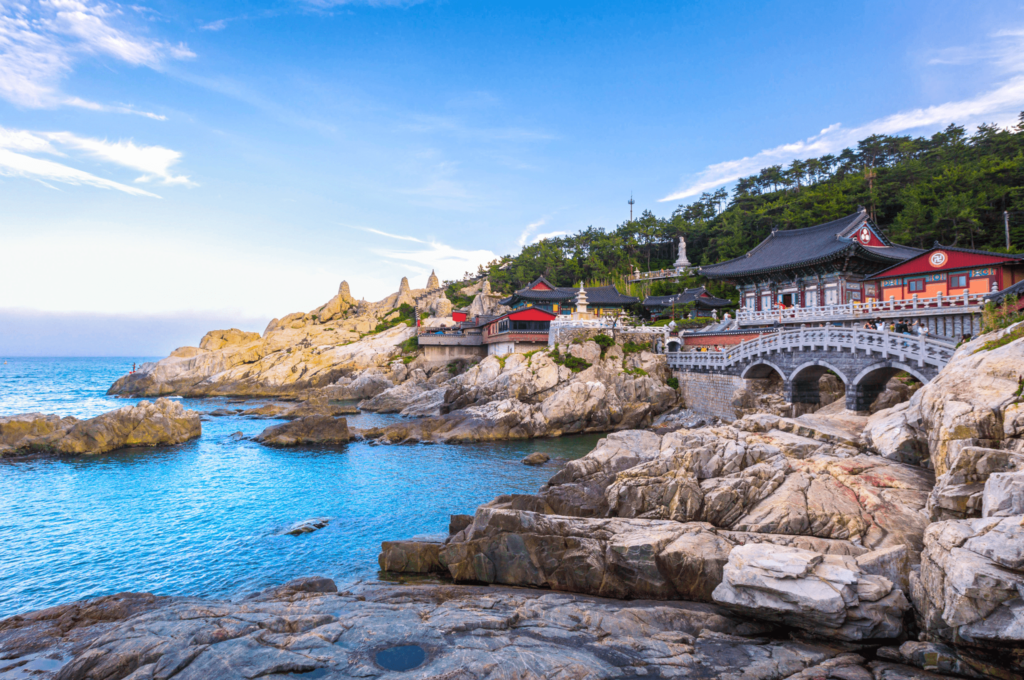
Author’s Tip: Skip the overpriced cafes on Haeundae’s main strip. Instead, catch a local bus up to Haedong Yonggungsa Temple. Unlike most Korean Buddhist temples tucked into mountain valleys far from everything, this one sits directly on ocean rocks. The original temple was founded in 1376 during the Goryeo Dynasty, though the structure you’ll see today dates largely from reconstructions in the 1930s and 1970s, it was destroyed during the Japanese invasions of 1592 and left in ruins for over three centuries. Get there by 8:00 AM before the tour buses arrive.
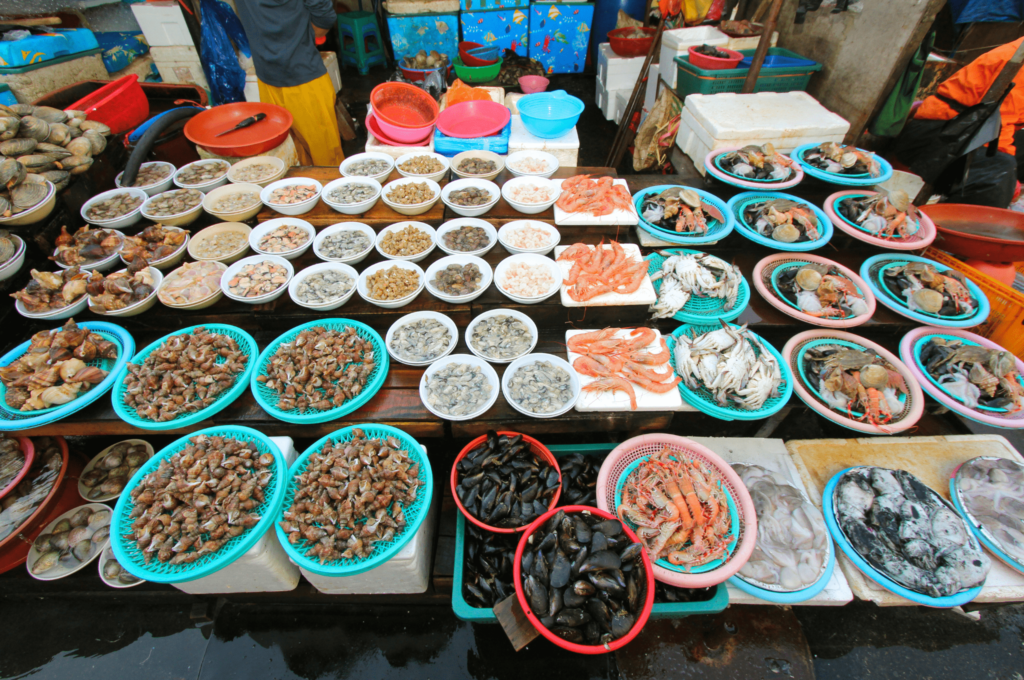
Food
Busan’s food culture was shaped significantly by the Korean War, when the city became a major refuge for people displaced from the north. The result is a culinary character that’s more intense and hearty than you’ll find in most Korean cities, with strong flavours and a heavy emphasis on seafood. The city has its own dishes you genuinely can’t find properly anywhere else.
Jagalchi Fish Market: The heart of Busan’s food identity. The ground floor is a live seafood labyrinth run almost entirely by the Jagalchi Ajumma, local women who’ve worked these stalls for decades and are not shy about flagging you over. You pick whatever looks good (sea eel, flatfish, octopus, red snapper), pay by the weight, and take it to the second-floor kitchens to be prepared raw as Hoe or cooked with a spread of spicy side dishes. It’s loud, wet, and one of the best food experiences in the country. Go hungry and go without a plan, the best meals here are the ones you fall into rather than research in advance.
Gukje Market & Bupyeong Kkangtong Market: These two connected markets are the place for street food. The Busan-specific items to try: Seed Hotteok (a griddle pancake with a molten brown-sugar and pine nut filling, messier and better than the Seoul version) and Bibim Dangmyeon (glass noodles tossed with pickled radish and sesame oil, spicy, chewy, excellent). Both are cheap and available at multiple stalls throughout the market. The markets are also worth wandering for the general atmosphere, a mix of tourist-facing stalls near the entrance and genuinely local commerce further in.
Milmyeon: Busan’s signature cold noodle dish, and one that many visitors miss entirely because it’s less famous than naengmyeon. Unlike the buckwheat naengmyeon you find further north, milmyeon uses wheat flour, widely believed to have come from American food aid during and after the Korean War. The noodles are springy and served in an icy beef broth. On a humid August afternoon, it’s the only thing you want to eat. The best versions are served in no-frills restaurants in the Seomyeon and Busanjin areas, look for places with long queues of locals, not English menus.
Culture & Heritage
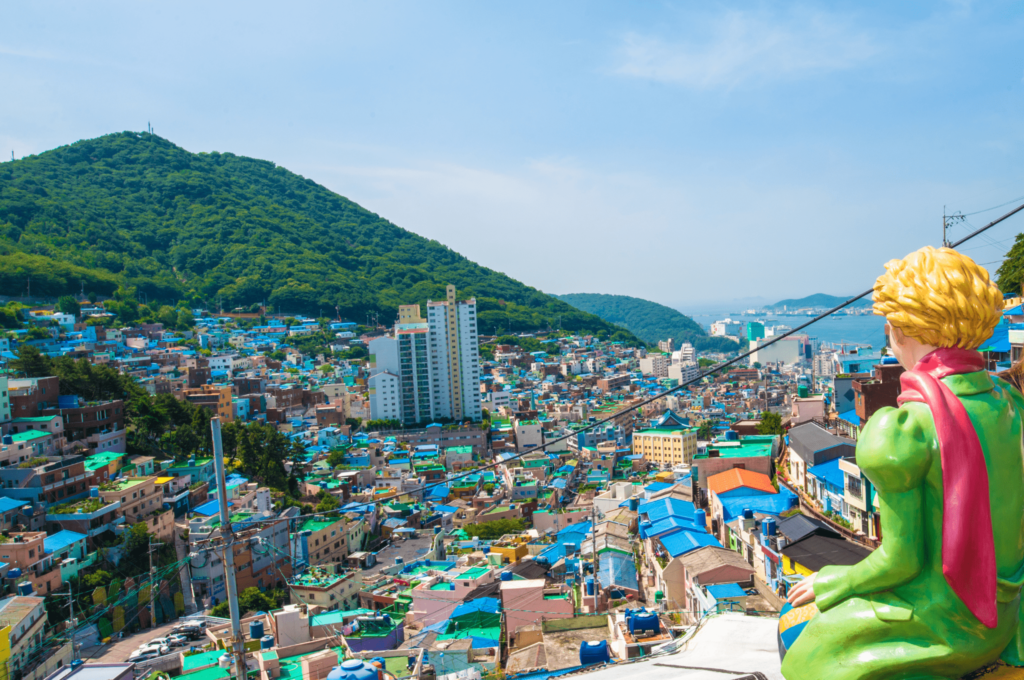
Gamcheon Culture Village: Often called the “Machu Picchu of Busan”, the nickname that the original 2009 revitalisation project actually used, the setting is genuinely unusual. The village was originally settled by war refugees and followers of Taegeukdo, a Korean religious movement, and its densely packed pastel houses climb up a steep hillside in a way that doesn’t look like anywhere else in Korea. A public art initiative starting in 2009, officially called the “Dreaming of Machu Picchu in Busan” project, turned the staircases, walls, and rooftops into an open-air gallery. It’s heavily visited now, and specially on weekends the main paths get genuinely crowded, so go early. Keep in mind it’s still a real residential neighbourhood with real residents, not a theme park.
Beomeosa Temple: Up on the slopes of Mt. Geumjeongsan, well away from the coast, Beomeosa is one of the more atmospheric temple complexes in the country. Founded in 678 AD during the Silla Dynasty by the monk Uisang, it’s large enough that you can spend two hours walking its grounds: stone bridges, bamboo groves, wooden halls that have been repaired and rebuilt over thirteen centuries — without feeling rushed. To get there from the city, take Metro Line 1 to Beomeosa Station (exits 5 or 7), walk about five minutes to the nearby bus stop, and take Bus No. 90 to the temple entrance, the whole journey from the station takes around 15 minutes. From the temple itself, hiking trails lead up into the Geumjeongsan mountain forest and are worth exploring if you have the energy. Templestay programmes are available for those who want to spend a night in a working Buddhist monastery.
Shopping
Seomyeon District: Busan’s main commercial and transit hub. The area above ground is all chain stores and chain restaurants, but the underground shopping mall beneath the main intersection is worth exploring, affordable Korean skincare, local fashion, and accessories aimed at the university crowd rather than the tourist market. If you’ve been buying the same products in Seoul for inflated tourist-zone prices, you’ll find better deals here.
Shinsegae Centum City: The Guinness World Record holder for the world’s largest department store, and worth visiting even if shopping isn’t on the agenda. The complex includes an indoor ice rink, a multiplex cinema, a driving range, and Spaland, a multi-storey luxury jjimjilbang (Korean bathhouse) that’s genuinely impressive in scale and facilities. Entry to Spaland costs around ₩18,000–₩22,000 (~$12–$15 / €10–€13) depending on the day and time. A few hours there after a long day of walking is one of the better decisions you can make in Busan.
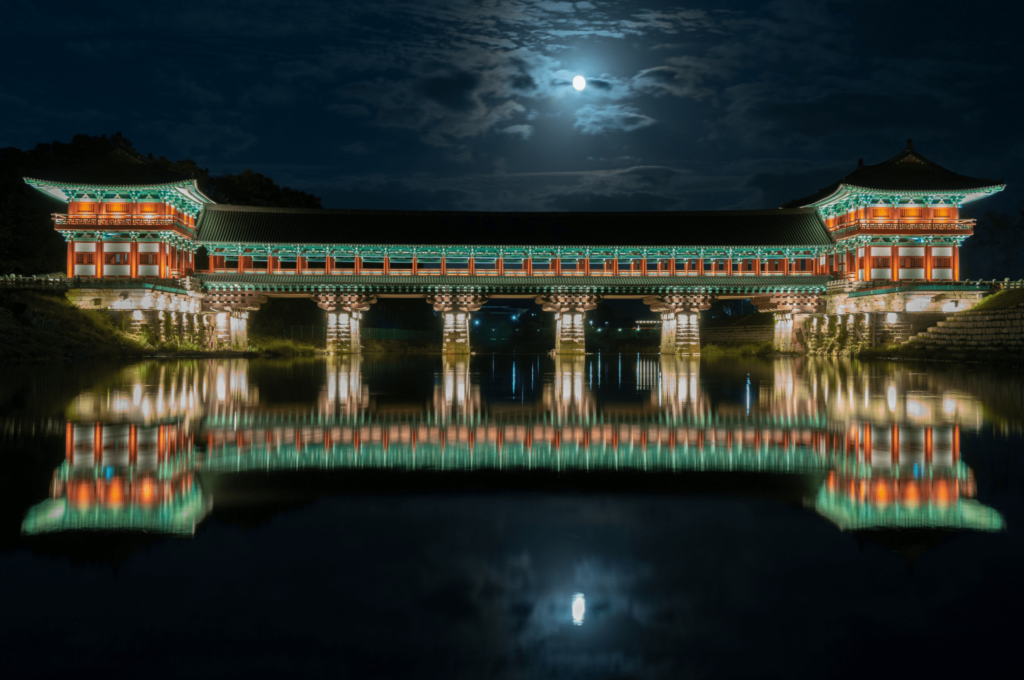
Day Trips
Gyeongju: Around 20–25 minutes by KTX to Singyeongju Station, plus local transit into the historic centre. Gyeongju was the capital of the Silla Kingdom for almost a thousand years, and the city centre is effectively an open-air UNESCO World Heritage site: royal burial mounds in the middle of residential streets, ancient astronomical observatories, temple ruins scattered across parks. It’s an unusual place and one of the better half-day or full-day trips from Busan.
Tongyeong: About two hours southwest by intercity bus. A smaller port town with strong local character with good oysters, scenic island views, a historic cable car system, and far fewer international tourists than the Busan beaches. Worth an overnight if you have the time.
Geoje Island: Accessible via the Geoga Grand Bridge. Geoje offers rugged coastal cliffs, the botanical garden island of Oedo Botania, and a wartime POW camp converted into a sobering historical park. Good option if you want coastline without the crowd density of central Busan.
Author’s Top 5 Hidden Picks
These are the places I personally head to when I want the city without the tourist infrastructure.
1. Choryang Ibagu-gil Monorail: Free to use and almost entirely overlooked by visitors, this small incline monorail runs up through the old hillside neighbourhood behind Busan Station. It’s used mainly by local residents going about their day, and the views over the port are completely unpolished. One of the few places left in central Busan that feels untouched by tourism development.
2. Cheongsapo Daritdol Skywalk: Go at sunrise. This glass-bottomed pier extends over the ocean near Haeundae, and at that hour you’ll likely see local divers in the water below, harvesting sea urchin from the rocks. Empty, quiet, and genuinely beautiful before the rest of the city wakes up.
3. Bosu-dong Book Alley: Established by refugees during the Korean War, this narrow network of paths packed with second-hand booksellers has barely changed since. It’s crumbling gently, the stock is in Korean, and it feels like it exists in a completely different decade from the rest of the city.
4. Amnam Park Coastal Trail: Pine-covered rocks above, open ocean below, almost no one else around. The trail is a metal walkway pinned to sheer cliffs beneath the Songdo Cable Car line, one of the more underrated walks in the city, and a good reason to venture out to the western coast.
5. Yeongdo Huinnyeoul Culture Village: While Gamcheon draws most of the attention, this smaller art village on Yeongdo Island sits directly on a clifftop facing the open sea. Quieter, less curated, and with genuinely better ocean views. Yeongdo is connected to the mainland by the Yeongdo Bridge, take a bus from Nampo Station rather than looking for a ferry.
Field-Tested Itineraries
The Half-Day Express Take Line 2 directly to Jung-dong Station (exit 7) and walk to Mipo. Explore the eastern end of Haeundae Beach, then pick up the Blueline Park Sky Capsule or Beach Train to Cheongsapo, get a bowl of grilled clams at one of the harbour restaurants, and head back. It’s a clean three-to-four hour loop that covers both the iconic beach and something more local.
The 1-Day Route
- 09:00 — Gamcheon Culture Village before the tour groups arrive
- 11:30 — Taxi to Jagalchi Fish Market for a fresh seafood lunch
- 14:00 — Walk through Gukje Market and BIFF Square
- 16:30 — Metro east to Gwangalli Beach for sunset
- 20:00 — Catch the Saturday drone show or watch the bridge light up from the beach
The 2-Day Route
Day 1 — West Busan & Culture: Start at Huinnyeoul Culture Village on Yeongdo Island before 10:00 AM, when the cliffside paths are still quiet. Head north to Jagalchi for lunch, then spend the afternoon in Seomyeon’s underground shopping arcades.
Day 2 — Temples, Coast & Centum City: Begin at Haedong Yonggungsa Temple early (08:00 ideally). Work south to Haeundae for a mid-morning walk and a ride on the Blueline Park coastal train. Finish the afternoon at Spaland inside Shinsegae Centum City, a long soak is a good way to end a full two days on foot.
The 3-Day Route Follow the 2-day itinerary, then use day three for a day trip. KTX to Gyeongju is the most efficient option, you can cover the main heritage sites in about five hours and be back in Busan for dinner. Alternatively, the intercity bus to Tongyeong takes about two hours and gives you a genuinely different coastal atmosphere. If you’d rather stay in the city, Beomeosa and the trails through Geumjeongsan mountain make a good full day without leaving Busan.
How to Get to Busan
From Seoul by KTX (Recommended)
The train is almost always the right call. Departures from Seoul Station run constantly throughout the day, and the journey to Busan Station takes roughly 2 hours 15 minutes on the faster services. Standard tickets cost around ₩59,800 (~$40 / €34) one-way for the direct express; slower services with more stops run closer to ₩40,000 (~$27 / €23). Book at least two weeks ahead on the Let’s Korail website if you’re travelling on a weekend, particularly around the BIFF dates in October — seats on preferred departure times sell out faster than most people expect. If you’re planning multiple long-distance train journeys around Korea, the KR Pass (available to foreign visitors) can work out cheaper than individual tickets.
By Air
Flights from Seoul’s Gimpo Airport (GMP) to Busan’s Gimhae International Airport (PUS) take about an hour in the air. On paper that’s faster than the KTX, but once you factor in getting to the airport, check-in, security, and transit from Gimhae into central Busan, the train wins on total journey time from city centre to city centre the majority of the time.
By Express Bus
The cheapest option, roughly half the price of a KTX ticket from Seoul Express Bus Terminal to Busan Central Bus Terminal. Journey time is a minimum of four hours, more on busy weekends with highway traffic. The right call if budget is the priority and time isn’t.
From Japan by Ferry
Busan’s position at the southern tip of the peninsula makes it the most straightforward Korean destination to reach by ferry from western Japan. High-speed hydrofoil services operate daily between Fukuoka (Hakata Port) and the Busan International Passenger Terminal, crossing the Tsushima Strait in approximately three hours. For current schedules and booking, check the JR Kyushu High Speed Ferry (Beetle service) portal directly — ferry schedules change seasonally, so always confirm before booking.
Getting Around Busan
The Metro
The most reliable way to move around the city. Four lines cover almost all main tourist areas. Line 1 (Orange) runs through the historic western side: Busan Station, Jagalchi, Seomyeon, and south toward Nampo. Line 2 (Green) cuts east to the beach districts: Gwangalli and Haeundae. A standard T-money card (the same one used in Seoul) works on all lines, buses, and most taxis without needing a separate local card.
Buses
The metro won’t get you everywhere. Haedong Yonggungsa Temple, Gamcheon Village, and some of the more remote coastal spots require a local city bus or neighbourhood minibus (마을버스, Maeul-bus). Digital arrival screens at shelters show real-time wait times and are reasonably accurate. The bus network in Busan covers territory the metro doesn’t reach, and a lot of the best parts of the city like Yeongdo, the western coastline or the northern beaches are most easily accessed by bus.
Author’s Tip: Don’t use cash on public transport. Pick up a rechargeable T-money smart card at any convenience store as soon as you arrive: it works on buses, metro, and gives you automatic transfer discounts between the two. See our dedicated T-money Card Guide for loading and usage details.
Where to Stay: Neighbourhood Guide
Busan is big and cut up by mountains. Picking the wrong base means spending a significant chunk of every day on transit.
Haeundae: is the obvious choice for first-time visitors: right on the beach, well connected by metro, and surrounded by restaurants and cafes. It’s also the most expensive area and can feel quite separate from the rest of the city. Worth it if the beach is your main focus.
Seomyeon: sits at the centre of the metro network and is the most practical base for getting around efficiently. It’s a commercial district rather than a scenic one, but you can reach any major area in Busan within 30 minutes, and the eating and drinking options are solid.
Nampo/BIFF Square: puts you closest to Jagalchi, Gukje Market, and the western cultural spots. It’s the most atmospheric part of the city for walking around in the evening, and prices are noticeably lower than Haeundae.
FAQ
What is Busan famous for? Its beaches (Haeundae and Gwangalli in particular), Jagalchi Fish Market, the Gamcheon Culture Village, and the Busan International Film Festival (BIFF), which draws filmmakers and industry professionals from around the world each October (6–15 October in 2026).
How many days do you need in Busan? Two days is the minimum to cover the main areas without feeling rushed. Three days is more comfortable if you want to include a day trip to somewhere like Gyeongju.
Is Busan worth visiting? Yes, and it’s worth visiting on its own terms rather than as an add-on to Seoul. The coastal setting, the food, the price levels: all significantly different from the capital. Most people who spend real time in Busan end up wishing they’d stayed longer.
What is the best time to visit Busan? Spring (April–May) for cherry blossoms and mild weather, or early October for clear skies and the film festival atmosphere. Both are noticeably better than the summer months in terms of comfort.
What is the most beautiful place in Busan? Personal preference matters a lot here, but Haedong Yonggungsa Temple, the oceanside Buddhist complex first established in 1376, is the most visually striking single location most visitors encounter. The combination of sea, rocks, and stone architecture is hard to match.
Is Busan cheaper than Seoul? Generally yes, particularly for everyday meals and accommodation away from the beachfront hotels in Haeundae.
Can you swim at Busan beaches? Yes, during peak summer season (roughly July through August) when full lifeguard operations, changing facilities, and beach amenities are set up at Haeundae and Gwangalli. Outside those months, swimming is possible but unsupervised.
What should I buy at Jagalchi Market? Buy live seafood from the ground floor vendors: sea eel, flatfish, and Korean octopus are all common, and take it to the second-floor restaurant kitchens to be prepared fresh. Raw (Hoe) or grilled with side dishes are both excellent.
Is English widely spoken in Busan? Major transport hubs, tourist areas, and modern hotels have English signage and English-speaking staff. Outside those contexts, less so than in Seoul, a translation app is more useful in Busan than it would be in central Seoul.
How late does the KTX run from Seoul to Busan? Late evening KTX departures from Seoul typically run until around 22:00–23:00, though schedules vary by day and season. Check the Let’s Korail website for current timetables.
The Bottom Line
Busan isn’t Seoul’s weekend excursion, it’s a genuinely distinct city that happens to be two and a half hours south. It wears its wartime history openly, mixes mountain terrain with urban coastline in a way that shouldn’t work but does, and has a food culture rooted in necessity that turned into something exceptional.
The key to getting the most out of it is geography: base yourself on a metro line rather than near a specific attraction, pick up a T-money card immediately, and leave enough room in the itinerary for the parts of the city that don’t appear on the obvious lists. That’s usually where Busan is at its best.
Continue planning your trip:
▶︎A guide to the best taxi service in South Korea
Visit other Cities in South Korea!
While Incheon offers plenty to do, cities like Busan and Seoul also have much to offer! Make the most of your trip to South Korea by visiting multiple cities. You can check this guides to have more information and help you to plan your trip:
▶︎Best Things to Do in Incheon