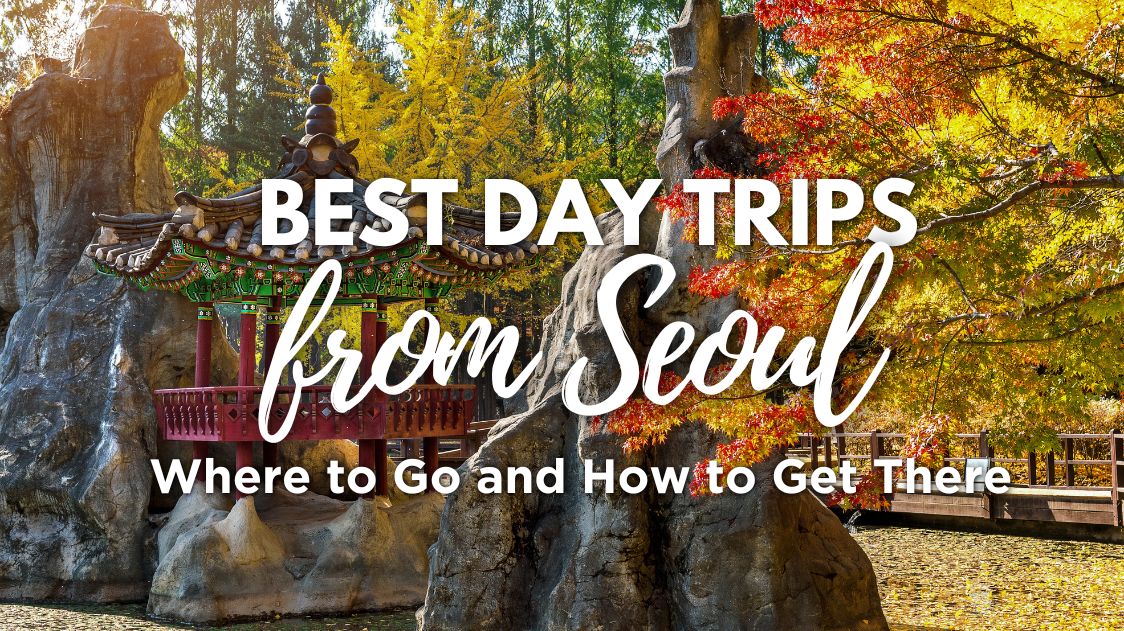
Seoul is a good base for day trips in a way that few capital cities are. The KTX and subway network reach a surprising amount of the country within two hours, and the city’s geography: surrounded by mountains and within reach of both coasts: gives you genuine variety. You can leave Seoul at 8am and be standing inside a UNESCO-listed fortress city, a mountain temple, a coastal island, or one of South Korea’s most dramatic volcanic craters by mid-morning, and be back for dinner.
This guide covers the ten best day trips from Seoul in 2026, with honest transport times, costs, and what each destination is actually like on the ground.
Exchange rates June 2026: ₩1,500 = $1 USD / ₩1,680 = €1 EUR
1. Suwon Hwaseong Fortress
Distance from Seoul: 30–40 minutes by train
Best for: History, walking, street food
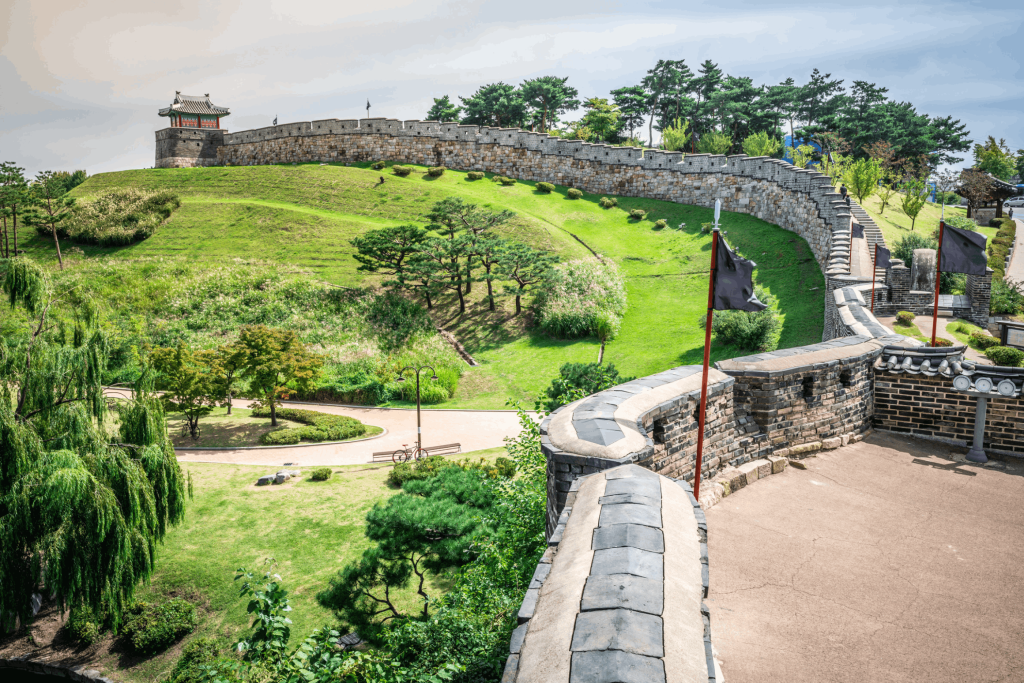
Hwaseong Fortress is the most underrated day trip from Seoul. Built between 1794 and 1796 under King Jeongjo of the Joseon Dynasty, the fortress wall runs for 5.7 kilometres around the city of Suwon, incorporating towers, gates, and command posts that are remarkably intact for a structure that is 230 years old. It was designated a UNESCO World Heritage Site in 1997.
The walk around the full perimeter takes about two to three hours at a relaxed pace. The section from the Paldalmun Gate to Hwaseomun Gate along the western wall gives the best views across the city. The Hwahongmun water gate, a stone arch spanning a stream running through the wall, is the most photographed point and looks best in the morning before the tour groups arrive.
Inside the fortress walls, Suwon’s old market district (Paldalmun Market and the surrounding streets) is among the liveliest traditional markets near Seoul, known particularly for galbi (grilled beef ribs). The area around Paldalmun Gate has galbi restaurants that have been operating in the same location for decades.
Getting there: KTX from Seoul Station to Suwon takes about 30 minutes (₩4,800/~$3.20/€2.85). Regular subway (Line 1) takes about 60 minutes and is cheaper (₩1,650/~$1.10/€0.98). From Suwon Station, Hwaseong is a 15-minute walk or short taxi ride.
Entry: ₩1,000 (~$0.67/€0.60) for adults to access the fortress areas.
Full guide: Suwon Hwaseong Fortress: The Easiest UNESCO Day Trip from Seoul
Author’s Tip: Skip the tourist train that circles the fortress and walk it instead. The wall walk itself is the point: the views from the ramparts, the rhythm of the towers, and the oddly peaceful feeling of walking a medieval fortification that happens to be inside a modern city. The tourist train skips all of that.
2. Gyeongju
Distance from Seoul: 2 hours by KTX
Best for: History, archaeology, temple architecture, UNESCO sites
Gyeongju is covered in detail in the Best Things to Do in Gyeongju guide, but as a day trip it works surprisingly well if you focus on the central historical sites.
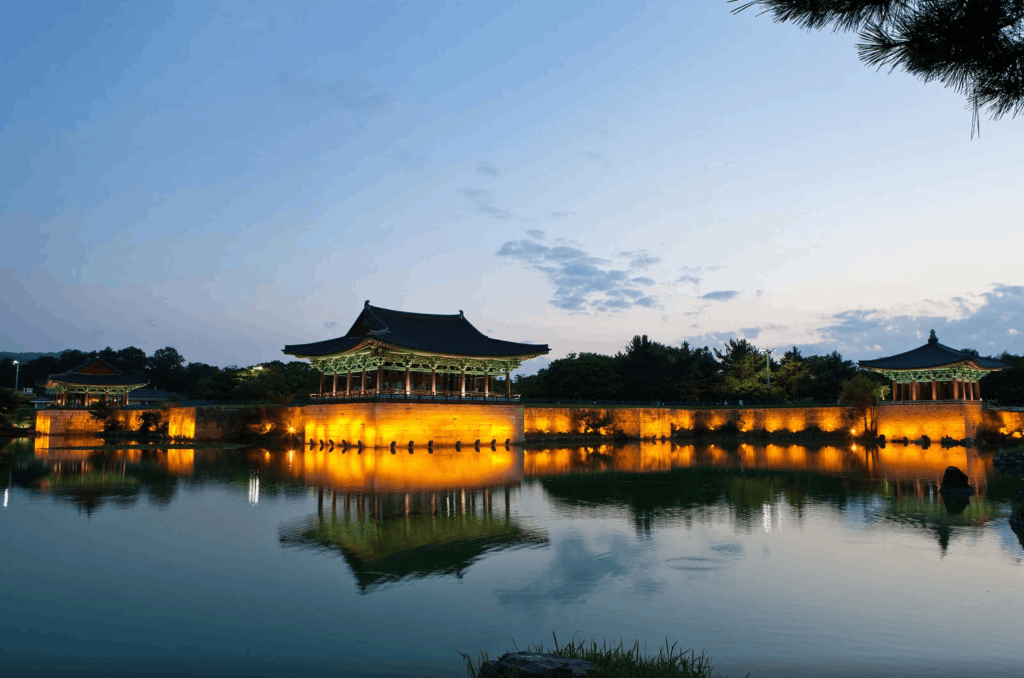
The UNESCO World Heritage historic area is compact enough to cover on foot or by bicycle. The royal tomb complex Daereungwon, the Cheomseongdae observatory, and Donggung Palace and Wolji Pond are all within walking distance of each other. Bulguksa Temple and Seokguram Grotto: the two most architecturally significant sites: require a bus or taxi and about 45 minutes additional travel from the centre.
For a day trip, the most realistic itinerary is: arrive in the morning, Daereungwon and Cheomseongdae before noon, lunch in Hwangnidan-gil, Donggung Palace in the afternoon (if possible, stay until after dark to see the night lighting), and evening train back. Bulguksa is better kept for an overnight trip.
Getting there: KTX from Seoul Station to Singyeongju Station. Important: Singyeongju is not the same as Gyeongju Station: it is outside the city and requires a bus or taxi (₩1,500/~$1/€0.90 by bus) to reach the historical centre. Trains from about ₩42,600 (~$28/€25) one-way.
Note: As a day trip, Gyeongju is best for travellers who have already visited and want to see more, or who prioritise the main tomb parks over Bulguksa. An overnight stay is significantly better for seeing the full range.
3. Nami Island and Petite France
Distance from Seoul: 1.5 hours by train and ferry
Best for: Nature, photography, Korean drama locations
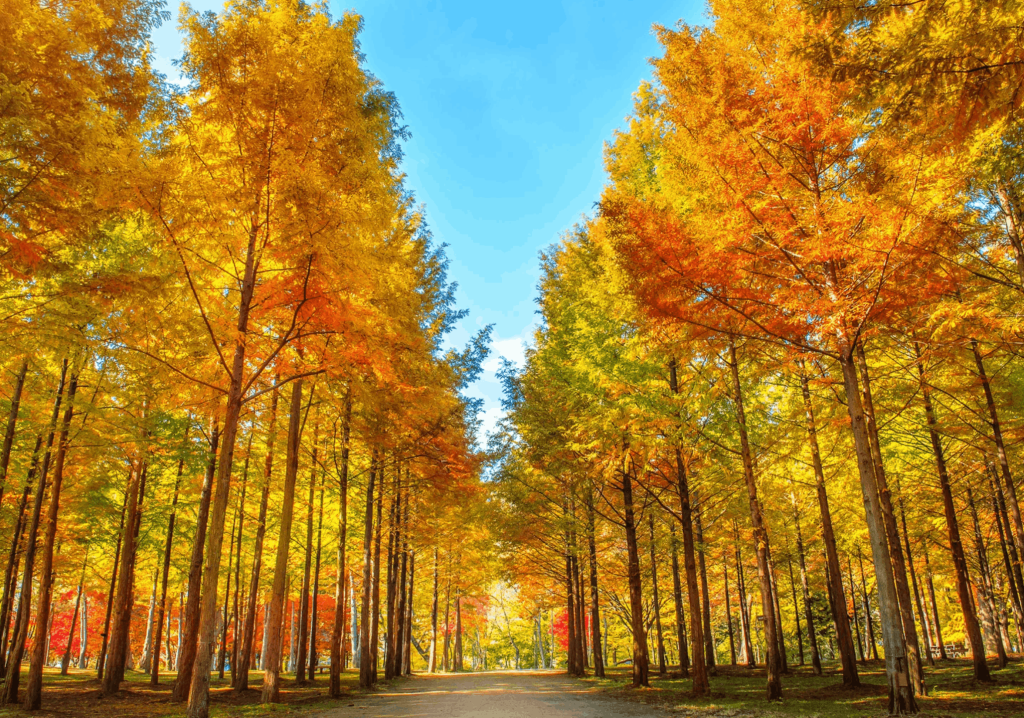
Nami Island (Namiseom) is a teardrop-shaped river island in the North Han River, famous for its tree-lined avenues and as a filming location for the Korean drama Winter Sonata. The island is not a historical site or a natural wonder in the conventional sense: it is a carefully maintained landscape that photographs extremely well, particularly in autumn (October–November, when the ginkgo and maple avenues turn gold and red) and spring (April, cherry blossoms). Outside those windows, it is pleasant but less dramatic.
The island is reached by a 5-minute ferry from Gapyeong Pier. Once there, the main activity is walking the avenues, renting a bicycle, and eating at the island’s restaurants. It takes about 2–3 hours to see comfortably.
Petite France, 15 minutes by shuttle from the Nami Island ferry pier, is a French-themed cultural village built on a hillside above the Cheongpyeong Lake. The architecture is whimsical rather than authentic: it is primarily a photography location and children’s attraction. Worth combining with Nami if you are already making the trip; not worth going to on its own.
Getting there: ITX-Cheongchun train from Seoul Cheongnyangni Station to Gapyeong Station (approximately 80 minutes, ₩3,000–₩6,000/~$2–$4/€1.80–€3.55). From Gapyeong Station, a 10-minute taxi or shuttle to the ferry pier.
Entry: Nami Island ₩16,000 (~$10.65/€9.50) including ferry, adults. Petite France ₩12,000 (~$8/€7.15).
Author’s Tip: Book the ITX train in advance on the Korail app: it fills up fast on weekends, especially in autumn. Arrive at the island as early as possible; Nami gets genuinely crowded by mid-morning on peak weekends and the avenues lose their atmosphere when they are packed.
4. Bukhansan National Park
Distance from Seoul: 30–40 minutes by subway
Best for: Hiking, mountain views, city perspective
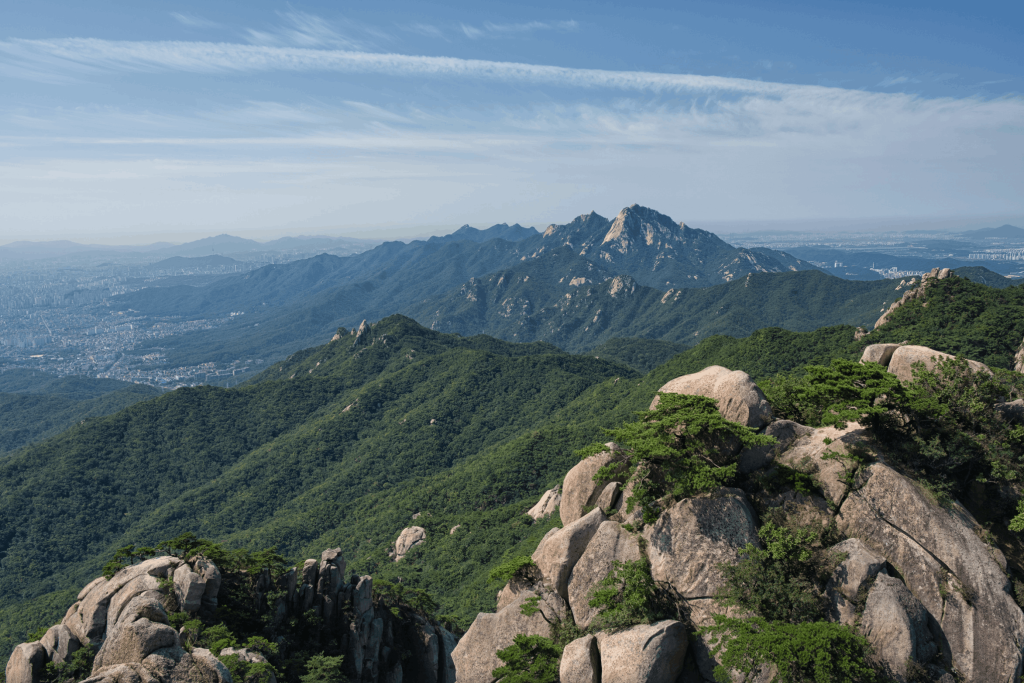
Bukhansan is one of the few national parks in the world accessible directly by urban subway. From central Seoul, you are at the trailhead within 40 minutes without changing from the subway. The park covers 78.45 square kilometres of granite peaks and forested valleys that sit immediately north of the city.
The main summit, Baegundae (836 metres), takes about 3–4 hours return from the Bukhansan Ui Station trailhead. The final section involves fixed ropes on the granite rock face: manageable for most people with a basic level of fitness, but not suitable for sandals or small children. The views from the summit extend across the entire Seoul metropolitan area and are genuinely spectacular on clear days.
For a shorter option, the Bukhansanseong Fortress trail (2–3 hours return) follows the line of a historic city wall through the forest without requiring the rock climbing section. The fortress walls date to the 1st century BC with significant reconstruction in 1711.
Getting there: Subway Line 3 to Gupabal Station, then Bus 704 to the Bukhansan entrance. Or Line 4 to Suyu Station for the Jeongneung Valley entrance. No train ticket needed beyond the standard subway fare (₩1,650/~$1.10/€0.98).
Entry: Bukhansan National Park entry is free.
Author’s Tip: Go on a weekday. Weekend mornings at Bukhansan feel like rush hour: hundreds of hikers in matching outdoor gear queuing for the summit section. A Tuesday or Wednesday morning gives you the park almost to yourself and the views without the wait on the fixed rope sections.
5. Incheon: Chinatown, Open Port, and Songdo
Distance from Seoul: 30–60 minutes by subway
Best for: History, architecture, food, waterfront
Most visitors only see Incheon from a bus window on the way to the airport. That is a mistake worth correcting if you have a free day in Seoul. The Open Port area, developed after Korea opened to international trade in 1883, has one of the best-preserved collections of late 19th and early 20th century colonial architecture in the country. Japanese, Chinese, and Western-style buildings sit within a few streets of each other in a way that reflects Incheon’s role as the first point of contact between Korea and the outside world.
Korea’s only Chinatown sits directly adjacent and has been operating since the 1880s. The food here is specifically Incheon Chinese-Korean rather than generic: jajangmyeon (black bean noodle sauce) was said to have been invented here by Chinese immigrants, and the jajangmyeon restaurants in Incheon’s Chinatown take it more seriously than most.
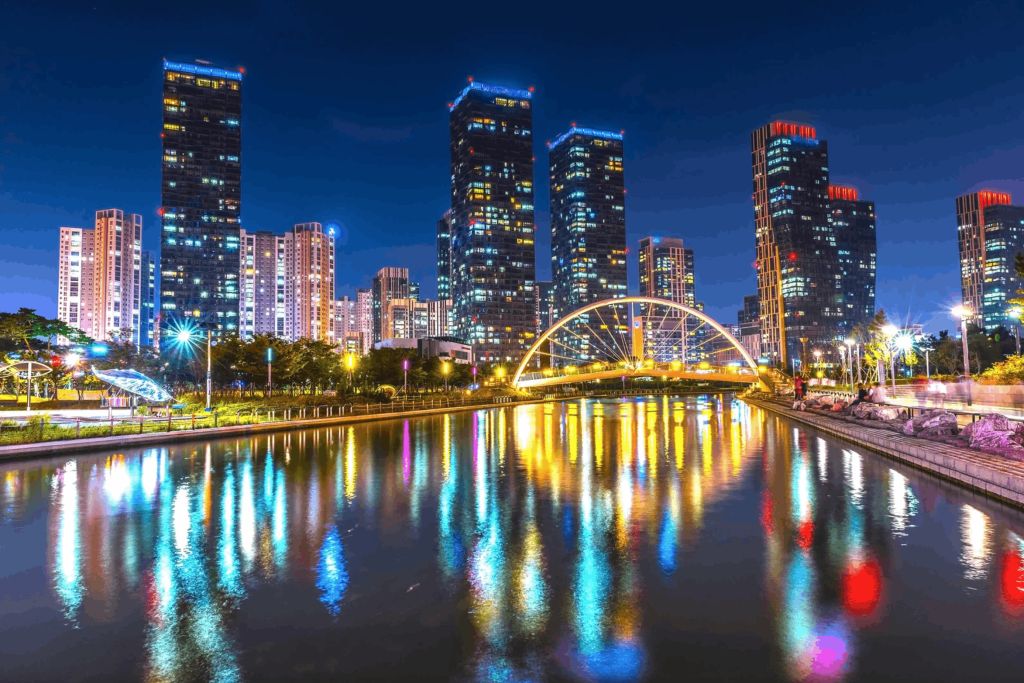
Songdo International Business District, 20 minutes by bus from the Chinatown area, is a planned smart city built on reclaimed land from the sea. The Central Park with its tidal canal is pleasant in the afternoon and gives a completely different perspective on Korean urban development.
Getting there: Airport Railroad (AREX) All-Stop from Seoul Station to Incheon Station (approximately 60 minutes, ₩4,150/~$2.75/€2.45). Or subway Line 1 to Dong인천 Station.
Full guide: Best Things to Do in Incheon
6. Jeonju
Distance from Seoul: 1 hour 45 minutes by KTX
Best for: Food, traditional architecture, Korean cultural experience
Jeonju is the food capital of South Korea. The city’s reputation for cooking is not a marketing claim: it is a genuine cultural distinction. Jeonju bibimbap (the layered rice and vegetable dish served with gochujang) is considered the standard against which other versions are measured, and the hanjeongsik (traditional full set meal with 15–20 side dishes) restaurants around Jeonju Hanok Village are among the most authentic in the country.
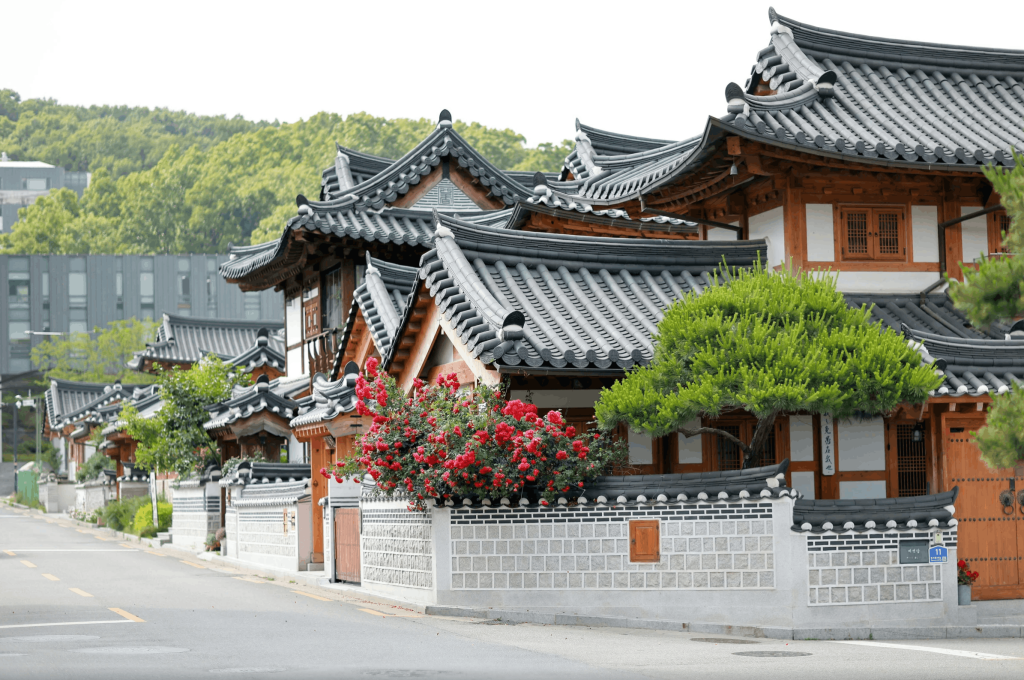
Jeonju Hanok Village is a neighbourhood of approximately 700 preserved traditional hanok houses in the city centre. Unlike Bukchon Hanok Village in Seoul, most of the buildings in Jeonju’s hanok village have been repurposed as cafes, restaurants, craft shops, and guesthouses, which makes it a more commercialised experience but also a more animated one. Hanbok rental is available throughout the village at around ₩15,000–₩20,000 (~$10–$13.35/€8.90–€11.90) for two hours.
As a day trip, Jeonju is on the edge of what is comfortable: you arrive at around 10am and need to leave by 5–6pm to be back in Seoul for a reasonable hour. The food alone is worth the journey. If you can stay overnight, the experience is considerably better.
Getting there: KTX from Seoul Station to Jeonju Station (approximately 1 hour 45 minutes, from ₩28,600/~$19.05/€16.95). From Jeonju Station, Bus 79 or 999 to Hanok Village (15 minutes).
Full guide: Jeonju Hanok Village: The Complete Guide
Author’s Tip: The hanjeongsik set meals in Jeonju typically run ₩15,000–₩25,000 (~$10–$16.65/€8.90–€14.90) per person for 15–20 dishes. The best version I have had was at a small restaurant on the eastern edge of the hanok village with no English menu and a queue of locals outside at noon. That queue is worth joining.
7. Ganghwado Island
Distance from Seoul: 1.5 hours by bus
Best for: History, nature, quiet, off-the-beaten-path
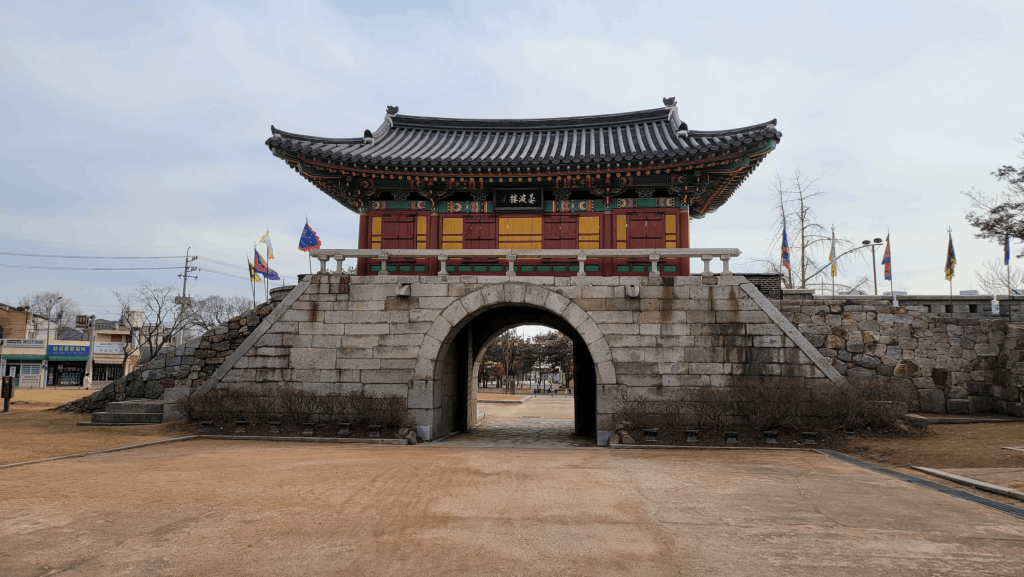
Ganghwado is among the most historically significant places in Korea and almost completely off the foreign tourist circuit. The island served as the royal refuge when Mongol armies invaded in 1232, and later as the site of Korea’s first treaty with Japan in 1876, which opened the country to foreign trade. The dolmen sites on Ganghwado: massive prehistoric stone burial structures: are UNESCO World Heritage listed.
The island has a completely different character from the mainland: rural, quiet, and largely bypassed by the domestic tourism circuit that focuses on Jeju, Gyeongju, and Busan. Goryeo Gung Siege Remnants, Ganghwa Jeondeungsa Temple (founded in 381 AD), and the dolmen clusters are the main historical sites. The ridge trail along the western coast gives views across the Yellow Sea toward China.
Getting there: Bus from Seoul Sinchon Bus Terminal or Seoul Station Bus Stop to Ganghwa Terminal (approximately 90 minutes, ₩5,000–₩7,000/~$3.35–$4.65/€2.95–€4.15). From Ganghwa Town, local buses or taxis connect the main sites. Having a car or hiring a taxi for the day (approximately ₩80,000–₩100,000/~$53–$66.65/€47.60–€59.50) is the most practical way to cover the island’s spread-out attractions.
8. Everland and Caribbean Bay
Distance from Seoul: 50 minutes by shuttle bus
Best for: Families, theme parks, full-day entertainment
Everland is South Korea’s most visited theme park and sits roughly 50 kilometres south of Seoul in Yongin. It is not a cultural experience in the traditional sense but it is a genuinely well-run park: clean, efficient, with a good range of rides across different age groups and a safari section with live animal exhibits. The adjacent Caribbean Bay water park is one of the largest in Asia.
For families travelling with children, Everland makes a natural full-day Seoul day trip. The park typically runs from 10am to 10pm, which gives a realistic 9–10 hours on the ground.
Getting there: Direct shuttle bus from Seoul Gangnam Express Bus Terminal (approximately 50 minutes, bus included in some ticket packages). Or subway Line 2 to Gangnam Station and then express shuttle. Fares vary by ticket package.
Entry: Approximately ₩60,000–₩75,000 (~$40–$50/€35.70–€44.65) for adults; children’s prices lower. Combined Everland and Caribbean Bay tickets available. Book online for 15–20% discount over gate prices.
Full guide: Everland & Lotte World: Theme Park Guide
9. Chuncheon
Distance from Seoul: 1 hour by ITX-Cheongchun
Best for: Lake scenery, dakgalbi, outdoors
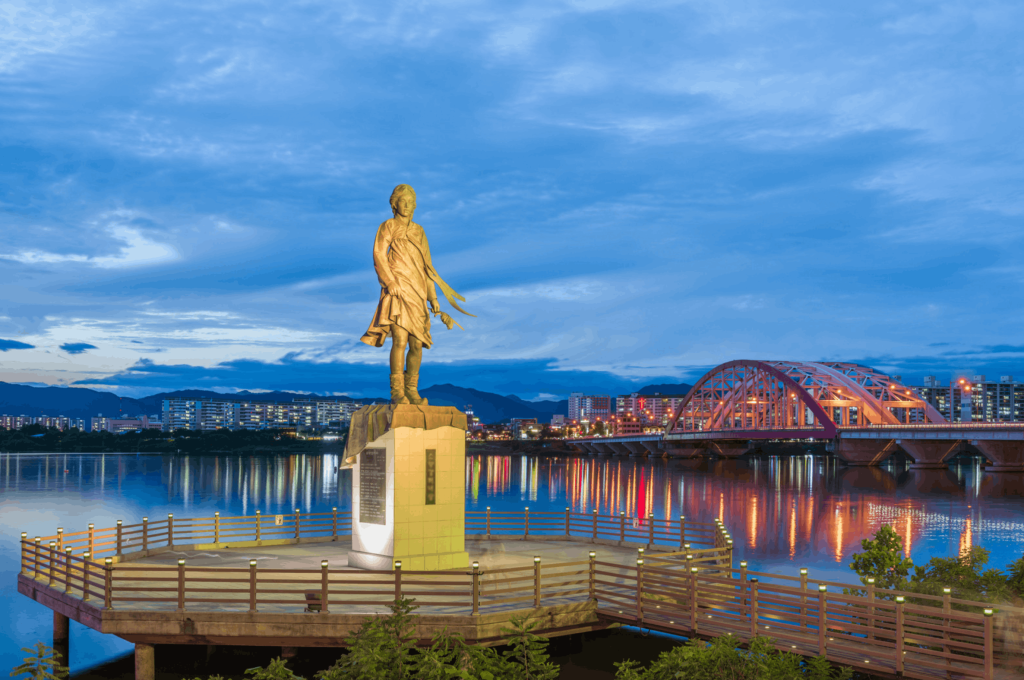
Gangwon Province, an hour from Seoul by express train, has a different character from the rest of the country: more rural, more spread out, properly mountainous. Chuncheon is its main city, sitting on a lake ringed by peaks, and it is known for two things: dakgalbi (spicy stir-fried chicken with rice cakes and vegetables, cooked at the table on a hotplate) and its lake and river scenery, which featured in the Korean drama Autumn in My Heart and drew enormous tourism from the Winter Sonata audience.
The lakeside area around Uiamho Lake and the riverside path along the Bukhan River are pleasant for cycling or walking. Nami Island (see above) is 30 minutes by taxi from Chuncheon, making a natural combination if you want to cover both in a day.
Getting there: ITX-Cheongchun express train from Seoul Cheongnyangni Station to Chuncheon Station (approximately 60 minutes, ₩6,000–₩8,800/~$4–$5.85/€3.55–€5.25). Trains run hourly throughout the day.
Author’s Tip: The dakgalbi restaurants are clustered around the Dakgalbi Alley (닭갈비 골목) near the city centre. Order the version with mozzarella cheese added: it is not the traditional preparation but it has become the most popular variant for good reason.
10. DMZ Tour (Korean Demilitarized Zone)
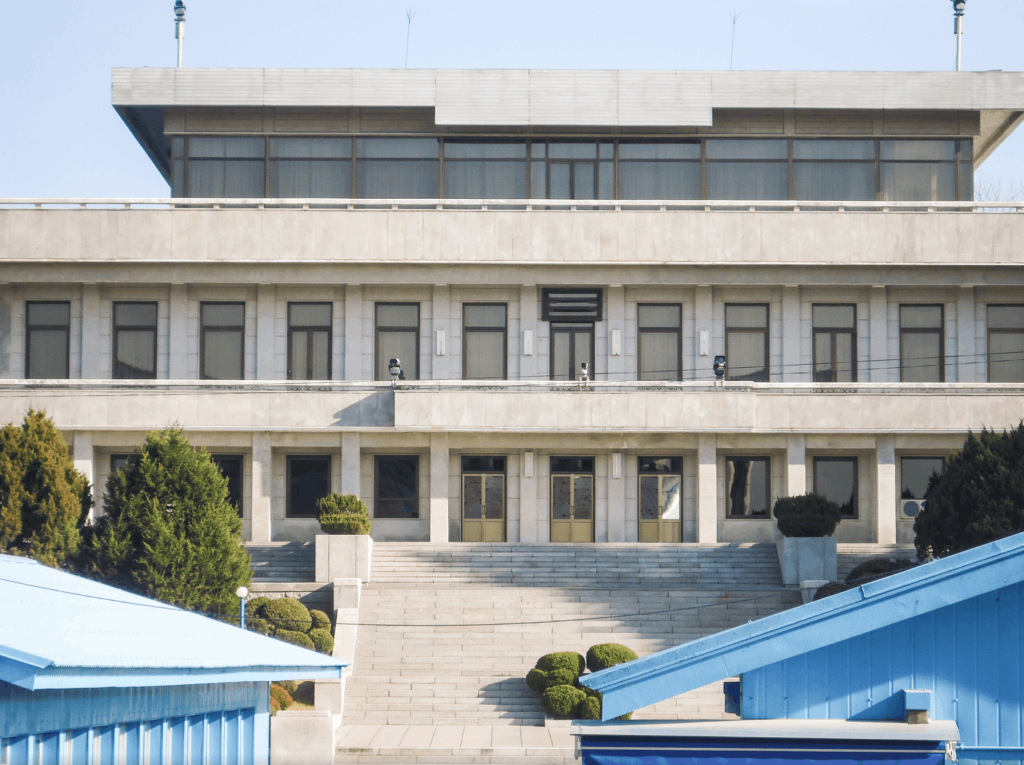
Distance from Seoul: 1 hour
Best for: History, unique experience, understanding modern Korea
The DMZ is the 4-kilometre-wide buffer zone that has divided North and South Korea since the 1953 armistice. Visiting it requires joining an organised tour: access is controlled by the military and independent visits are not permitted. Tours typically run 8–9 hours and cover the Third Infiltration Tunnel (one of four tunnels discovered dug by North Korea under the DMZ), the Dora Observatory (with views across into North Korea), and Dorasan Station (the southernmost station on the line intended to connect Seoul with Pyongyang).
The experience is unusual and genuinely thought-provoking. The infrastructure of the DMZ: watchtowers, minefields, rusted barbed wire, the silence: is unlike anything else you encounter in South Korea. It is not a comfortable excursion but it is a meaningful one for anyone trying to understand the country.
Getting there: Organised tours depart from various points in central Seoul, typically Hongik University Station or City Hall. Tour prices from approximately ₩55,000–₩90,000 (~$36.65–$60/€32.75–€53.55) per person depending on the operator and what is included. Book in advance: tours have passenger caps and fill up.
Full guide: DMZ Tour from Seoul
Author’s Tip: Bring your passport. Access to the DMZ and JSA (Joint Security Area, the blue buildings on the actual border) requires ID verification. Without a passport, you will not be permitted entry to certain areas regardless of which tour operator you have booked with.
Practical Notes for Seoul Day Trips
T-money card: Load one before your first day trip. It covers all subway journeys, buses, and intercity local buses at the destination. Load ₩30,000–₩50,000 (~$20–$33.35/€17.85–€29.75) at any convenience store.
KTX reservations: Book in advance for Gyeongju, Jeonju, and any weekend travel. Seats fill up during peak periods and on public holidays. Book on the Korail website or app.
What to carry: T-money card, cash for markets and smaller restaurants, downloaded offline maps for your destination, and the Korean name of your destination written down for taxi drivers.
Best days: Tuesday to Thursday for most destinations. Weekend crowds at popular sites like Bukhansan and Nami Island are significantly heavier.
FAQ: Day Trips from Seoul
What is the best day trip from Seoul?
For first-time visitors: Suwon Hwaseong Fortress (easy, close, historically significant, good food). For history enthusiasts: Gyeongju. For nature: Bukhansan National Park. For families: Everland.
Can I visit multiple places in one day?
Some combinations work well: Nami Island and Petite France are designed to be combined. Suwon and Incheon can be done consecutively if you start early. Most destinations work better as standalone full-day trips rather than attempts to combine two major sites.
Which day trip requires the least planning?
Bukhansan National Park: no advance booking needed, reachable by regular subway, free entry. Suwon Hwaseong is similarly accessible with no advance planning required.
Is a day trip to Jeonju worth it?
Yes, primarily for the food. Jeonju bibimbap and hanjeongsik in the hanok village are among the best versions in the country. The distance makes it a long day but the food justifies it.
Do I need to speak Korean for day trips from Seoul?
For most destinations, no. Suwon, Gyeongju, and Nami Island have English signage. The DMZ tour is conducted in English. Jeonju and Ganghwado are less tourist-adapted and some Korean or a translation app is useful.
All prices verified June 2026. Exchange rates: ₩1,500 = $1 USD / ₩1,680 = €1 EUR. Train fares subject to change; verify on the Korail app before travel.
👉 Seoul 3-Day Itinerary: Best Route for First-Time Visitors