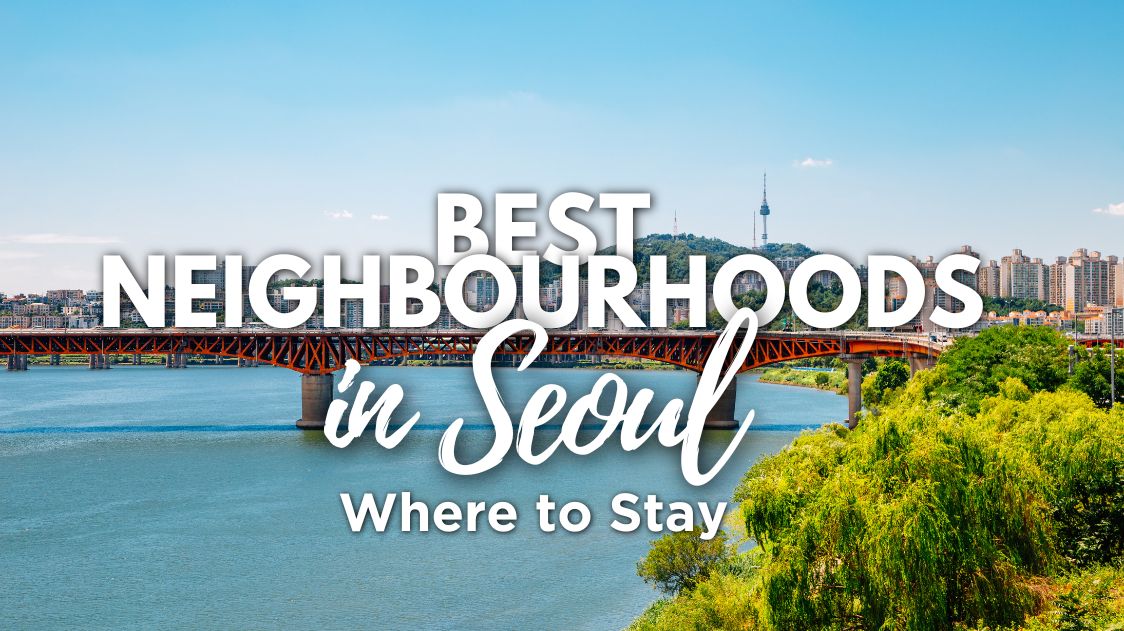
Seoul’s neighbourhoods do not blend into each other the way they do in some cities. The gap between staying in Myeongdong and staying in Hongdae: two places separated by 20 minutes on the subway: is the difference between a tourist-facing commercial district and a university arts neighbourhood with independent cafés and live music. The neighbourhood you choose shapes what you see, who you eat next to, and how much you walk versus transit.
This guide covers the eight most relevant areas for visitors to Seoul in 2026, with honest assessments of who each suits: and who it does not.
Exchange rates June 2026: ₩1,500 = $1 USD / ₩1,680 = €1 EUR
A Quick Map of Seoul
Before picking a neighbourhood, it helps to understand Seoul’s basic geography. The Han River runs east to west through the city, dividing it into north (historic Seoul, palaces, markets) and south (Gangnam, modern Seoul, business districts). Most tourists spend time in the north for cultural sites and the south for shopping and restaurants: the subway makes moving between the two straightforward.
North of the Han: Gwanghwamun, Jongno, Insadong, Myeongdong, Hongdae, Mapo, Bukchon, Itaewon
South of the Han: Gangnam, Apgujeong, Cheongdam-dong, Seongsu-dong, Yeouido
1. Myeongdong
Best for: First-time visitors, K-beauty shoppers, tourists who want maximum convenience
Not ideal for: Anyone who dislikes crowds or wants to experience local Seoul life
Myeongdong is Seoul’s most tourist-concentrated neighbourhood: dense, commercial, and built almost entirely around visitor spending. The main pedestrian street is lined with Korean cosmetics chains, international fashion, and street food stalls (tteokbokki, gyeran-ppang, tornado potatoes). Olive Young’s Central Myeongdong flagship is here. The streets are busy from morning to late evening.
For a first visit to Seoul where you want to maximise sightseeing and shopping with minimal navigation complexity, Myeongdong makes sense. Gyeongbokgung Palace and Bukchon are 30 minutes on foot or a short metro ride. Namsan and N Seoul Tower are walkable uphill. Insadong is 10 minutes away.
The trade-off is that Myeongdong does not represent Seoul as Seoulites experience it. The restaurants are oriented toward tourists, the prices are elevated, and the ambient noise and density can wear on you over multiple days.
Accommodation: Luxury options include The Shilla Seoul and Lotte Hotel Seoul nearby. Mid-range business hotels are plentiful and competitively priced. Budget hostels exist but fill quickly in peak season.
Getting around: Myeongdong Station (Line 4) is central. Seoul Station (multiple lines, KTX connections) is a 10-minute walk.
2. Gwanghwamun / Jongno
Best for: History-focused visitors, palace and hanok neighbourhood access, Four Seasons guests
Not ideal for: Nightlife, evening restaurant scenes, Gangnam access
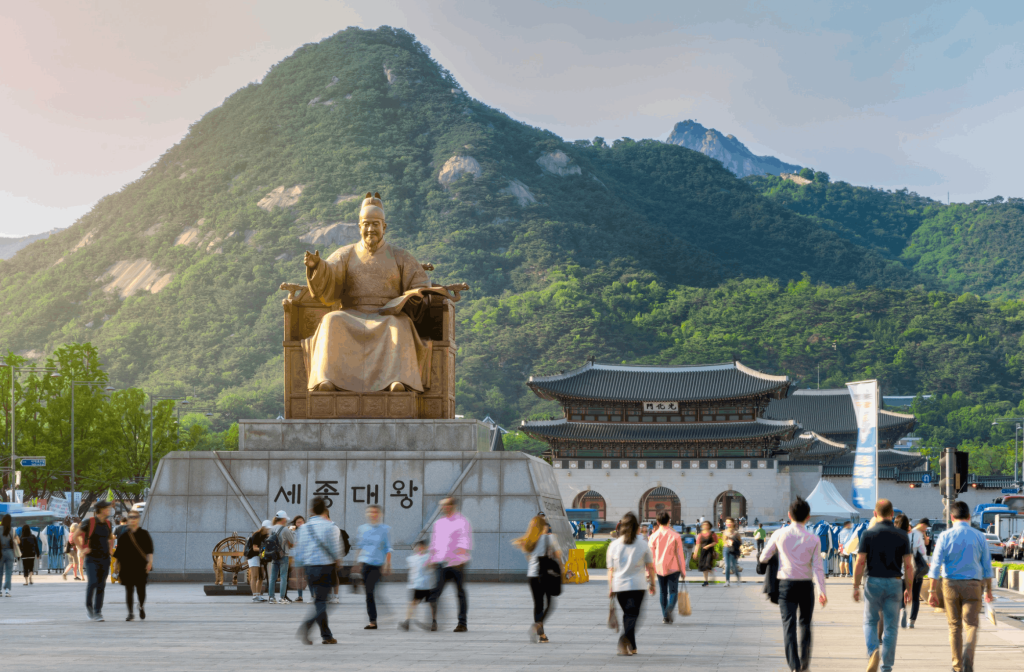
Gwanghwamun is where Seoul’s historical identity is most concentrated. Gyeongbokgung Palace is at the north end of Gwanghwamun Square; Changdeokgung and the Secret Garden are a 15-minute walk east. Bukchon Hanok Village begins immediately behind the palaces. Insadong: the traditional arts and tea house district: is a 10-minute walk south.
The area quiets down significantly after 18:00 when the palace gates close and the tourist traffic disperses. The evening restaurant scene is limited compared to Hongdae or Itaewon, though the Tongin Market and Tonuimun side streets have decent Korean options. For a stay focused on historical sites rather than dining and nightlife, the trade-off is acceptable.
Four Seasons Hotel Seoul is in this neighbourhood. A cluster of well-regarded mid-range hotels operates near Gwanghwamun Station.
Getting around: Gwanghwamun Station (Line 5) and Anguk Station (Line 3) are the main transit points. Both put you within 10 minutes of the major palaces.
3. Hongdae (Hongik University Area)
Best for: Young travellers, independent cafés, live music, creative culture, budget accommodation
Not ideal for: Families with young children, quiet stays, easy palace access
Hongdae is the neighbourhood that most closely matches the image of Seoul as a creative, youth-oriented city. The area around Hongik University has been building its arts and music identity since the 1990s: street art, independent galleries, vinyl record shops, craft beer bars, and live music venues occupy the dense streets between the university and the main commercial strip.
During the day it is best for café culture: the Yeonnam-dong extension of the neighbourhood (10 minutes on foot from the main station) has the highest concentration of independent specialty coffee in the city. On weekend evenings, the streets between the main plaza and the main road fill with street performers, pop-up markets, and a crowd that is authentically young and local rather than tourist-facing.
Accommodation in Hongdae is among the best-value in Seoul for the quality. The AREX All-Stop train connects Hongdae directly to Incheon Airport: for arrivals and departures, this is the most convenient base in the city.
Getting around: Hongik University Station (Lines 2, AREX, and Gyeongui-Jungang Line) is one of the best-connected stations in the city. Gangnam is 20 minutes on Line 2. Seoul Station is 10 minutes on the AREX.
Author’s Tip: The Gyeongui Line Forest Park: a 6-kilometre linear park built along a decommissioned railway: runs from Hongdae through the adjacent Sinchon and Mapo neighbourhoods. Walking it in the morning is one of the more genuinely local things to do in this part of the city.
4. Insadong / Bukchon
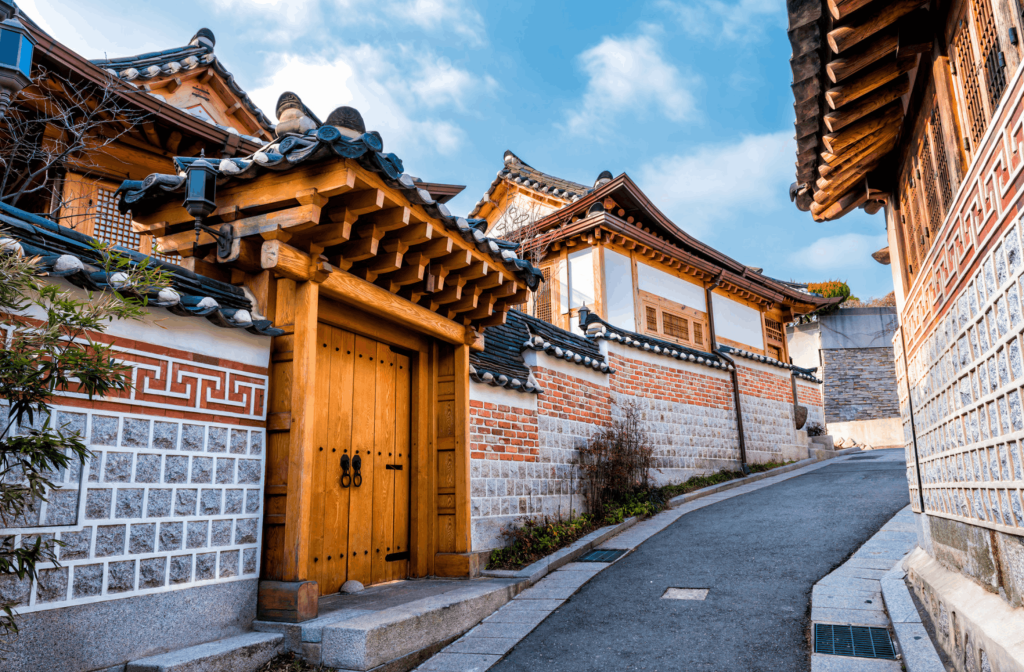
Best for: Cultural experience, traditional crafts, quieter atmosphere, Changdeokgung access
Not ideal for: Nightlife, modern Seoul, extensive shopping
Insadong is the traditional arts and craft district: tea houses, calligraphy shops, ceramics galleries, and independent restaurants in buildings that predate the rest of commercial Seoul. The main pedestrian street is tourist-facing but the alleys off it retain independent character. Ssamziegil, a courtyard complex in the middle of the district, has more interesting food and craft stalls than the main street.
Bukchon Hanok Village sits immediately north of Insadong: the famous stepped alley of preserved traditional houses photographed on every Seoul itinerary is a 15-minute walk from Insadong. Changdeokgung Palace and its Secret Garden are adjacent. Gyeongbokgung is 15 minutes on foot.
Insadong is not primarily a place to stay: there are fewer accommodation options than in Myeongdong or Hongdae. But small boutique hotels and guesthouses exist in the surrounding streets, and the quieter pace of the neighbourhood suits a specific type of visitor well.
Getting around: Anguk Station (Line 3) is the most useful station for this neighbourhood.
5. Itaewon / Hanam-dong
Best for: International dining, cocktail bars, diverse neighbourhood character
Not ideal for: Budget travellers, families, easy cultural site access
Itaewon has changed significantly in the past decade. The neighbourhood built around the US military base and international community remains, but has been joined by a more polished layer of independent restaurants and bars that have made the Hanam-dong strip (between Itaewon and Gyeongnidan) one of the best places to eat in Seoul.
The international food density here is exceptional: Levantine, Turkish, Ethiopian, Mexican, Japanese: the kind of variety that the more Korean-focused neighbourhoods do not have. The cocktail bar scene is strong. For an evening based around eating and drinking rather than sightseeing, Itaewon and Hanam-dong consistently outperform other districts.
Grand Hyatt Seoul sits on the Namsan hillside above the neighbourhood, accessible by a 20-minute walk or short taxi.
Getting around: Itaewon Station (Line 6). Slightly removed from the main subway lines but taxis are plentiful and the district is walkable internally.
6. Gangnam
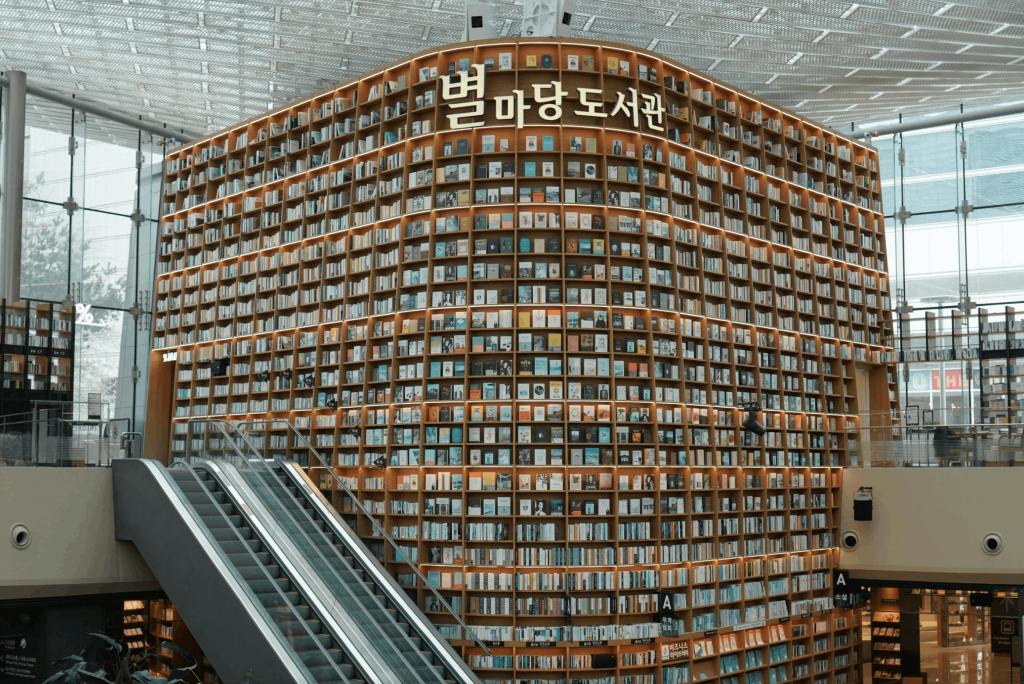
Best for: Upmarket shopping, the best restaurant concentration in Seoul, modern architecture
Not ideal for: Palace access, traditional Seoul culture, budget travellers
Gangnam (specifically the Apgujeong, Cheongdam-dong, and Sinsa-dong sub-neighbourhoods) is where the city’s best restaurants, flagship designer boutiques, and high-end independent retail are concentrated. Dosan Park, the anchor of the Apgujeong neighbourhood, is surrounded by the most interesting independent dining and retail in Seoul.
For travellers whose Seoul experience is primarily food-focused: who want the multi-course Korean contemporary restaurants, the specialty coffee culture, the chef-driven izakayas: Gangnam is the right base. It is less convenient for the major cultural sites north of the river, but the subway makes the trip manageable.
Josun Palace, Park Hyatt, Andaz Seoul, and InterContinental Parnas are all within the Gangnam cluster. The price of accommodation reflects the neighbourhood’s status.
Getting around: Apgujeong Rodeo Station (Bundang Line), Sinsa Station (Line 3), and Gangnam Station (Line 2) are the main transit points.
7. Seongsu-dong
Best for: The most interesting emerging neighbourhood in Seoul, design, coffee, Instagram
Not ideal for: Traditional Seoul experience, easy palace access, families
Seongsu has been the fastest-changing neighbourhood in Seoul for the past four years. What was an industrial area of shoe factories and auto workshops has become the city’s most interesting creative district: but unlike most gentrification stories, a significant number of the original workshops remain alongside the concept stores, galleries, and roasters.
The visual character is genuinely distinctive: a leather workshop beside a specialty coffee roaster beside a gallery beside a restaurant with a three-month waiting list. The pace is slower than Hongdae and the crowd is older and more design-aware. It is the neighbourhood that most visitors to Seoul do not visit and most Seoulites currently consider the most interesting.
Accommodation options are limited compared to the more established neighbourhoods: most visitors day-trip from a base elsewhere. But the handful of boutique hotels that have opened in the area in 2025–2026 are worth seeking out.
Getting around: Seongsu Station (Line 2), a short ride from the centre of Seoul.
Author’s Tip: Seongsu is at its best on weekday mornings before the afternoon crowds arrive. The streets between the station and the Han River: particularly around the old Sungsoo Tannery complex: are the most interesting in the neighbourhood. Go before the weekend pop-up market crowds take over.
8. Yeouido
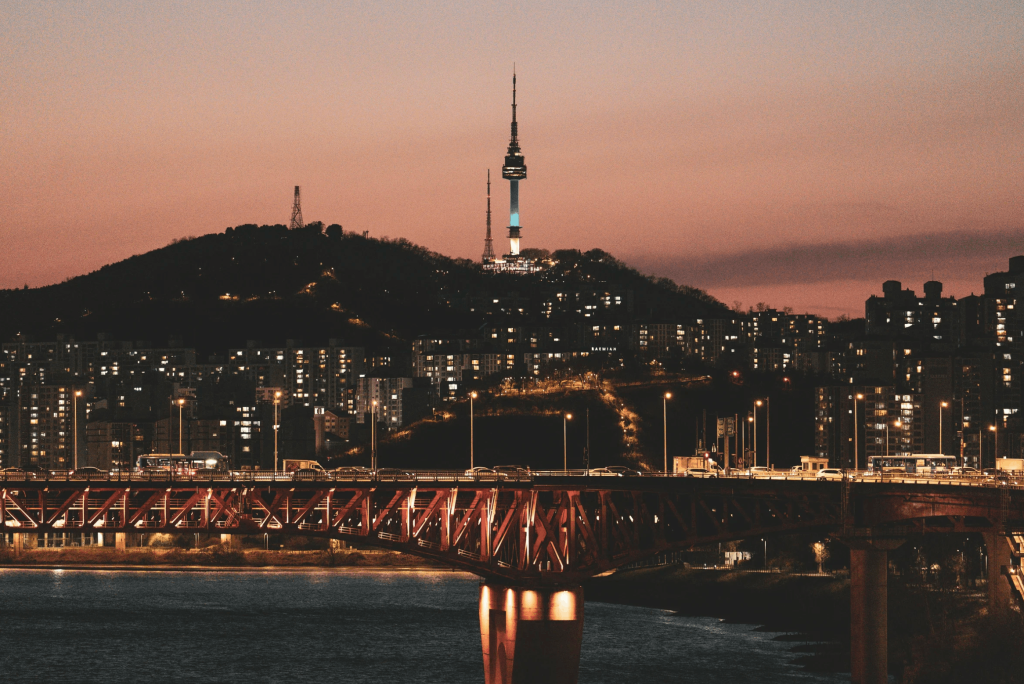
Best for: Business travellers, quieter stays, Han River access, cherry blossoms in spring
Not ideal for: Cultural sites, evening dining scenes, first-time visitors
Yeouido is Seoul’s financial district on an island in the Han River, and it has a character completely unlike the rest of the city: planned, clean, wide-avenueed, and quiet in the evenings. The IFC Mall and adjacent Yeouido Park are pleasant. The Han River is directly accessible from the park.
In April, Yeouido hosts Seoul’s most famous cherry blossom festival: the Yeouinaru riverside and Yeouido Park are lined with flowering trees and the crowds during peak blossom weekend are enormous. Outside that window, Yeouido is a calm and slightly characterless base that suits business travellers far better than leisure visitors.
Conrad Seoul is here. The ferry connection across the Han to Mapo and Hongdae adds an alternative transit option.
Getting around: Yeouinaru Station (Line 5) or National Assembly Station (Line 9). The express Line 9 connects quickly to Gangnam and the airport.
How to Choose
| If you are… | Stay in… |
|---|---|
| First-time visitor, want maximum convenience | Myeongdong or Gwanghwamun |
| Focused on palaces and traditional culture | Gwanghwamun or Insadong/Bukchon |
| Young traveller, budget-conscious, nightlife | Hongdae |
| Food-focused, want best restaurants | Gangnam (Apgujeong) |
| Interested in current Seoul, less tourist-heavy | Seongsu-dong or Hanam-dong |
| Business travel or long stay | Yeouido or Gangnam |
| Want the most atmospheric evening scene | Itaewon / Hanam-dong |
Practical Notes
Most of Seoul’s neighbourhoods are walkable within themselves but require the subway to connect them. The metro is fast (trains every 3–5 minutes on most lines), inexpensive (₩1,550–₩2,150/~$1.05–$1.45/€0.92–€1.28 depending on distance), and easy to navigate with English signage.
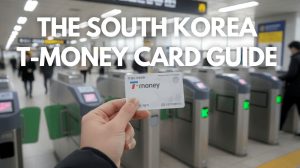
T-money card: The reloadable transit card that works on subway, bus, and most taxis. Buy at any GS25 or CU convenience store for ₩2,500 (~$1.65/€1.50) plus your initial load. Transfer discounts apply when switching from metro to bus within 30 minutes.
Noise: Myeongdong and Hongdae on weekend nights are genuinely loud. If light sleep is a concern, book upper floors or bring earplugs. Gwanghwamun, Insadong, and Yeouido are significantly quieter in the evenings.
FAQ
Which Seoul neighbourhood is best for tourists? Myeongdong for maximum convenience and proximity to major sites. Gwanghwamun for a quieter base closer to the palaces and hanok village. Hongdae for a more local feel at lower prices.
Which area of Seoul has the best nightlife? Hongdae for live music and younger crowds. Itaewon and Hanam-dong for cocktail bars and a more international crowd. Gangnam for upscale bars and late-night dining.
Is Gangnam worth staying in? Yes, if restaurants, design, and upmarket shopping are priorities. No, if you want easy access to the palaces and cultural sites of northern Seoul. The metro bridges the gap but adds 20–30 minutes of commuting to any palace visit.
Is Seongsu-dong worth visiting from another neighbourhood? Absolutely. Even staying in Myeongdong or Hongdae, a half-day in Seongsu is worth the subway ride. It is the most interesting neighbourhood in Seoul right now.
All prices verified June 2026. Exchange rates: ₩1,500 = $1 USD / ₩1,680 = €1 EUR.
👉 Seoul 3-Day Itinerary: Best Route for First-Time Visitors
👉 Best Luxury Hotels in Seoul 2026