There is a version of a Seoul skincare shopping trip where you spend ₩400,000 in 25 minutes at Olive Young, get home, and discover that three of the products are for oily skin, one duplicates something you already own, and the toner you bought because it looked good on the shelf makes your face itch. This happens more often than the K-beauty content you watched on YouTube would suggest.
The version that goes better starts with knowing what your skin actually needs, understanding which Korean ingredients address those needs, and having a rough plan before you walk through the door. That version does not require reading 47 ingredient glossaries. It requires understanding about ten things.
This guide covers those ten things: what the Korean skincare philosophy actually is, which ingredients matter for which concerns, where to buy and when, what the tax refund system actually gives you, and what customs rules mean for what you can bring home.
All prices reflect June 2026 rates. Exchange rate: ₩1,500 = $1 USD / ₩1,680 = €1 EUR
What Korean Skincare Is Actually Doing Differently
The core difference between Korean and most Western skincare approaches is the premise. Western skincare has traditionally been reactive: treating problems after they appear, often with strong actives. Korean skincare is built around prevention: keep the barrier healthy, keep hydration levels high, protect against UV daily, and the skin has less to recover from.
This is why the Korean routine has more steps. Not because more steps are inherently better, but because each step has a specific function: oil cleanser removes sunscreen and makeup without disrupting the barrier; water-based cleanser removes water-soluble residue; toner restores pH and delivers the first hydration layer; essence feeds the barrier from beneath; serum delivers targeted actives; moisturiser seals everything in; sunscreen protects.
For a tourist buying Korean skincare to use at home, this translates to one practical question: what is my routine currently missing? If you already have a good retinol and a good SPF, you probably do not need to add both to your basket. If you have never properly hydrated your skin before applying active ingredients, a layering toner and an essence will do more for you than a fifth serum.
Author’s Take: The most common mistake I see people make at Olive Young is buying the same category of product five times over. Four toners with slightly different ingredients is not a routine: it is a shelf. Figure out your one gap first, fill it with the best option in that category, and spend the rest of your budget on sunscreen and sheet masks.
How to Read Korean Skincare Labels
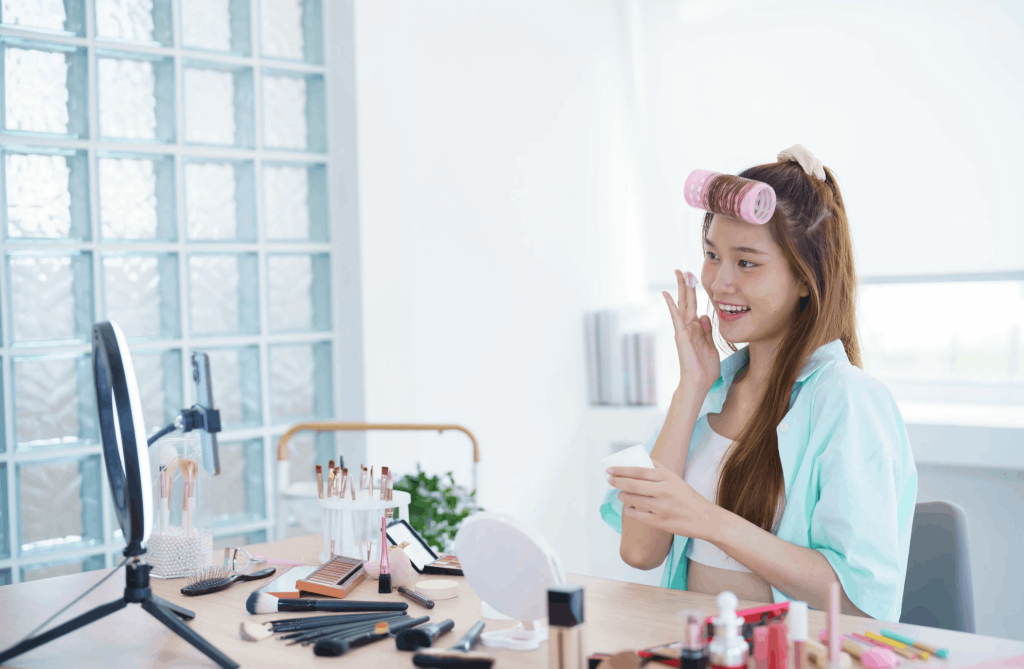
Most Korean skincare at Olive Young and department stores includes English ingredient lists, but the label conventions are not always obvious.
The ingredient list
Ingredients are listed in descending order of concentration, the same standard as the US and EU. The first five ingredients make up the majority of what you are putting on your skin. Anything after “water” is typically present at less than 1%.
Alcohol (에탄올, 알코올, denatured alcohol): If it appears in the first five or six ingredients, the product may be too drying for mature or sensitive skin. Not always a problem: some lightweight toners use it deliberately for quick absorption: but worth noting.
Fragrance (향료, parfum): A common irritant found in many mid-range Korean products. If your skin is reactive, look for 무향 (fragrance-free) on the front of the packaging.
Functional cosmetic claims: The Korean MFDS regulates specific claims: whitening (미백), anti-wrinkle (주름 개선), and sun protection (자외선 차단). Products carrying these labels must contain approved actives at regulated concentrations. It is a useful quality signal.
Dates
Korean cosmetics use YYYY/MM/DD format stamped on the base or seam of the packaging.
- 제조 (je-jo): Manufacturing date
- 까지 (kka-ji): Expiry date
Example: 20260412 제조 = manufactured 12 April 2026. 20290412 까지 = expires 12 April 2029.
Product types by suffix
| Korean term | Type | Texture | When in routine |
|---|---|---|---|
| 토너 (toner) | Hydrating toner | Watery | After cleansing |
| 에센스 (essence) | Essence | Light liquid | Before serum |
| 세럼 (serum) | Serum | Varies | After essence |
| 앰플 (ampoule) | Concentrated serum | Varies | Treatment step |
| 크림 (cream) | Moisturiser | Medium to rich | Penultimate step |
| 선크림 / 선세럼 | Sunscreen | Varies | Final morning step |
Ingredients Worth Understanding Before You Buy
Niacinamide (나이아신아마이드)
The most ubiquitous active in Korean skincare. Addresses pigmentation, enlarged pores, and uneven skin tone. Works across skin types, pairs well with most other ingredients, and is stable at concentrations from 2% to 10%. Very well tolerated including on sensitive skin.
Hyaluronic acid (히알루론산)
A humectant that draws moisture to the skin. Korean products often use multiple molecular weights: high molecular weight sits on the surface for immediate plumping; low molecular weight penetrates deeper for lasting hydration. The “10 types of hyaluronic acid” claims refer to this multi-weight approach.
Centella asiatica / CICA (시카)
An anti-inflammatory plant extract used for calming, barrier repair, and wound healing. Genuinely effective for sensitive, reactive, or acne-prone skin. Less relevant if your primary concern is pigmentation or firming.
Retinol (레티놀)
Used widely in Korean anti-ageing skincare. Stimulates cell turnover and collagen production. Korean formulas typically use lower concentrations than Western prescription retinoids and combine them with barrier-supporting ingredients to reduce irritation. Start at 0.05–0.1% if you have not used retinol before.
Adenosine
The MFDS-approved anti-wrinkle active in most Korean anti-wrinkle claim products. Has solid clinical data for reducing fine lines at 0.04% concentration. Present in many creams carrying the 주름 개선 label. Not well-known in Western skincare, but it earns its place.
Fermented ingredients (발효)
Specifically Korean. Brands like Sulwhasoo, su:m37°, and History of Whoo have invested heavily in fermentation technology applied to skincare actives. The process increases potency and bioavailability compared to unfermented versions of the same botanicals. The science is legitimate and the results are measurably different.
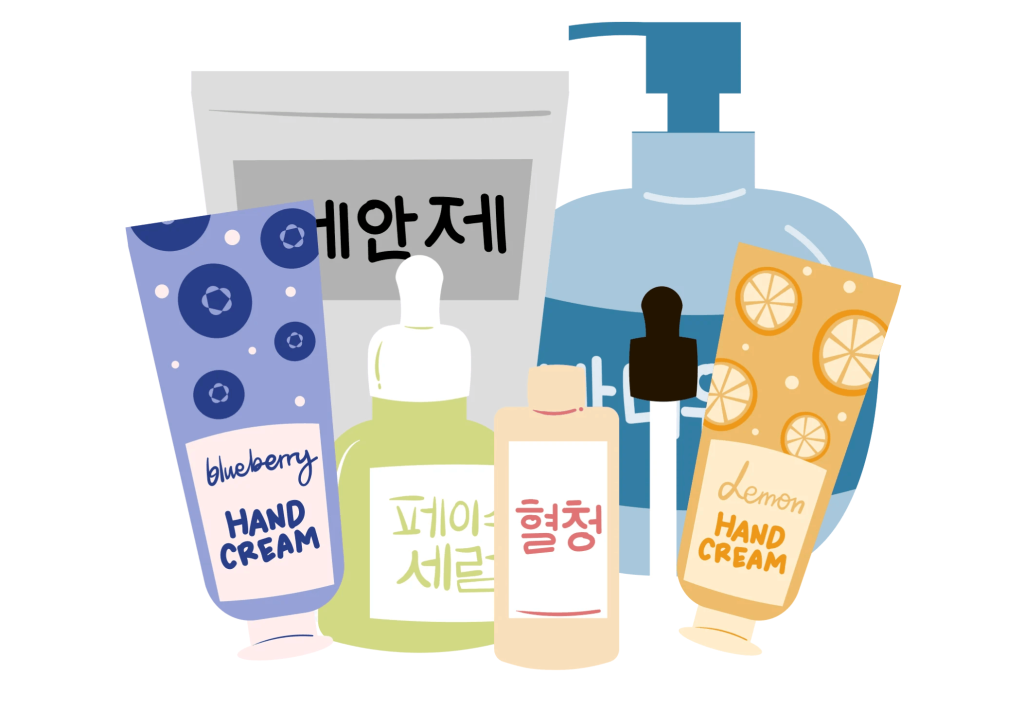
What Is Actually Worth Buying (and What Is Overrated)
Worth every won
Sunscreen. Korean sunscreen formulas are ahead of most Western equivalents in texture and wearability. The regulatory framework in Korea and the EU permits newer UV filter compounds not yet approved in the US, producing lighter, less white-cast-producing SPF products that you will actually wear daily. Buy sunscreen. Buy two. Prices in South Korea are 20–40% lower than internationally.
Author’s Tip: Buy sunscreen on the first or second day of your trip, not the last. The Beauty of Joseon Relief Sun, Round Lab Birch Juice, and TIRTIR cushions with SPF regularly sell out at Myeongdong and Hongdae branches by mid-afternoon during peak tourist season. I have arrived at 16:00 before and found the shelves cleared.
Hydrating toner and essence. The first-step hydration products that most Western routines skip. A good toner applied in two to three layers before serum creates the moisture base that makes everything applied afterward work better. The ingredient quality and price ratio in this category at Olive Young is excellent.
Sheet masks. Genuinely cheaper in South Korea than internationally, particularly in bulk. Mediheal 10-pack boxes and Torriden hyaluronic acid masks are typically 30–50% cheaper in-store than on international shipping platforms. Buy in bulk.
Worth it for specific concerns
Retinol products. If you already use retinol, the Korean mid-range options (IOPE Retinol Expert 0.1%, Cosrx Retinol 0.5 in Squalane) are well-formulated and cheaper than Western equivalents. If you are new to retinol, South Korea is an excellent place to start: the selection is wider and the prices are lower than anywhere else.
Vitamin C derivatives. Korean vitamin C formats (ascorbyl glucoside, ethyl ascorbic acid) are more stable than L-ascorbic acid and gentler on sensitive skin. Good for morning use under sunscreen for brightening and pigmentation support.
Often overrated for the price
Snail mucin as an add-on. The COSRX Advanced Snail 96 Mucin Power Essence is a good product. It works primarily as a hydration and barrier-support ingredient: which is useful. But if you already have a good moisturiser doing that job, the incremental benefit is modest. Worth buying if it replaces your moisturiser; less worth buying as a fifth layer in a routine that is already doing the job.
Whatever went viral this week. At any given moment, one or two products are trending on TikTok and selling out at Olive Young branches by mid-afternoon. These are often genuinely good: but so are the products that have been consistently popular for three years without going viral. Trend popularity and product effectiveness are related but not the same thing.
Author’s Take: I once bought a viral pore product that a dozen accounts had featured in haul videos. It irritated my skin for a week. The Round Lab Dokdo Toner I had been dismissing as “boring” for two trips turned out to be the product I have repurchased most consistently since. Check ingredients, not follower counts.
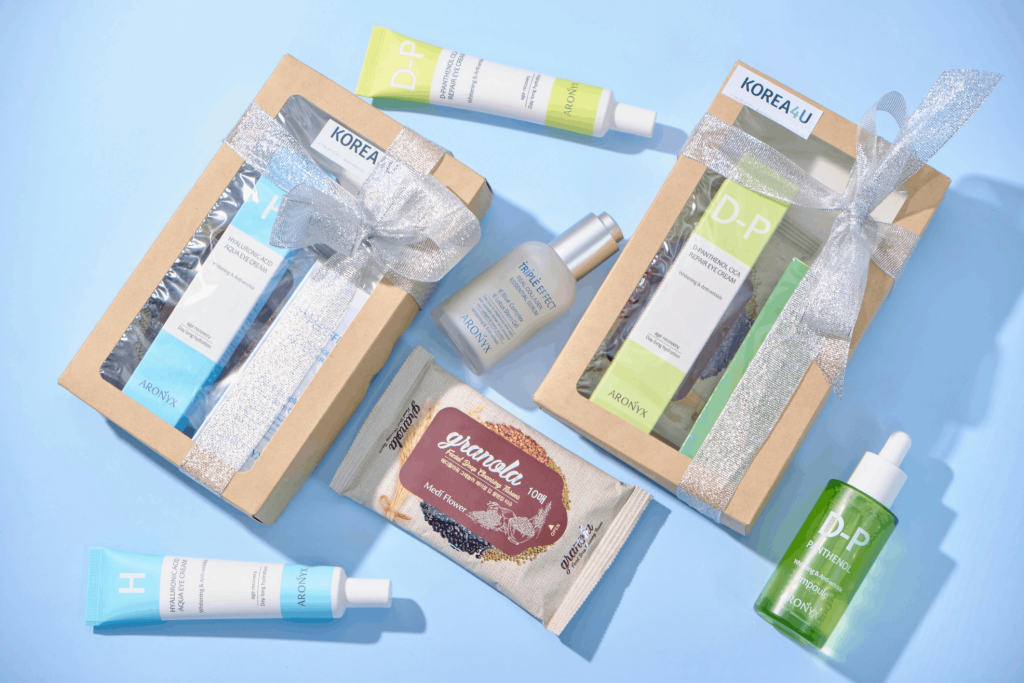
Where to Buy Korean Skincare in South Korea
Olive Young
The dominant mid-range retailer. Over 1,300 branches, with the most tourist-oriented locations in Myeongdong, Hongdae, and Gangnam. The Central Myeongdong Town flagship is the best single destination for most visitors: the fullest range, the most staff, immediate tax refund processing.
Tax refund at Olive Young: Show your passport before payment. The VAT deduction (typically 5–8% after processing fees) is applied instantly at checkout at most flagship branches. Eligible transactions must be between ₩15,000 and ₩1,000,000 (~$10–$667 / €8.90–€595) per receipt: purchases at or above ₩1,000,000 in a single transaction are not eligible for the in-store immediate refund and must be processed at an airport kiosk instead. The total trip refund cap is ₩5,000,000 (~$3,333 / €2,976).
Olive Day: The 3rd of every month. The biggest monthly promotion, with significant discounts on selected categories and the most aggressive 1+1 offers of the month. If your trip overlaps with the 3rd, plan accordingly.
Author’s Tip: The Myeongdong Town branch opens at 10:00. The most popular products: Beauty of Joseon Relief Sun, Anua Heartleaf Toner, TIRTIR cushions: sell out by early afternoon on peak tourist days. Arrive at opening if those are on your list. Come back in the evening for the considered purchases that do not disappear in the first hour.
Department Store Beauty Halls
Lotte, Shinsegae, and Hyundai department stores carry the full luxury Korean skincare ranges that Olive Young does not stock: Sulwhasoo, History of Whoo, OHUI, Donginbi, Amorepacific, and su:m37°.
The practical advantage over buying online is the consultation. Korean department store beauty counters offer proper skin assessments and product recommendations by trained staff. You can try the actual texture of a ₩150,000 cream on your skin before committing. This matters. Luxury Korean skincare textures vary significantly between products and what photographs beautifully on a review blog may not be what your skin needs.
The disadvantage is price: department store prices for mid-range products are higher than Olive Young, though comparable for luxury items.
Duty-Free at Incheon Airport
All major Korean luxury brands are available at Incheon International Airport departures duty-free, typically 15–20% below department store prices. The strategy that works:
- Buy mid-range products at Olive Young in the city, where the selection is wider
- Pre-order luxury items (Sulwhasoo, History of Whoo) at downtown duty-free counters in Myeongdong or Gangnam; collect at the airport departure gate
- Use Incheon Airport duty-free for any last-minute additions
Pre-ordering is important for high-demand luxury items. The Sulwhasoo Concentrated Ginseng Cream and History of Whoo Bichup Essence sell out at airport duty-free during peak travel periods.
What to Buy Based on Your Skin Concern
Dry or dehydrated skin
Hydrating toner, essence, ceramide moisturiser, hydrating sheet masks.
Best buys: Round Lab 1025 Dokdo Toner ₩15,000 (~$10 / €8.90), Sulwhasoo First Care Activating Serum ₩65,000–₩90,000 (~$43–$60 / €38–€54), Torriden Dive-In Hyaluronic Acid Masks (cheaper per unit in 10-packs).
Oily or combination skin
Water-based toner, lightweight sunscreen, BHA exfoliant.
Best buys: Anua Heartleaf 77% Soothing Toner ₩20,000 (~$13.35 / €11.90), Some By Mi AHA BHA PHA 30 Days Miracle Toner ₩18,000 (~$12 / €10.70), Isntree Watery Sun Gel SPF50+ ₩18,000 (~$12 / €10.70).
Acne-prone skin
BHA toner, centella-based calming products, lightweight non-comedogenic moisturiser, fragrance-free sunscreen.
Best buys: COSRX BHA Blackhead Power Liquid ₩18,000 (~$12 / €10.70), Skin1004 Madagascar Centella Ampoule ₩18,000 (~$12 / €10.70), Dr.Jart+ Cicapair Tiger Grass Cream ₩30,000–₩45,000 (~$20–$30 / €17.85–€26.80).
Hyperpigmentation and uneven tone
Niacinamide serum, vitamin C derivative, SPF every morning without exception.
Best buys: Beauty of Joseon Glow Serum: Propolis + Niacinamide ₩17,000 (~$11.35 / €10.10), COSRX The Niacinamide 15 Serum ₩22,000 (~$14.65 / €13.10).
Anti-ageing and mature skin
Retinol in the evenings, niacinamide or vitamin C in the mornings, rich moisturiser, SPF50+ PA++++ daily.
Best buys: IOPE Retinol Expert 0.1% ₩60,000–₩85,000 (~$40–$57 / €36–€51), Sulwhasoo Concentrated Ginseng Rejuvenating Cream ₩120,000–₩180,000 (~$80–$120 / €71–€107), Medicube PDRN Pink Peptide Serum ₩45,000–₩60,000 (~$30–$40 / €27–€36).
Customs: What You Can Actually Bring Home
US customs
Personal-use cosmetics require no formal declaration for most travellers. The key rules:
- Liquids, creams, gels, and aerosols in carry-on: containers of 100ml or less, all fitting in a single 1-litre clear bag
- Checked luggage: no volume restriction per item
- Duty-free personal exemption: $800 per person. Most skincare hauls fall below this. Goods above the threshold are subject to duty, typically 3–6% on cosmetics.
UK customs
Personal exemption: £390 per person for goods from outside the EU. Items above the threshold are subject to customs duty and VAT on arrival.
EU customs
Duty-free allowance: €430 per person by air. Check current rates for your specific country.
Packing practical notes
- Toners and essences in 200–300ml bottles must go in checked luggage
- Sheet mask boxes add up quickly: 10 masks per box, three or four boxes can be 1–1.5kg
- Korean sunscreens in 50ml tubes fit carry-on limits
- Sun sticks (solid format) are not classified as liquids: they do not count toward the 1L carry-on allowance
- Cushion foundations contain liquid in the cushion pad and count as liquids in carry-on bags
Editor’s Tip: Pack heavy skincare items in your checked bag on the way out, leaving room in carry-on for your actual daily-use items. When you buy at Olive Young, ask for a box at the counter if you are buying multiple items: they will pack your bottles more securely than a regular carrier bag.
A Shopping Strategy That Actually Works
The tourists who come away most satisfied from a Korean skincare shopping trip are almost always the ones who arrived with a shortlist. Not a rigid list: Korean beauty moves fast and something better than what you researched may be on a display right in front of you: but a shortlist of concerns and the category of product that addresses each one.
Before you go: Identify your two or three main skin concerns. Research the relevant ingredients: pigmentation needs niacinamide or vitamin C; dryness needs layering hyaluronic acid and ceramides; fine lines need retinol or peptides. Make a shortlist of five to eight products across those categories. Check which ones are at Olive Young versus department stores versus duty-free.
In the city: Visit the Myeongdong Town Olive Young first, early in the day, for mid-range products. Test textures on your inner wrist before buying anything expensive. For luxury items, visit a department store beauty counter for the consultation before deciding whether to buy there or at airport duty-free. Do not buy everything on the first day: you will find things during the trip that change your priorities.
At the airport: Collect any pre-ordered duty-free items at the departure gate. Use the Incheon Airport Olive Young (landside, before security) for anything you missed. Check weights and the 100ml carry-on rule before your final packing.
Author’s Tip: Take a photo of your full receipt at Olive Young. If you decide later that something is not right for your skin, returns must be made to the exact branch where you bought it, with the original receipt and the payment card. Airport branches cannot process returns for items bought at city branches.
Frequently Asked Questions
Is Korean skincare better than Western skincare?
Different strengths rather than a clear hierarchy. Korean skincare leads in sunscreen texture, fermented ingredient technology, and multi-step hydration philosophy. Western skincare leads in some retinoid delivery systems and prescription-strength actives. The best routine draws from both.
Do I need to buy Korean skincare in South Korea, or is it the same overseas?
Prices in South Korea are typically 20–40% lower than international platforms for the same products. The full range is available: many products sold at Olive Young never reach international retailers. Buying in South Korea also lets you test textures before purchasing, which matters particularly for expensive items.
How do I know if a product suits my skin before buying?
Most Olive Young stores have testers. Apply to your inner wrist or the back of your hand and check the texture and dry-down. For precise guidance, visit a department store beauty counter where trained staff can assess your skin and recommend products.
What is the difference between an essence and a serum?
An essence is applied before a serum and has a lighter, more watery texture. It functions as a hydration primer and absorption booster for products applied afterward. A serum is more concentrated and targeted: specific actives at higher concentrations. Some products blur the distinction: Sulwhasoo’s First Care Activating Serum is called a serum but functions as a first-step essence.
How many steps do I actually need?
For most adults: cleanser, toner, moisturiser, SPF in the morning. Cleanser, toner, targeted serum, moisturiser in the evening. Four to five steps each way. The full ten-step Korean routine is more aspirational than practical for everyday life. Add steps where you have a specific concern that the basic routine does not address.
Is it worth buying the luxury Korean brands (Sulwhasoo, History of Whoo)?
For specific concerns: mature skin, pigmentation, loss of firmness: the luxury brands deliver measurably different results from mid-range products. For general hydration and maintenance, mid-range Korean brands (Round Lab, Cosrx, Anua, Medicube) are excellent and significantly cheaper. The luxury brands earn their price when the concern warrants it.
All prices verified June 2026. Olive Young retail prices may vary slightly from brand official prices. Exchange rates: ₩1,500 = $1 USD / ₩1,680 = €1 EUR.
👉 Olive Young Shopping Guide for Tourists 2026