Fashion trends develop differently across regions, shaped by culture, lifestyle, climate, and consumer preferences. Over the past decade, clothing from South Korea has attracted growing international attention, especially through K-pop, Korean dramas, and social media influencers. At the same time, Western fashion continues to dominate global retail markets with established brands and long-standing design traditions.
This contrast leads many shoppers to compare Korean vs Western fashion in terms of fit, styling choices, and overall garment quality. While both fashion systems influence each other today, clear differences still exist in silhouettes, fabric selection, sizing standards, and production methods.
Understanding these differences helps shoppers choose clothing that suits their body type, personal style, and expectations regarding durability.
The Cultural Influence Behind Fashion Styles
Clothing trends reflect cultural attitudes toward appearance and social norms.
In South Korea, fashion often emphasises coordinated outfits, neat silhouettes, and seasonal trend cycles. Many Korean brands release collections designed around specific aesthetics seen in entertainment media. Young consumers frequently adopt these styles quickly, which accelerates trend turnover.
In contrast, fashion in countries such as the United States, the United Kingdom, and France typically highlights individual expression. Western fashion markets include a wide spectrum of styles ranging from luxury tailoring to streetwear and casual basics.
These cultural differences influence how designers approach clothing structure, color palettes, and styling.
Fit Differences: Korean vs Western Fashion
One of the most noticeable contrasts in Korean vs Western fashion appears in garment fit.
Korean Fashion Fit
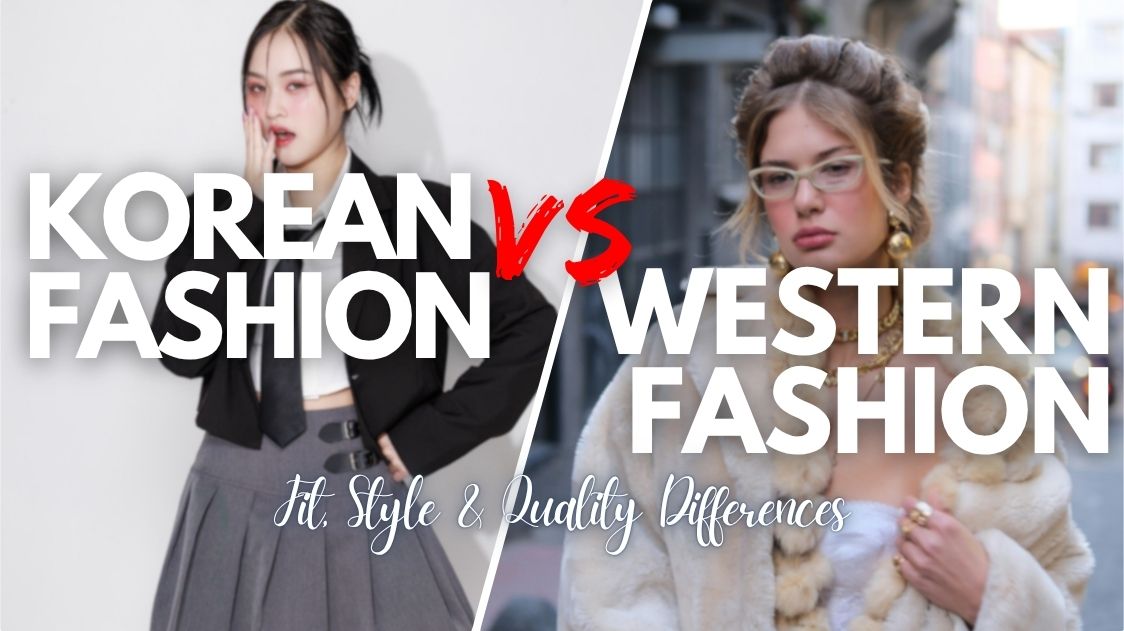
Korean clothing tends to focus on slim proportions and structured silhouettes. Many garments are designed to create a clean outline without excessive bulk.
Common characteristics include:
- Narrow shoulders in jackets and coats
- Shorter torso lengths in tops
- Higher waistlines in skirts and trousers
- Slightly cropped pant legs
At the same time, oversized styles also exist in Korean fashion, especially in streetwear. Oversized hoodies, loose sweaters, and wide trousers appear frequently in youth fashion trends.
However, even oversized pieces often maintain a balanced silhouette rather than exaggerated proportions.
Western Fashion Fit
Western clothing brands generally produce a wider range of fits. Body diversity in Western markets leads to expanded size ranges and multiple fit categories.
Common Western fit styles include:
- Relaxed cuts in casual clothing
- Athletic fits designed for muscular builds
- Tall and petite sizing options
- Wide-leg or extremely oversized silhouettes in streetwear
Western brands often prioritise comfort and mobility, particularly in casual clothing like denim, sweatshirts, and outerwear.
These structural differences strongly affect how garments look when worn, making fit one of the most important aspects when comparing Korean vs Western fashion.
Size Standards and Body Measurements
Sizing systems differ significantly between Korean and Western clothing brands.
Korean fashion companies usually follow local measurement standards that reflect average body proportions in South Korea. As a result, sizes often run smaller than those in Western markets.
Typical Korean size ranges include:
- Small (S)
- Medium (M)
- Large (L)
Some brands extend sizes further, though the selection may remain limited compared with Western retailers.
Western clothing brands frequently offer a broader range of sizes, including plus-size and extended fits. Numerical sizing systems such as US sizes or EU sizes also appear commonly in Western fashion.
Because of these differences, international shoppers comparing Korean vs western fashion should always review size charts before purchasing clothing from overseas brands.
Style Aesthetics and Visual Identity
The overall visual style of clothing differs significantly between Korean and Western fashion scenes.
Korean Style Characteristics
Korean fashion often emphasises polished and coordinated outfits. Neutral color palettes appear frequently, including:
- Beige
- Cream
- Gray
- Black
- Soft pastel tones
Layering also plays a key role. A typical Korean outfit may include several pieces combined carefully to create a balanced look.
Popular styling trends include:
- Oversized coats paired with slim trousers
- Layered shirts and knitwear
- Cropped jackets with high-waisted skirts
- Monochrome outfits with subtle accessories
These elements contribute to a refined and contemporary aesthetic.
Western Style Characteristics
Western fashion tends to display greater variation across subcultures and regions. Some segments prioritise minimalist wardrobes, while others focus on bold patterns, bright colours, or vintage influences.
Examples include:
- Denim-focused casual outfits common in the United States
- Tailored elegance associated with Paris fashion houses
- Experimental streetwear trends emerging from London
This diversity creates a broad spectrum of styles within Western fashion markets.
Streetwear: A Shared Influence
Streetwear represents one area where Korean vs Western fashion overlaps significantly.
Korean streetwear gained international popularity through K-pop artists who frequently wear oversized hoodies, cargo pants, and graphic prints during performances and public appearances.
Western streetwear brands also influence global fashion trends through skate culture, hip-hop music, and sportswear collaborations.
Despite this shared inspiration, differences still appear in styling details. Korean streetwear often combines oversized garments with carefully balanced proportions, while Western streetwear may push silhouettes toward more extreme shapes.
Both approaches attract global audiences interested in casual fashion trends.
Fabric Choices and Material Quality
Material selection plays an important role in clothing durability and comfort.
Many Korean fashion brands focus on lightweight fabrics suited for layering. Popular materials include cotton blends, polyester fabrics, and lightweight wool for seasonal outerwear.
These fabrics help maintain structured silhouettes without excessive weight.
Western brands vary widely in material selection. Premium fashion houses may use luxury fabrics such as cashmere or high-grade wool, while fast-fashion retailers prioritise affordability through synthetic blends.
When comparing Korean vs Western fashion, quality differences often depend more on the specific brand than the region itself.
Manufacturing and Production Methods
Clothing manufacturing processes vary between fashion markets.
A significant portion of Korean fashion brands produce garments within Asia, including domestic factories in South Korea as well as production facilities in neighbouring countries.
Many Korean brands operate with smaller production runs, allowing rapid responses to new fashion trends.
Western fashion companies also rely on global manufacturing networks. Major brands often produce clothing in countries with established textile industries.
Large production volumes allow Western retailers to distribute clothing worldwide through extensive retail networks.
Because of these differences, Korean vs Western fashion sometimes differs in product availability and restocking frequency.
Seasonal Fashion Trends
Seasonal fashion cycles also influence design strategies.
Korean fashion markets respond quickly to temperature changes and seasonal styling preferences. Spring and autumn collections often feature lightweight coats, cardigans, and layered outfits suited for mild weather.
Western fashion brands design collections according to broader climate variations across continents. Winter clothing, for example, may include heavier insulation to accommodate colder regions.
These seasonal differences contribute to the distinctive look of Korean vs Western fashion collections.
Price Ranges and Market Position
Price differences between Korean and Western clothing depend heavily on brand positioning.
Many Korean fashion labels operate within mid-range price categories. Their clothing remains accessible to younger consumers while still maintaining contemporary design.
Western fashion markets include both luxury designers and large fast-fashion retailers. This creates a wider price spectrum, from budget basics to high-end couture.
Shoppers comparing Korean vs Western fashion should consider not only style but also brand category when evaluating price and value.
Influence of Entertainment and Media
Entertainment industries strongly influence Korean fashion trends.
K-pop artists frequently wear coordinated outfits designed by stylists who work closely with fashion brands. Fans often follow these trends closely and purchase similar clothing items.
Korean television dramas also introduce popular fashion pieces such as trench coats, knit sweaters, and minimalist handbags.
Western fashion trends also connect with entertainment industries, particularly film and music. However, celebrity influence often varies across different markets and fashion segments.
Media exposure continues shaping global perceptions of Korean vs Western fashion.
Shopping Experience Differences
The retail environment can also differ between Korean and Western fashion markets.
In Seoul, fashion districts such as Hongdae and Garosugil showcase independent designers, boutique shops, and trend-focused retailers.
Western cities also feature well-known fashion districts. Examples include Oxford Street in London and Fifth Avenue in New York City.
Retail experiences vary depending on brand type, store size, and local fashion culture.
Which Style Is Better?
Comparing Korean vs Western fashion does not lead to a simple conclusion about which style is better. Each fashion system reflects its cultural background and consumer expectations.
Korean fashion stands out for its clean silhouettes, coordinated outfits, and trend responsiveness. Western fashion markets provide broader size ranges, diverse styles, and global brand recognition.
Many international shoppers now combine elements from both fashion systems to create unique personal wardrobes.
Final Thoughts
Fashion continues evolving as cultures exchange ideas through media, travel, and online platforms. Korean designers influence global trends, while Western fashion traditions still shape major segments of the clothing industry.
Understanding the differences in fit, styling, and production helps shoppers make better decisions when exploring international fashion brands.
For anyone interested in global style trends, comparing Korean vs Western fashion reveals how clothing reflects cultural identity, design philosophy, and changing consumer preferences.