

Planning a trip to South Korea can feel a bit overwhelming. There’s a lot to think about—visa rules, public transport, the best time to go, and how to use your days. It can take hours to figure everything out. This guide gives you everything you need to plan an easy and memorable trip to Seoul and beyond in 2026.
Explore more Korea travel tips →
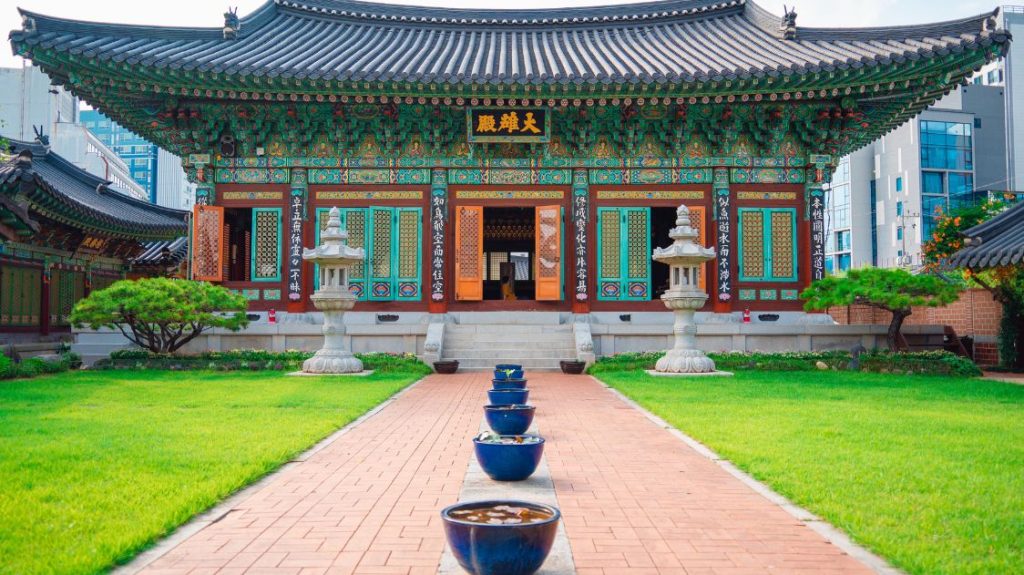
Visa Requirements and Entry Information
South Korea allows visa-free entry for many nationalities. Travelers from the United States, Canada, the United Kingdom, Australia, and most EU countries can stay for up to 90 days for tourism.
As of 2026, visa-free travelers need to apply for K-ETA (Korea Electronic Travel Authorization) before traveling. The application is online, costs 10,000 KRW (around $7 USD), and is usually approved within 24 to 72 hours. It’s best to apply at least a week before your trip. Once approved, it’s valid for two years and allows multiple entries.
When you arrive, you’ll need your passport (valid for at least six months), your K-ETA approval, a return ticket, and proof of where you’re staying.
When to Visit South Korea
Spring (April to May) is often seen as the best time to visit. Cherry blossoms bloom in early April, the weather is mild (around 15–20°C), and there are many festivals.
Summer (June to August) is hot and humid, with some rain, but it’s also beach season. Events like the Boryeong Mud Festival take place, and hotel prices can be lower.
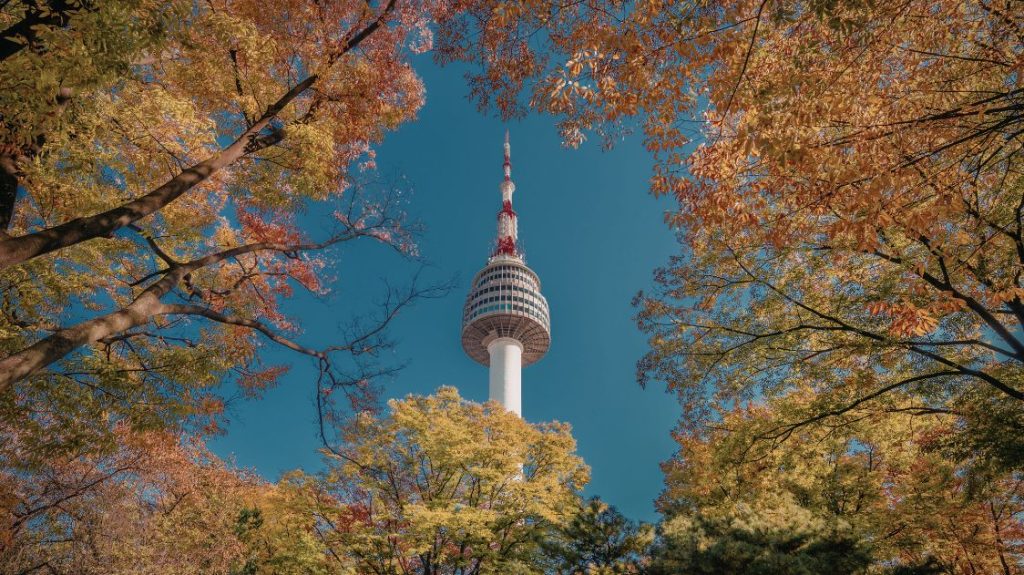
Autumn (September to November) is another great season, with cool weather and beautiful fall colors. Late October is especially popular in places like Nami Island and Seoraksan National Park.
Winter (December to February) is very cold (often below -10°C), but it has its own charm, with holiday lights, nearby ski resorts, and lower hotel prices.
Getting Around Seoul and South Korea
Public transport in Seoul is very easy to use. The subway reaches almost all major attractions, and signs are in English. A single ride costs about 1,250 KRW (less than $1 USD) with a T-money card.
Buy a T-money card when you arrive at Incheon Airport. It works on subways, buses, and taxis across the country. The card costs around 2,500 KRW, and you can get any remaining balance back at the end of your trip. Night buses (with an “N”) run from midnight to 5 AM on main routes.
For travel between cities, the KTX high-speed train is the best option. It connects major places like Busan (2.5 hours), Gyeongju (2 hours), and Jeonju (1 hour 40 minutes). You can book tickets through the Korail app. Buses are cheaper but take longer.
Need a SIM card or portable charger? Our guide to where to buy electronics in Seoul has you covered.
Budget Planning: How Much Does Korea Cost?
Budget travelers can spend 60,000 to 100,000 KRW ($40 to $70 USD) per day. This covers guesthouse accommodation (20,000 to 35,000 KRW), street food and affordable meals (15,000 to 25,000 KRW), transport (5,000 to 8,000 KRW), and one to two attractions.
Mid-range travelers should budget 150,000 to 250,000 KRW ($100 to $170 USD) per day for boutique hotels (80,000 to 150,000 KRW), sit-down restaurant meals including Korean BBQ (30,000 to 50,000 KRW), and multiple attractions.
Key savings strategies: eat at local restaurants over tourist-oriented ones, use T-money for all transport, visit free attractions like Gyeongbokgung Palace on Culture Day (last Wednesday of each month), and shop at convenience stores for breakfast.
Sample 5-Day Seoul Itinerary
Day 1: Arrival and Myeongdong. Arrive at Incheon Airport, pick up your T-money card and SIM, and take the AREX train to Seoul Station. Spend the evening exploring Myeongdong’s shops and street food, then head up to N Seoul Tower for sunset.
Day 2: Historic Seoul. Visit Gyeongbokgung Palace for the guard ceremony, then walk through Bukchon Hanok Village and explore Insadong. End the day with dinner in Ikseon-dong.
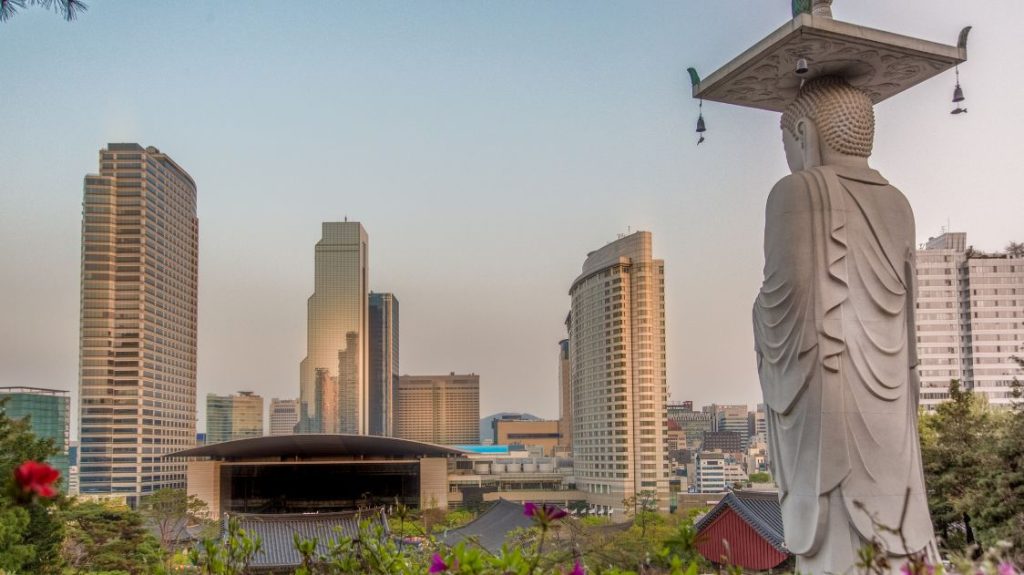
Day 3: Modern Seoul. Explore Gangnam, visit Starfield Library, stop by Bongeunsa Temple, and finish with views from Lotte World Tower.
Day 4: Markets and Local Life. Visit Noryangjin Fish Market, explore cafes in Seongsu-dong, and head to Hongdae in the evening for street performances and nightlife.
Day 5: Day Trip or Departure. Take a half-day trip to the DMZ, visit Nami Island, or do some last-minute shopping before heading to the airport.
For detailed activity ideas, see our guide to the best things to do in Seoul and the best food in Seoul.
Essential Apps and Practical Tips
Download these apps before your trip:
- Naver Map: The most accurate navigation app for Korea, far better than Google Maps for transit routing.
- KakaoTalk: Korea’s dominant messaging app, used by restaurants and services for reservations.
- Papago: Naver’s translation app for Korean text, speech, and camera translation.
- Subway Korea: Lightweight app for navigating the Seoul metro with real-time schedules.
Practical tips: remove shoes when entering homes and many traditional restaurants, carry some cash for smaller shops and market stalls, learn basic phrases (annyeonghaseyo for hello, gamsahamnida for thank you), and remember that tipping is not customary in Korea.
https://www.kr-webmagazine.com/busan-attractions/
Frequently Asked Questions
Do I need to speak Korean to travel in South Korea?
No. All subway stations have English signage, most tourist-area restaurants offer English or picture menus, and younger Koreans often speak conversational English. Translation apps bridge any gaps. Learning basic pleasantries is appreciated but not essential.
Is South Korea safe for tourists?
South Korea is one of the safest countries for tourists. Violent crime rates are extremely low, public transport is reliable, and many Seoul hospitals have international clinics with English-speaking staff. Standard travel precautions are sufficient.
Can I use credit cards everywhere in Korea?
Cards are accepted almost everywhere in Seoul, including convenience stores, restaurants, and subway machines. However, some traditional market vendors and small stalls are cash-only. Carrying 50,000 to 100,000 KRW as backup is wise, especially for markets like Namdaemun or Gwangjang.
Final Tips
The most important advice for first-time visitors: give yourself enough time. Seoul alone can fill a week, and rushing through a packed itinerary means missing the small moments that make Korea special. Build flexibility into your schedule and trust that Korea’s excellent infrastructure makes spontaneous changes easy. The subway runs until midnight, convenience stores never close, and there is always another incredible meal waiting around the corner.