
The ten-step Korean skincare routine that circulated online in the early 2010s was never really the point. It was a marketing simplification of something more nuanced: the idea that skin health is built in layers, that different products serve different functions, and that consistency over time matters more than any single product.
For a beginner, the actual starting point is much simpler than ten steps. This guide explains the Korean skincare philosophy, which steps matter and why, and how to build a routine that works: starting with four products and adding from there as your skin responds.
All prices at Olive Young Seoul, June 2026. Exchange rates: ₩1,500 = $1 USD / ₩1,680 = €1 EUR
What Korean Skincare Is Actually About
Western skincare has traditionally focused on correction: treating problems after they appear, often with strong actives that can irritate the skin in the process. Korean skincare starts from a different premise: if the barrier is healthy, hydration is maintained, and UV protection is consistent, problems are less likely to develop in the first place.
This shifts the focus toward gentler cleansing, layered hydration, and daily SPF. The actives (retinol, vitamin C, exfoliating acids) come later and are applied on top of an already well-maintained base rather than as the primary treatment.
The practical result for a beginner: start with barrier support and hydration before adding anything targeted. A skin that is well-hydrated and has a functioning barrier responds better to actives than one that is dry and irritated.
The Four Products You Actually Need to Start
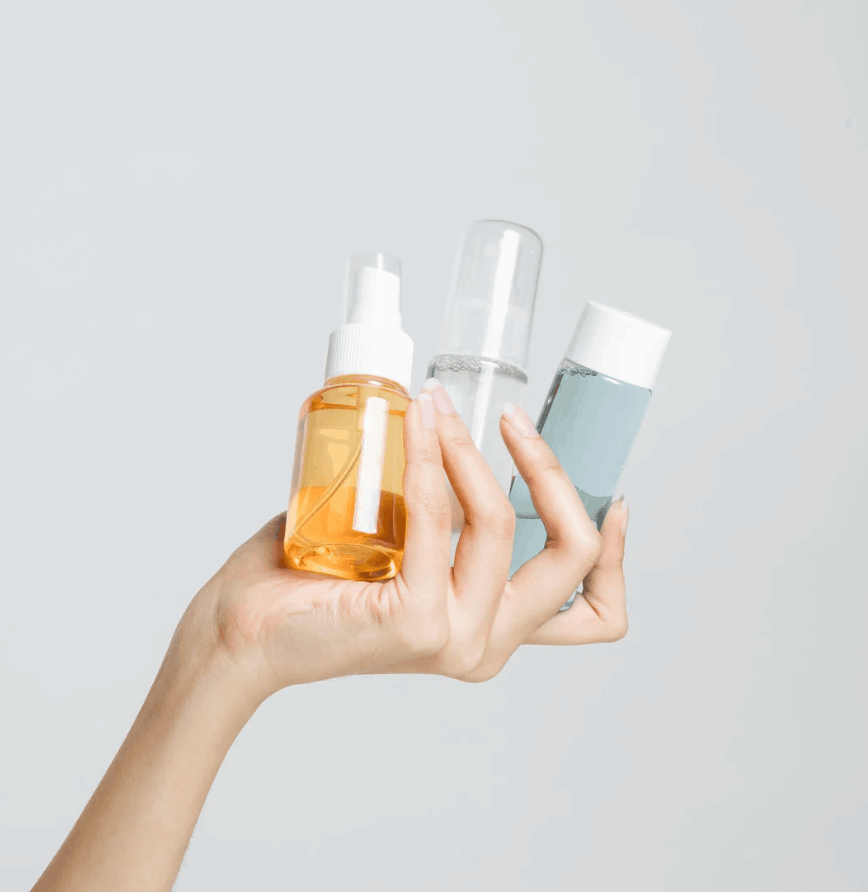
Before building to more steps, get these four right. They form the base that everything else works on top of.
1. A Gentle Cleanser
The cleanser is the first step and the one that sets the conditions for everything that follows. Korean skincare uses low-pH cleansers (pH 4.5–6.5, close to the skin’s natural acidity of around 5.5) because they clean effectively without disrupting the acid mantle: the slightly acidic film that protects the barrier.
Standard foaming cleansers and many Western face washes have a pH of 8–10, which strips the barrier and leaves the skin tight. That tightness is not clean skin: it is a damaged barrier.
Recommended for beginners:
COSRX Low pH Good Morning Gel Cleanser (₩12,000–₩15,000/~$8–$10/€7–€9): pH 5.0, gentle, no fragrance. Removes overnight products without stripping. Suitable for all skin types including sensitive and acne-prone.
Anua Heartleaf Quercetinol Pore Deep Cleansing Foam (₩18,000–₩22,000/~$12–$15/€11–€13): slightly richer lather, with calming heartleaf extract. Better for drier skin or colder climates.
For evening cleansing if you wear sunscreen or makeup: double cleanse. First an oil-based cleanser or balm to dissolve sunscreen and makeup, then the water-based cleanser above. The Banila Co Clean It Zero Balm (₩15,000–₩19,000/~$10–$13/€9–€11) is the standard recommendation for the first cleanse.
2. A Hydrating Toner (Not an Exfoliating Toner)
Korean toners are not the same as Western toners. The Western version (alcohol-based, pore-tightening) actively damages the barrier. Korean hydrating toners are closer to a first layer of moisture: thin, watery, applied immediately after cleansing to begin restoring hydration before it evaporates.
The method matters: apply with your hands rather than a cotton pad. Press the toner gently into the skin with your palms rather than swiping. This deposits more product where it needs to go and does not waste it in the fibres of a pad.
For extra hydration, the seven-skin method applies the toner in five to seven thin layers in sequence, each one pressed in and allowed to absorb before the next. This builds hydration more effectively than one thick layer and is particularly useful for dry or dehydrated skin.
Recommended for beginners:
Round Lab 1025 Dokdo Toner (₩15,000/~$10/€8.90): deep-sea mineral water base with mild enzymatic exfoliation. Hydrating, slightly brightening, suitable for all skin types. A consistent bestseller that does its job without drama.
Anua Heartleaf 77% Soothing Toner (₩20,000/~$13.35/€11.90): 77% heartleaf extract base, extremely calming. Best for sensitive, reactive, or redness-prone skin.
Some By Mi AHA BHA PHA 30 Days Miracle Toner (₩18,000/~$12/€10.70): this one is an exfoliating toner (AHA, BHA, and PHA acids), not a hydrating toner. Use it two to three times per week maximum as a separate step, not as your daily hydration toner. Good for oily or congested skin types with texture concerns.

3. A Moisturiser
The moisturiser seals in the hydration built in the previous steps. Korean moisturisers tend to be lighter than Western equivalents because they work on top of already-hydrated skin rather than trying to compensate for dryness that was not addressed earlier.
Skin type matters here more than anywhere else in the routine:
Oily or combination skin: gel-texture or water-gel moisturisers that hydrate without heaviness or a greasy finish.
Dry or normal skin: cream-texture moisturisers that provide both immediate comfort and lasting moisture retention.
Recommended for beginners:
COSRX Oil-Free Ultra-Moisturizing Lotion with Birch Sap (₩18,000–₩22,000/~$12–$15/€11–€13): lightweight, absorbs quickly, no greasiness. Good default for oily and combination skin.
Beauty of Joseon Dynasty Cream (₩22,000–₩30,000/~$15–$20/€13–€18): medium weight, nourishing, built on a traditional Korean herbal complex. Suits normal to dry skin and works well in both morning and evening routines.
Laneige Water Sleeping Mask (₩28,000–₩35,000/~$19–$23/€17–€21): used as an overnight moisturiser rather than a daytime cream. Applied as the last step in an evening routine, it delivers intense hydration overnight and is particularly good for dehydrated skin or as a once or twice-weekly treatment.
4. Sunscreen (SPF50+ PA++++)
This is the most important product in any skincare routine, including Korean skincare. UV radiation is the single largest driver of visible skin ageing: more than genetics, more than stress, more than diet. Every other skincare product becomes more effective when SPF is used consistently because it prevents the damage that creates the problems everything else is trying to address.
Korean sunscreens are specifically worth knowing because the regulatory framework in Korea (and the EU) permits UV filter compounds not yet approved in the US. The result is sunscreens that achieve SPF50+ PA++++ protection in formulas that feel like moisturisers rather than barriers: they absorb quickly, leave no white cast, and do not pill under makeup.
PA++++ (four plus signs) indicates very high UVA protection: the highest rating in the PA system. UVA causes tanning, premature ageing, and contributes to skin cancer. It penetrates glass and cloud cover. PA++++ is the correct daily minimum.
Recommended for beginners:
Beauty of Joseon Relief Sun: Rice + Probiotics SPF50+ PA++++ (₩18,000/~$12/€11): the most consistently recommended Korean sunscreen across skin types. Rice extract and probiotic base makes it nourishing as well as protective. Absorbs in 20–30 seconds, no white cast on light to medium skin tones, does not pill under makeup. The standard recommendation and for good reason.
Isntree Hyaluronic Acid Watery Sun Gel SPF50+ PA++++ (₩18,000/~$12/€11): gel texture, completely matte finish, best for oily skin. If you find other sunscreens feel dewy or shiny, this is the alternative.
Beauty of Joseon Matte Sun Stick: Mugwort + Camellia SPF50+ PA++++ (₩15,000/~$10/€9): solid stick format for reapplication over makeup. Not a replacement for the morning sunscreen but an essential complement for midday touch-ups.
The Four-Step Morning and Evening Routine
Morning:
- Gentle cleanser (or just rinse with water if skin is not oily)
- Hydrating toner (pressed in with hands)
- Moisturiser
- Sunscreen (applied last, over everything)
Evening:
- Oil cleanser or balm cleanser (if wearing SPF or makeup)
- Water-based cleanser
- Hydrating toner
- Moisturiser
That is it to start. Four products in the morning, four in the evening (two of which are the same), most of which take under 30 seconds each to apply.
Adding Steps: What Comes Next and When
Once the base four-step routine is consistent for 3–4 weeks and your skin is responding well (hydrated, less tight, barrier stable), you can add one step at a time.
Essence (add after week 4)
An essence is applied between toner and moisturiser. It is lighter than a serum and functions as an additional hydration layer and absorption booster: the products applied after it penetrate better.
COSRX Advanced Snail 96 Mucin Power Essence (₩20,000–₩28,000/~$13–$19/€12–€17): 96% snail secretion filtrate. Intensely hydrating, smooths texture, supports repair. The most widely used Korean essence internationally. Suitable for all skin types.
Missha Time Revolution First Treatment Essence (₩40,000–₩55,000/~$27–$37/€24–€33): fermented yeast extract base. Brightening and texture-smoothing over 4–6 weeks of consistent use. The original Korean fermented essence.
Serum (add after week 6–8, based on specific concern)
A serum targets a specific concern: pigmentation, firmness, acne, dullness. Add only one serum to start and wait 3–4 weeks before assessing and potentially adding another.
For brightening and even tone: Beauty of Joseon Glow Serum: Propolis + Niacinamide (₩17,000/~$11.35/€10.10). Niacinamide at 2% with propolis extract. Visible tone improvement over 4–6 weeks.
For firmness and anti-ageing: Medicube PDRN Pink Peptide Serum (₩45,000–₩60,000/~$30–$40/€27–€36). PDRN and nine peptide types targeting density and elasticity.
For acne-prone skin: COSRX Advanced Snail Mucin Essence doubles as an acne support product. For active breakouts, add COSRX AC Collection Blemish Spot Clearing Serum (₩18,000–₩22,000/~$12–$15/€11–€13) as a targeted spot treatment.
Retinol (add after month 2–3, evenings only)
Retinol is the most evidence-backed anti-ageing active and the one most worth adding eventually. But it requires an already-stable barrier before introduction: starting on irritated or dehydrated skin makes the adjustment period worse.
COSRX Retinol 0.5 in Squalane (₩28,000/~$18.65/€16.65): 0.5% retinol in a squalane base that minimises irritation. Use twice per week for the first month, then build to three to four times. Never use on the same night as an exfoliating acid.
Exfoliant (use 2–3 times per week maximum, not daily)
Chemical exfoliation (AHA, BHA, or PHA) removes dead skin cell buildup, improving texture and allowing subsequent products to penetrate better. Do not start until the barrier is stable: exfoliation on a compromised barrier is counterproductive.
Some By Mi AHA BHA PHA 30 Days Miracle Toner (₩18,000/~$12/€10.70): used in place of the hydrating toner on exfoliation nights only.
COSRX BHA Blackhead Power Liquid (₩18,000/~$12/€10.70): 4% betaine salicylate (a gentler form of salicylic acid). Better for oily and congested skin, especially blackheads.
Common Beginner Mistakes
Using too many actives at once. The instinct when starting Korean skincare is to buy everything and use it all. The result is usually irritation or a breakout that you cannot attribute to any specific product. Introduce one new product at a time and wait two weeks before the next addition.
Skipping SPF. Every active ingredient you apply: retinol, vitamin C, AHA: increases photosensitivity. Using actives without SPF accelerates the damage you are trying to address.
Expecting immediate results. Hydration improves quickly. Texture improves over weeks. Pigmentation and firmness improve over months. Most Korean skincare is not designed for dramatic immediate results: it is designed for cumulative, sustainable improvement.
Confusing “fragrance-free” with “unscented.” Unscented products may contain masking fragrances that neutralise odour without being labelled as fragrance. Fragrance-free (무향) means no fragrance compounds were added. For sensitive skin, fragrance-free is the safer specification.
Using exfoliating toners daily. AHA, BHA, and PHA toners are for 2–3 uses per week at most. Daily exfoliation disrupts the barrier faster than it rebuilds, particularly on mature or sensitive skin.
Reading Korean Skincare Labels
Most products sold at Olive Young have English ingredient lists, but some label conventions are worth knowing.
Ingredients are listed in descending order of concentration: the same standard as the US and EU. The first five ingredients make up most of what you are putting on your skin.
제조 (je-jo): Manufacturing date
까지 (kka-ji): Expiry date
Both in YYYY/MM/DD format, stamped on the base or seam of the packaging.
무향: Fragrance-free
EWG 녹색등급: Products displaying EWG Green rating have been assessed for ingredient safety: a useful additional signal for sensitive skin shoppers.
Where to Buy
In South Korea: Olive Young is the primary destination. The Central Myeongdong flagship has the most complete range. Arrive early: popular products like the COSRX Snail Mucin Essence and Beauty of Joseon Relief Sun sell out by early afternoon at busy branches during peak tourist season.
Tax refund: Olive Young participates in the tourist tax refund system. Show your passport before payment on purchases of ₩15,000 or more for an immediate VAT deduction (typically 5–8% after processing fees).
Internationally: COSRX, Some By Mi, Beauty of Joseon, Anua, and Round Lab are all available on Amazon and through Korean beauty retailers like YesStyle and Stylevana. Prices are typically 20–35% higher than buying in Seoul.
Adjusting the Routine by Skin Type
The four-step base routine works for everyone, but the specific products you choose within each step: and the actives you add later: depend on your skin type.
Oily and Combination Skin
Oily skin produces excess sebum, leading to shine, enlarged pores, and a tendency toward breakouts. The Korean approach here is counterintuitive for many beginners: oily skin still needs hydration. Skipping moisturiser because skin feels oily actually increases oil production: the skin compensates for dehydration by producing more sebum.
What to prioritise: Water-based, oil-free products that hydrate without adding heaviness. Gel textures over cream textures. BHA (salicylic acid or betaine salicylate) for pore clarity and controlling breakouts. Lightweight, non-comedogenic sunscreen.
Recommended routine additions:
- Cleanser: COSRX Low pH Good Morning Gel Cleanser (already listed) or Purito From Green Deep Foaming Cleanser (₩12,000/~$8/€7.15)
- Toner: Some By Mi AHA BHA PHA Toner 2–3 nights per week for exfoliation; Anua Heartleaf 77% Toner on other days for calming
- Moisturiser: COSRX Oil-Free Ultra-Moisturizing Lotion (already listed) or Skin1004 Madagascar Centella Gel Cream (₩18,000/~$12/€11): gel texture, non-comedogenic
- Active to add: COSRX BHA Blackhead Power Liquid (₩18,000/~$12/€11): 4% betaine salicylate, 2–3 nights per week for congestion
Avoid: Heavy cream moisturisers, products with high mineral oil content, and layering too many products: oily skin tends to pill with excessive layering.
Dry Skin
Dry skin produces insufficient sebum and struggles to retain moisture. The barrier is often compromised, leading to tightness, flaking, and sensitivity. Korean skincare’s layered hydration approach is particularly well-suited to dry skin: building moisture in stages is more effective than applying one heavy product.
What to prioritise: Rich cream moisturisers, hydrating essences, ceramides for barrier repair, the seven-skin method with toner. Avoid harsh or drying ingredients: alcohol high in the ingredient list, strong acids daily.
Recommended routine additions:
- Cleanser: Banila Co Clean It Zero Cleansing Balm for first cleanse (₩15,000–₩19,000/~$10–$13/€9–€11); Anua Heartleaf Foam Cleanser (gentle, nourishing) for second cleanse
- Toner: Round Lab 1025 Dokdo Toner, applied in 3–5 layers using the seven-skin method
- Essence: COSRX Advanced Snail 96 Mucin Power Essence: adds a significant hydration layer before moisturiser
- Moisturiser: Laneige Water Sleeping Mask as evening moisturiser; Beauty of Joseon Dynasty Cream for daytime
- Active to add: Ceramide-containing products, such as Dr.Jart+ Cicapair Tiger Grass Cream (₩30,000–₩45,000/~$20–$30/€17.85–€26.80) for intensive barrier repair
Avoid: Foaming cleansers with high pH, daily exfoliation, retinol without adequate moisturiser buffering.
Sensitive and Reactive Skin
Sensitive skin reacts to ingredients that most people tolerate: fragrance, alcohol, essential oils, and some acids. The reaction usually presents as redness, itching, stinging, or breakouts immediately after using a new product.
What to prioritise: Short ingredient lists. Fragrance-free (무향) products. Centella asiatica and heartleaf for calming. Introduce one new product at a time and wait two weeks before adding another.
Recommended routine additions:
- Cleanser: COSRX Low pH Good Morning Gel Cleanser (fragrance-free) or Anua Heartleaf Quercetinol Foam (calming)
- Toner: Anua Heartleaf 77% Soothing Toner: 77% heartleaf extract specifically for reducing redness and reactivity
- Essence: Skin1004 Madagascar Centella Ampoule (₩18,000/~$12/€11): centella-focused, calming
- Moisturiser: Skin1004 Madagascar Centella Cream (₩18,000/~$12/€11): minimal formula, barrier-supporting
- Sunscreen: Purito Daily Go-To Sunscreen SPF50+ PA++++ (₩15,000/~$10/€9): mineral filters, fragrance-free, formulated for sensitive skin
Avoid: Fragranced products, high-concentration acids initially, products with many actives layered simultaneously.
Acne-Prone Skin
Acne-prone skin is not the same as oily skin, though they often overlap. Acne involves a combination of excess sebum, clogged pores, and bacterial activity. The Korean approach avoids the aggressive drying treatments common in Western acne care (benzoyl peroxide, strong salicylic acid at high concentrations) in favour of gentler but consistent pore management.
What to prioritise: BHA for pore clearing. Non-comedogenic products throughout. Niacinamide for reducing redness and post-acne marks. Targeted spot treatments rather than full-face aggressive actives.
Recommended routine additions:
- Cleanser: COSRX Low pH Good Morning Gel Cleanser: the low pH prevents bacterial growth without drying
- Toner: Some By Mi AHA BHA PHA Toner (2–3 nights per week) for active management
- Targeted treatment: COSRX AC Collection Blemish Spot Clearing Serum (₩18,000–₩22,000/~$12–$15/€11–€13): applied directly to active spots only, not all over
- Moisturiser: Skin1004 Centella Gel Cream or COSRX Oil-Free Lotion: lightweight, non-comedogenic
- Active to add: Beauty of Joseon Glow Serum: Propolis + Niacinamide (₩17,000/~$11.35/€10.10): 2% niacinamide reduces redness and fades post-acne hyperpigmentation over 4–6 weeks
Avoid: Comedogenic oils (coconut oil is a common offender in natural skincare), heavy cream moisturisers, manual scrubs on active breakouts.
Ingredients to Avoid as a Beginner
Starting a Korean skincare routine means introducing several new products at once. These ingredients increase the risk of a reaction, particularly on skin that has not been exposed to them before.
Denatured alcohol (알코올, 에탄올) high in the ingredient list: Drying, barrier-disrupting. Common in lightweight toners. Look for it in the first five ingredients: if it appears there, avoid on sensitive or dry skin.
Fragrance (향료): The most common skincare irritant. Present in many mid-range Korean products. For beginners whose skin reactivity is unknown, starting with fragrance-free products reduces the number of variables.
Essential oils (tea tree, lavender, rose): Often marketed as natural and gentle. In practice, they are among the more common contact allergens in skincare. Particularly problematic at high concentrations.
High-concentration AHA on compromised skin: Glycolic and lactic acid are effective exfoliants but aggressive on a damaged barrier. Start at low concentrations (5–7% AHA) and use 1–2 times per week before increasing frequency.
Benzoyl peroxide: Standard in Western acne products but drying and oxidising. Korean acne care generally avoids it. BHA (salicylic acid or betaine salicylate) is the preferred alternative.
Frequently Asked Questions
How many steps do I actually need?
Four to start: cleanser, toner, moisturiser, SPF. Add steps one at a time as you understand what your skin needs.
Is the Korean skincare routine suitable for men?
Yes. The products and principles apply regardless of gender. The routine is often marketed toward women but the skin biology is the same.
Can I mix Korean and Western products?
Yes. Korean and Western skincare products are compatible. If a Western retinoid or vitamin C serum is already working for you, keep it. Layer Korean hydration and barrier support products around it.
What is the difference between an essence and a serum?
An essence is lighter and applied earlier: it is a hydration layer and absorption booster. A serum is more concentrated and targets a specific concern. Some products blur the distinction (Sulwhasoo’s First Care Activating Serum functions as an essence), but the general principle holds.
How long before I see results?
Hydration: within days. Texture improvement: 3–4 weeks. Pigmentation and firmness: 3–6 months. Consistent use over time matters more than the number of products used.
All prices at Olive Young Seoul, verified June 2026. Exchange rates: ₩1,500 = $1 USD / ₩1,680 = €1 EUR.
👉 Korean Skincare Buying Guide 2026
👉 Korean Sunscreen Guide 2026: Best SPF Products