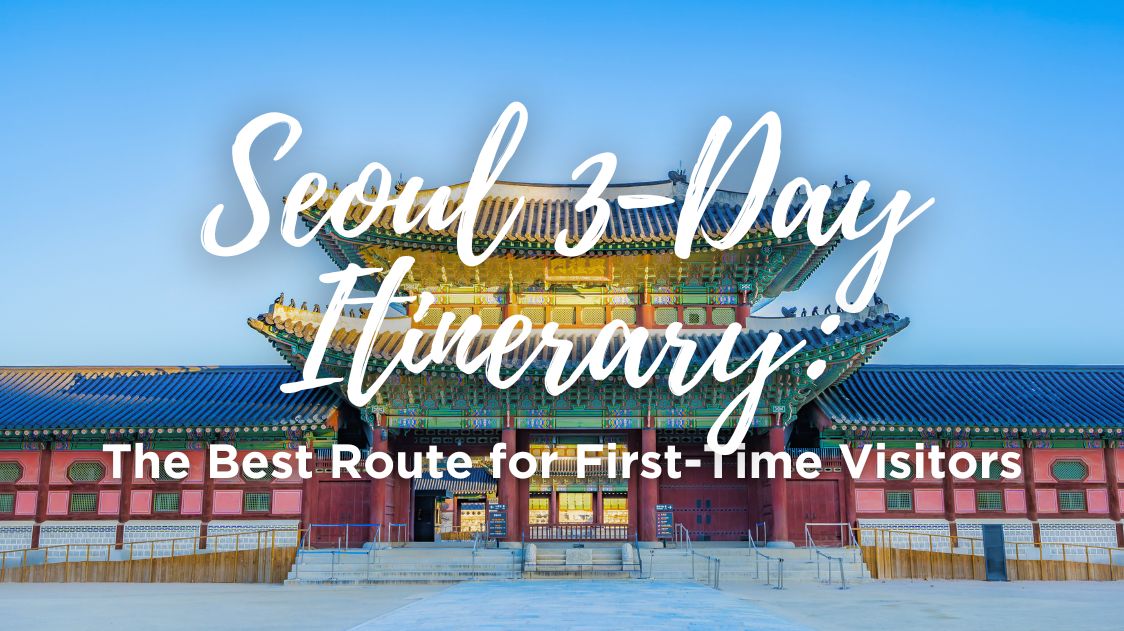
Three days in Seoul is enough to cover the city’s most iconic sights, eat well, explore distinct neighbourhoods, and leave feeling like you actually saw the place rather than rushed through it. The key is structure: Seoul is divided by the Han River into distinct northern and southern halves, and each area has a completely different character. Moving efficiently between them makes the difference between a good trip and a genuinely memorable one.
This itinerary is built around three distinct sections of the city: the historic north (palaces, hanok villages, and traditional markets), the creative and commercial centre (Myeongdong, Insadong, Dongdaemun), and the modern south (Gangnam, Hongdae, and the Han River). You could reorder the days depending on where you are staying, but the sequence below minimises transit time and groups complementary experiences.
Before You Go: Practical Essentials
Transport: Pick up a T-money card at any GS25 or CU convenience store on arrival. Load ₩30,000–₩50,000 (~$20–$34/€18–€30) to start. It works on all metro lines, buses, and most taxis, and transfers between metro and bus within 30 minutes are automatically discounted.
Navigation: Download Naver Maps before arriving. It is more accurate than Google Maps for Korean public transport, real-time bus arrivals, and walking routes through dense urban areas. Google Maps works for walking and basic metro navigation but misses local bus nuance.
Getting connected: An eSIM or pocket WiFi is effectively essential. You will need Naver Maps, Google Translate, restaurant booking apps, and the occasional Kakao T taxi booking throughout the day.
Palace entry fees: Most palaces charge ₩3,000 (~$2/€2). Entry is free if you are wearing a hanbok (traditional Korean dress), which you can rent near any major palace for ₩15,000–₩25,000 (~$10–$17/€9–€15) for two hours. More details in the hanbok rental guide.
Day 1: The Historic North: Palaces, Hanok Villages, and Markets
The northern part of Seoul is where the city’s Joseon-era history is most visible. Centuries-old palaces, traditional village streets, and one of the world’s great covered markets all sit within walking distance or short metro rides of each other. Start early to beat the coach groups.
Morning: Gyeongbokgung Palace
Arrive at Gyeongbokgung Palace (경복궁) when it opens at 09:00. The palace grounds are enormous: covering around 410,000 square metres: and exploring them properly takes 90 minutes to two hours without rushing.
Gyeongbokgung was the primary royal palace of the Joseon Dynasty, first built in 1395. It was destroyed during Japanese invasions in the 1590s, left in ruins for nearly 300 years, rebuilt in the 1860s, and partially demolished again during the Japanese colonial period. Restoration work continues today. What stands is impressive but not fully original: the main throne hall (Geunjeongjeon) and the Hyangwonjeong pavilion above the central pond are the most photogenic sections.
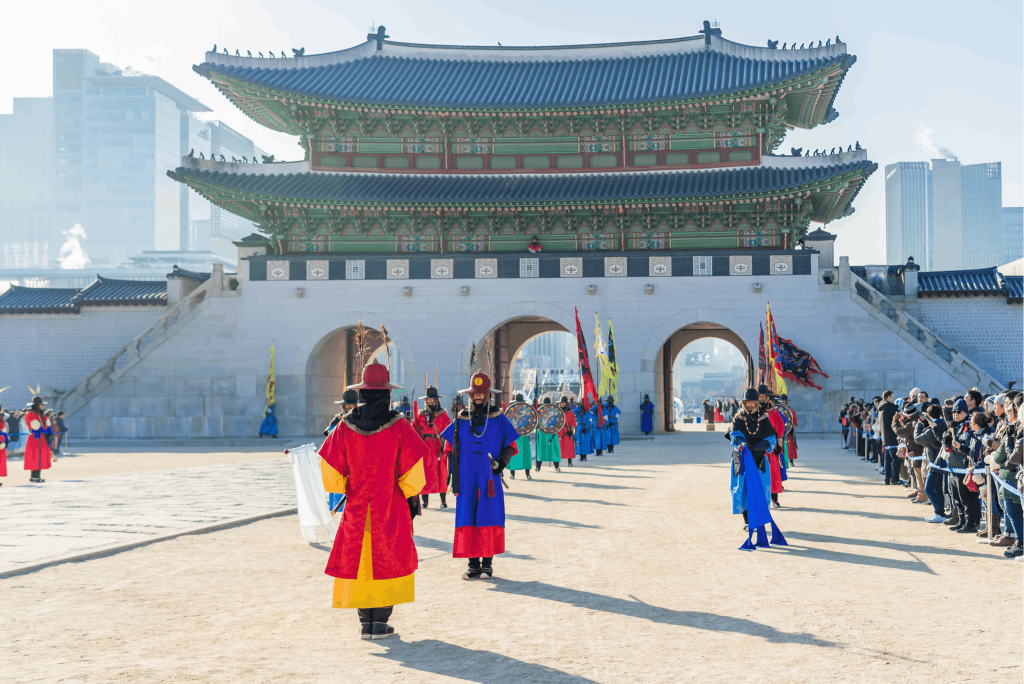
The Changing of the Guard ceremony happens at the main gate (Gwanghwamun) at 10:00 and 14:00. It lasts about 25 minutes and involves historically costumed guards performing a formalised changing procedure. Worth watching once.
National Folk Museum of Korea is inside the palace grounds and is free to enter. It gives good cultural context for the palace itself and has English-language displays.
Entry: ₩3,000 (~$2/€2). Free in hanbok. Metro: Gyeongbokgung Station, Line 3, Exit 5.
Author’s Tip: Get there for 09:00 opening on a weekday if you can. The palace feels completely different before the tour groups arrive. By 11:00 the main courtyard is packed. That first hour is worth setting the alarm for.
Mid-Morning: Bukchon Hanok Village
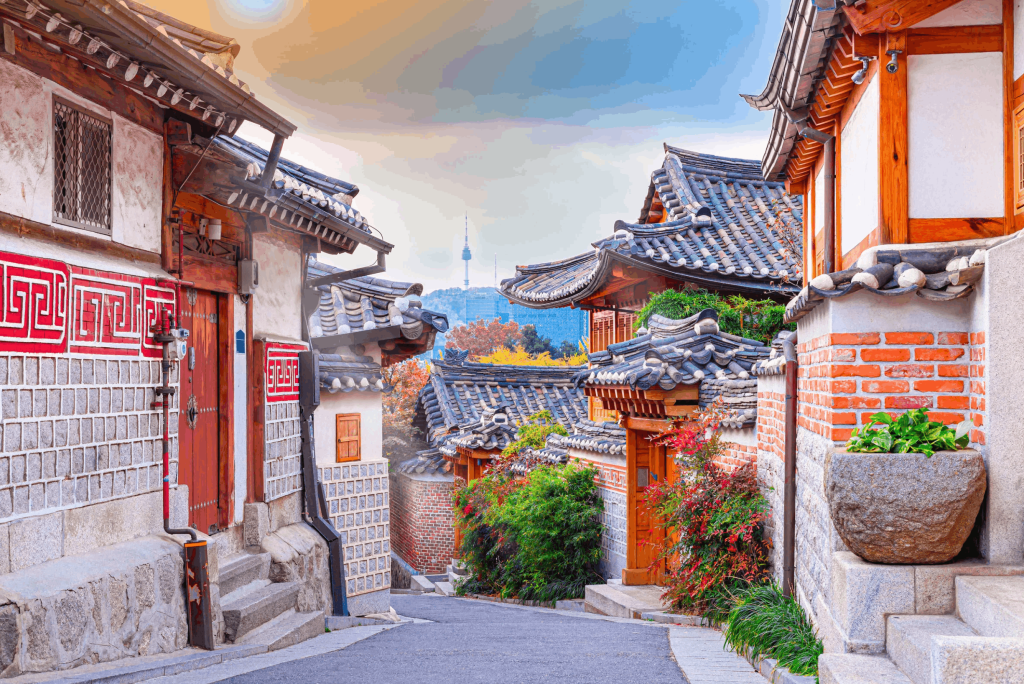
A 10-minute walk east of the palace takes you into Bukchon Hanok Village (북촌한옥마을), a hillside neighbourhood of hundreds of preserved traditional Korean houses (hanok) with tiled roofs and wooden frames dating to the Joseon period.
Bukchon is still a residential area, not a theme park. Residents live in these houses and have posted noise restriction signs throughout the main alley. Visit on a weekday morning rather than a weekend afternoon if possible: the difference in crowd levels is dramatic.
The classic viewpoint is on Gahoe-ro 11-gil, a stepped alley where the rooftops layer down toward the city in a way that has become one of the most photographed scenes in Seoul. It is genuinely beautiful.
Author’s Take: The Bukchon alley photograph looks identical in every tourist’s camera roll because everyone takes it from the same spot at the same time. If you want something different, walk past the famous viewpoint and keep going uphill. The alleys north of Gahoe-ro get quieter and the houses are just as old.
From Bukchon, it is a short walk to Changdeokgung Palace (창덕궁), particularly worth visiting for the Secret Garden(Huwon): a series of pavilions, ponds, and forested hills dating to the 15th century. The Secret Garden requires a separate ticket (₩8,000/~$5/€5) and timed entry. Book online in advance at the official Korea Heritage Service website.
Lunch: Insadong
Head south on foot or by bus to Insadong (인사동), Seoul’s traditional arts district. The main pedestrian street is lined with tea houses, craft shops, galleries, and food vendors. It is more tourist-facing than it once was, but the side alleys still hide genuinely good independent restaurants.
For lunch, try one of the Korean set-meal restaurants (한정식, hanjeongsik) in the alleys off the main street. A full set meal with rice, soup, and 10–15 small side dishes typically costs ₩12,000–₩18,000 (~$8–$12/€7–€11) per person.
Alternatively, the Ssamziegil courtyard complex in the centre of Insadong has multiple food stalls and cafés in a pleasant open-air space. Good for a quick bite if you would rather save appetite for the evening.
Afternoon: Gwangjang Market
Take the metro to Gwangjang Market (광장시장) on Line 1, Jongno 5-ga station. This is one of Seoul’s oldest traditional markets, established in 1905, and it remains one of the best places in the city for Korean street food.
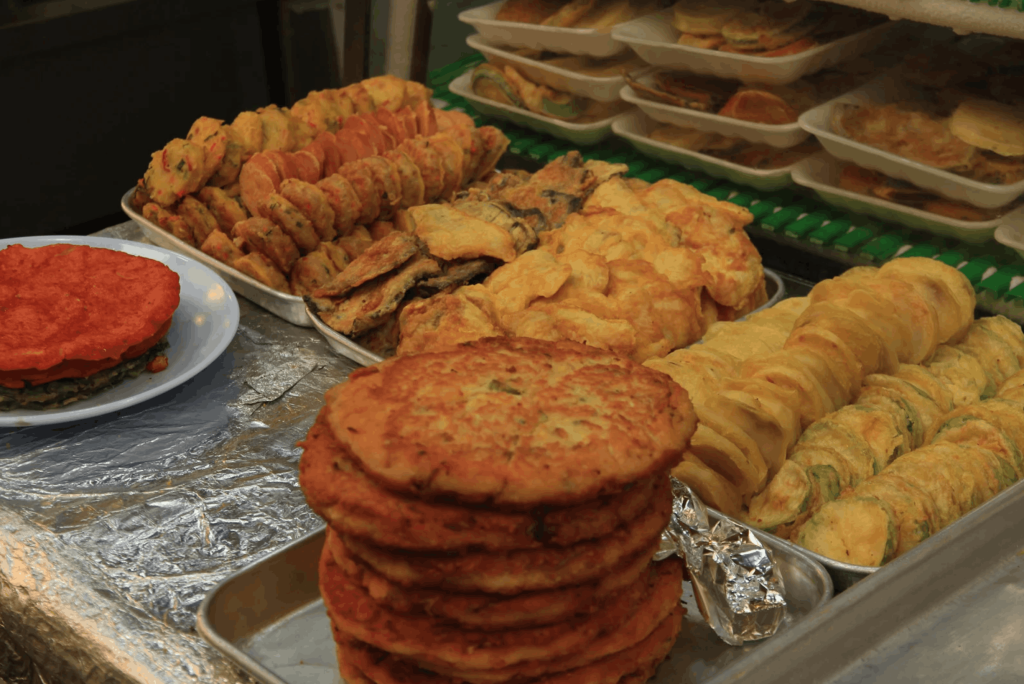
The covered market hall is vast and slightly overwhelming. Head directly for the food section in the central interior: rows of stalls run by (mostly) older women serving bindaetteok (mung bean pancakes fried to order, ₩5,000–₩8,000/~$3–$5/€3–€5), mayak gimbap (tiny rice rolls dipped in mustard soy sauce, around ₩3,000/~$2/€2 per plate), raw marinated beef (yukhoe) for those who eat it, and noodle soups.
Sit at the stall where you order, not at a shared table in the middle. The woman who served you will expect you to sit at her counter.
Author’s Take: Gwangjang is one of my favourite spots in Seoul and I come back every visit. The bindaetteok stall run by the woman in the yellow apron near the north entrance has been there for years. Order two pancakes and a soju. The total will be around ₩12,000 and it will be one of the better meals of your trip.
The fabric section of the market (separate from the food hall) is also worth wandering through: traditional Korean fabrics, silk, linen, and hanbok materials in every colour.
Evening: Cheonggyecheon Stream and Dongdaemun
From Gwangjang Market, walk 10 minutes south to Cheonggyecheon Stream (청계천), a restored urban waterway that runs for 11 km through the city centre. The stream was buried under a highway in the 1970s and reopened as a public park in 2005. Walking along it in the evening, with the city lights reflected in the water, is one of those Seoul experiences that photographs poorly but feels genuinely pleasant.
Continue east to Dongdaemun Design Plaza (DDP), the LED-clad landmark designed by Zaha Hadid. The exterior is best at night when it is illuminated. The DDP hosts temporary exhibitions, design shows, and a night market (Bamdokkaebi, operating weekends from 18:00 to 23:00) with independent designers, street food, and artisan goods.
Dinner recommendation: The narrow streets around Dongdaemun are packed with Korean BBQ restaurants targeting the fashion wholesale crowd rather than tourists. Prices are lower than Myeongdong and the food quality is consistently good. Look for restaurants with long queues of locals around 19:00–20:00.
Day 2: Commercial Seoul: Myeongdong, Namsan, and Gangnam
Day 2 covers the commercial heart of the city and the south bank of the Han River. The contrast between Myeongdong’s dense shopping streets, Namsan’s quiet hilltop views, and Gangnam’s polished modernity captures something important about how Seoul holds multiple versions of itself simultaneously.
Morning: Myeongdong
Myeongdong (명동) is Seoul’s highest-density shopping district: roughly one square kilometre of pedestrian streets dominated by Korean cosmetics chains, international fashion, street food stalls, and the occasional palace-era building that somehow survived the development.
For K-beauty shopping, Olive Young’s new Central Myeongdong flagship (opened March 2026) is the most comprehensive single stop, with three floors covering skincare, makeup, and wellness. Bring a list of products and their Korean names: the staff are helpful but the floor plan rewards preparation.
👉 Full Myeongdong Shopping Guide
The street food starts appearing around 11:00. Tteokbokki (spicy rice cakes), gyeran-ppang (egg bread), and tornado potatoes are the staples. Prices are around 30–40% higher than in neighbourhood markets, but the density and convenience are hard to beat for a single morning visit.
Myeongdong Cathedral, a 10-minute walk from the main shopping street, is Seoul’s oldest Gothic church (built 1898). The courtyard is a genuinely quiet escape from the commercial noise and worth five minutes if you are passing.
Editor’s Tip: If you are doing a K-beauty haul in Myeongdong, go to Olive Young Central first thing in the morning before the 1+1 promotional stock sells out. Popular toners and sunscreens are sometimes gone by early afternoon during peak tourist season. The flagship is on the main street, three floors, hard to miss.
Late Morning: Namsan and N Seoul Tower
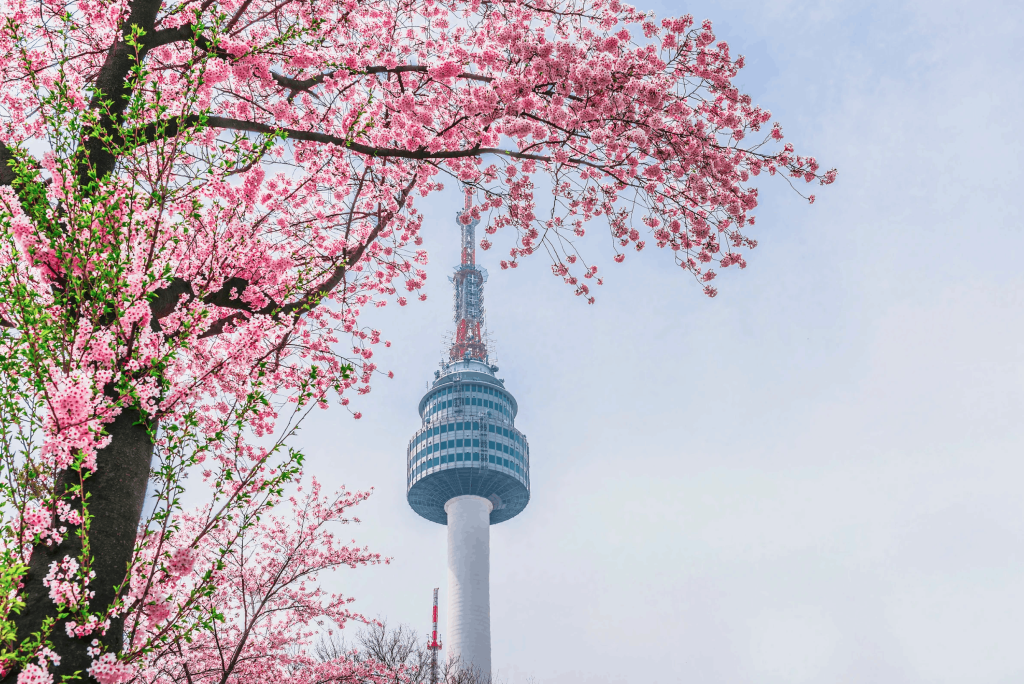
From Myeongdong, walk 20 minutes uphill or take the cable car to Namsan Mountain and N Seoul Tower (남산서울타워). The tower sits at 480 metres above sea level and the observation deck gives 360-degree views across the entire city.
The cable car runs from the bottom of Namsan-gil and costs ₩15,000 (~$10/€9) return. Walking up via the footpath takes about 25 minutes and avoids the queues entirely.
The tower itself charges ₩21,000 (~$14/€13) for the observation deck. On a clear day the Han River, the surrounding mountains, and the full sweep of the city spread out below. In haze or cloud, the view is obscured: check the air quality index (AQI) before going up.
The famous padlock trees around the tower base are a Korean tradition. Couples write their names on a padlock and attach it to the fence, supposedly as a symbol of eternal love. The practicality of removing hundreds of thousands of padlocks regularly appears not to have been considered.
Afternoon: Gangnam and COEX
Take the metro south across the Han River to Gangnam (강남). The name became globally known through a particular song, but the district itself is a polished commercial and residential area with good restaurants, upmarket shopping, and an underground city beneath COEX Mall.
COEX Mall is Asia’s largest underground shopping complex: several floors of shops, restaurants, a cinema, an aquarium, and the famous Starfield Library: a soaring public space filled floor to ceiling with books and open to anyone. It is genuinely impressive architecturally and worth 20 minutes even if you have no intention of reading anything.
Bongeunsa Temple (봉은사) sits directly adjacent to COEX and offers a remarkable contrast to the surrounding glass towers. The temple was founded in 794 and the current buildings date largely from the 19th and early 20th centuries. The 23-metre Mireuk Daebul statue is particularly striking. Entry is free.
Evening: Hannam-dong or Itaewon
For dinner and evening, head to Hannam-dong or Itaewon (한남동 / 이태원), two adjacent neighbourhoods on the north bank of the Han River that have become Seoul’s most cosmopolitan dining and bar area.
Hannam-dong in particular has evolved significantly in recent years: independent restaurants serving everything from excellent Korean barbecue to Levantine mezze, wine bars, and cocktail lounges occupy the streets between the main road and the hillside. Less crowded than Hongdae, slightly more expensive, and better food overall.
If your budget is more modest, Itaewon’s main street has a wider range of price points and some of Seoul’s best international food options.
Day 3: Creative Seoul: Hongdae, Han River, and Seongsu
The third day takes in the creative, younger face of the city: the indie music and arts district of Hongdae, the Han River parks, and Seongsu-dong, the neighbourhood that has become Seoul’s most interesting emerging area in recent years.
Morning: Hongdae
Hongdae (홍대) is the neighbourhood surrounding Hongik University and has been Seoul’s creative hub since the 1990s. The street art, independent shops, live music venues, and café culture are more concentrated here than anywhere else in the city.
The main streets are busiest on weekend afternoons when street performers occupy the open plazas. On a weekday morning, the neighbourhood is quieter and easier to explore properly.
The Hongdae Free Market (Freemarket) runs on Saturdays from 13:00 near Hongik University Park: artists, designers, and craftspeople sell independent work at accessible prices. Worth timing a visit if you are there on a Saturday.
For breakfast or mid-morning coffee, the café density in Hongdae is extraordinary. The blocks east of the main commercial strip around Yeonnam-dong have the quieter, more interesting independent cafés.
Late Morning: Gyeongui-Jungang Line Forest
The Gyeongui Line Forest (경의선숲길) is a 6-km linear park built along a decommissioned railway line running through Mapo-gu. It connects Hongdae to Sinchon and beyond, passing through low-rise residential streets, community gardens, and patches of actual greenery rare in central Seoul.
Walking or cycling this trail is one of the more genuinely local things to do in the city. Rent a public bicycle (Seoul Bike / Ddareungi) from any of the many docking stations along the route. The app is in English and cards are accepted. Prices are ₩1,000 (~$0.70/€0.60) per hour.
Afternoon: Han River Parks
Take the metro to one of the Han River parks. The Han cuts through the city and its banks are lined with public parks used heavily by locals for cycling, picnics, and watersports.
Yeouido Hangang Park (여의도한강공원) is the most accessible and has the best facilities: convenience stores, bicycle rental, a ferry pier, and great views of the downtown skyline from the north bank. In spring it is carpeted with cherry blossoms. Metro: Yeouinaru Station, Line 5.
Ttukseom Hangang Park (뚝섬한강공원) is more popular with young Seoulites and has kayaking, a swimming pool in summer, and a pleasant camping area. Metro: Ttukseom Resort Station, Line 7.
Convenience store picnics on the Han River are a Seoul institution. Pick up chimaek (chicken and beer), instant noodles, tteokbokki cups, and snacks from the 7-Eleven or GS25 at the park entrance, find a spot on the grass, and watch the city from the riverbank.
Late Afternoon: Seongsu-dong
End Day 3 in Seongsu-dong (성수동), across the Han River on the eastern side. Five years ago this was an industrial area of shoe factories, auto repair workshops, and small manufacturers. It has been transformed into Seoul’s most interesting creative neighbourhood, but unlike many gentrification stories, a significant number of the original workshops remain alongside the cafés and concept stores.
The mix is unlike anywhere else in Seoul: a hand-stitched shoe workshop next to a third-wave coffee roaster next to a gallery showing Korean contemporary art next to a restaurant that has had a three-month waiting list since it opened.
Author’s Take: Seongsu is the most interesting neighbourhood in Seoul right now and it will not stay this way. The rents are rising and the independent character is slowly being replaced by concept stores and brand pop-ups. Go in 2026 while it still feels like a place rather than an experience.
The area is navigable on foot from Seongsu Station (Line 2). The main streets to explore run between the station and the river. Plan 2–3 hours and no particular agenda.
Evening: Back to Hongdae or Itaewon
For the final evening, return to Hongdae for the nightlife district or Itaewon/Hannam for a better dinner. Both are well-connected from Seongsu via Line 2.
If it is your last night in Seoul, the view from one of the rooftop bars in Mapo-gu (north of Hongdae) over the city is worth seeking out. The neighbourhood is changing fast and the independent bar scene above street level is some of the best in the city.
Day Trip Options from Seoul
If you have a fourth day or want to add a side trip:
Suwon Hwaseong Fortress: 30 minutes on a direct train from Seoul Station. An 18th-century fortress wall encircling a hillside city, UNESCO-listed, with free hiking along the ramparts and a good street food market inside the gates.
Bukhansan National Park: Within the city limits, the trails up Bukhansan offer proper mountain hiking 30 minutes from central Seoul by metro. The Baegundae peak trail takes 3–4 hours return and gives views over the entire city.
Nami Island + Petite France: A popular day trip combination, 90 minutes northeast by train and ferry. Nami Island is a tree-covered river island famous for autumn foliage and as a filming location for Korean dramas. Petite France is a quirky French-themed cultural village 15 minutes further. Book the ferry in advance during autumn (October–November) when queues are long.
Frequently Asked Questions
Is three days enough for Seoul? Three days covers the essential sights at a comfortable pace. You will not see everything, but you will leave with a proper sense of the city’s character and range. Four or five days allows for more neighbourhood exploration and day trips.
What is the best area to stay in Seoul for first-time visitors? Myeongdong is central and convenient but expensive and touristy. Hongdae has more character and better value accommodation. Insadong is quieter and well-placed for the historic sites on Day 1. Gangnam is better for business travellers or those who prefer quieter, more polished surroundings.
Is Seoul safe for solo travellers? Seoul has very low rates of violent crime against foreigners. Solo travel, including at night, is generally straightforward across all the areas in this itinerary. Commonsense precautions apply as in any large city.
How much does three days in Seoul cost? Budget traveller (hostels, street food, free attractions): ₩80,000–₩120,000/day (~$54–$81/€49–€72). Mid-range (guesthouse or budget hotel, sit-down meals, paid attractions): ₩180,000–₩280,000/day (~$122–$189/€110–€168). Comfort (3-star hotel, restaurant meals, shopping): ₩400,000+/day (~$270+/€243+).
Do I need to book attractions in advance? Gyeongbokgung Palace does not require advance booking. Changdeokgung Secret Garden timed entry should be booked in advance online. Namsan Tower observation deck has no booking requirement but queues at peak times. Nami Island ferry should be booked in advance during autumn.
Prices are accurate as of June 2026. Exchange rate used: ₩1,500 = $1 USD, ₩1,680 = €1 EUR.
👉 Myeongdong Shopping Guide 2026
👉 Where to Buy Korean Cosmetics in Seoul
Where to Eat: Quick Food Guide by Day
Day 1 Food Picks
- Breakfast: Any bakery café near your accommodation. Korean bakery culture is excellent; Paris Baguette and Tous Les Jours are the main chains, but independent bakeries produce better bread.
- Lunch: Hanjeongsik set meal in Insadong. ₩12,000–₩18,000 (~$8–$12/€7–€11) for a full spread.
- Street food: Gwangjang Market in the afternoon. Bindaetteok and mayak gimbap are the must-orders.
- Dinner: Korean BBQ around Dongdaemun. Budget ₩20,000–₩30,000 (~$14–$20/€12–€18) per person including drinks.
Day 2 Food Picks
- Breakfast/brunch: A café in Hannam-dong or Itaewon. The neighbourhood has Seoul’s best coffee scene.
- Lunch: The underground food halls in COEX Mall have decent Korean food at reasonable prices (₩10,000–₩15,000/~$7–$10/€6–€9 per person).
- Dinner: Hannam-dong or Itaewon. Budget ₩30,000–₩50,000 (~$20–$34/€18–€30) per person for a proper restaurant meal.
Day 3 Food Picks
- Breakfast: Hongdae café. Egg toast from street vendors near the university entrance (₩3,000/~$2/€2) is a quick and genuinely good option.
- Picnic lunch: Han River convenience store picnic. Budget ₩15,000–₩25,000 (~$10–$17/€9–€15) for chicken, sides, and drinks.
- Dinner: Seongsu-dong restaurant. The neighbourhood has some of Seoul’s most interesting cooking at this point. Book in advance if you have a specific place in mind.
Transport Between Areas: Time Estimates
| Journey | Method | Time | Cost |
|---|---|---|---|
| Gyeongbokgung to Insadong | Walk | 12 min | Free |
| Insadong to Gwangjang Market | Metro (Line 1) | 8 min | ₩1,550 |
| Gwangjang Market to Myeongdong | Metro (Lines 1+4) | 12 min | ₩1,550 |
| Myeongdong to Namsan Tower | Walk + cable car | 25 min | ₩15,000 |
| Namsan to Gangnam | Metro (Lines 4+2) | 20 min | ₩1,650 |
| Gangnam to Hongdae | Metro (Line 2) | 18 min | ₩1,550 |
| Hongdae to Han River (Yeouido) | Metro (Lines 2+5) | 15 min | ₩1,550 |
| Yeouido to Seongsu | Metro (Lines 5+2) | 22 min | ₩1,650 |
What to Pack for Seoul
Seoul’s weather varies significantly by season. Check conditions for your travel dates, but generally:
Spring (March–May): Light jacket for mornings and evenings, layers for the day. Comfortable walking shoes are essential: this itinerary involves 10–15 km of walking per day.
Summer (June–August): Very hot and humid. Light, breathable clothing. An umbrella for the monsoon season (late June–July). High-SPF sunscreen, ideally Korean: it is cheaper, better formulated, and widely available.
Autumn (September–November): Similar to spring. Layers work well. October evenings cool down quickly.
Winter (December–February): Genuinely cold (often below freezing). Proper winter coat, gloves, and thermal layers. The cold is dry rather than damp, which makes it feel less harsh than equivalent European temperatures, but the wind chill is real.
A portable battery pack (power bank) is worth having regardless of season: a full day of navigation, translation, and photography drains phone batteries faster than most people expect.
Putting It All Together
Three days, three distinct versions of Seoul: the Joseon-era north with its palaces and tomb-quiet hanok alleys, the commercial centre where Myeongdong’s shopping streets sit a cable car ride from a mountain view, and the creative south where Hongdae’s street culture flows into the Han River parks and ends in Seongsu-dong’s converted workshops.
The sequence in this guide works because each day has its own internal logic: Day 1 moves on foot and short metro hops through a compact historic core; Day 2 trades altitude and shopping density for the polish of Gangnam; Day 3 spends the morning on foot in Hongdae and lets the afternoon open up along the river. If you only have time to cut one element, the Han River picnic in Day 3 is the most skippable without losing the shape of the trip. If you can stretch to a fourth day, Bukhansan or Suwon are the better additions over a second pass through any of the three days above.
The version of Seoul that surprises most first-time visitors is not the palaces, which mostly look the way the photographs suggested. It is the speed at which the city changes character between neighbourhoods that are a ten-minute metro ride apart, and how easily this itinerary moves between them without losing a day to transit.
Prices are accurate as of June 2026. Exchange rate used: ₩1,500 = $1 USD, ₩1,680 = €1 EUR.
👉 Myeongdong Shopping Guide 2026