
Busan is South Korea’s second-largest city and one of its most loved coastal getaways. Set along the southeastern coast, it feels completely different from Seoul, here, mountains rise right next to the sea, sandy beaches stretch along the shoreline, and lively seafood markets buzz with energy. Colourful hillside neighbourhoods add even more character, cascading down toward the water.
Getting there from Seoul is simple. The KTX high-speed train takes about 2.5 hours, making Busan an easy and worthwhile addition to your Korea itinerary. In this guide, you’ll find the must-see attractions, a suggested itinerary, and practical tips to help you make the most of your first visit.
Stay connected in Korea — Rent pocket WiFi or get an eSIM →
Haeundae Beach and the Coastal Strip
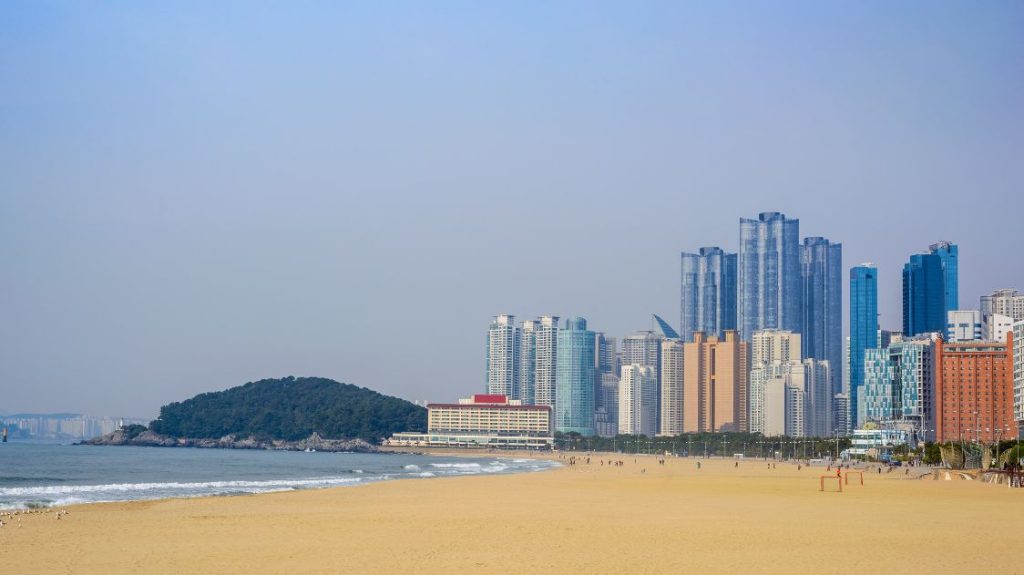
Haeundae Beach is the city’s most iconic stretch of coastline. This 1.5-kilometer crescent of sand is lined with high-rise hotels, as well as a lively promenade filled with restaurants and cafés. In summer, it comes alive with sunbathers and swimmers, while the cooler months bring a quieter, more relaxed atmosphere.
Running along the coast, Haeundae Blueline Park offers a scenic ride between Haeundae and Songjeong Beach. Visitors can choose between a slow-moving beach train or the popular sky capsules, which glide above the shoreline and offer sweeping ocean views. Tickets typically range from 10,000 to 35,000 KRW, and it’s best to book ahead during busy seasons.
Just a short walk away, Dongbaek Island provides a peaceful escape from the crowds. Despite its name, it’s actually a peninsula connected by a walking path, with a scenic coastal trail that takes around 40 minutes. Lined with camellia trees and ocean viewpoints, it’s especially beautiful around sunset.
For more on exploring Busan, see our complete Busan travel guide.
Gamcheon Culture Village
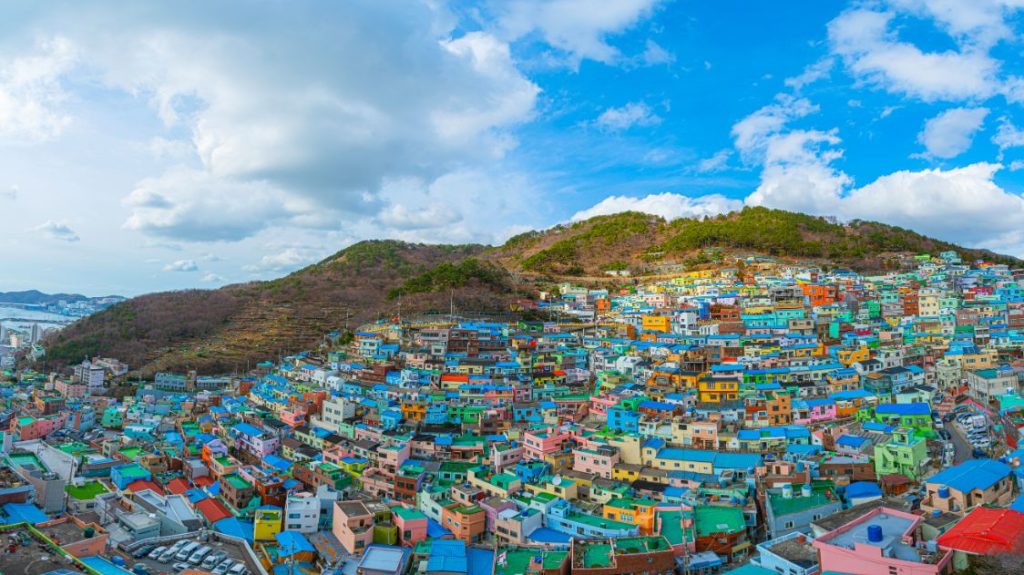
Often referred to as the Santorini of Korea, Gamcheon Culture Village is a colorful hillside neighborhood where pastel houses spill down a steep slope toward the sea. Originally built as a settlement for war refugees in the 1950s, it was later transformed through a community art project into one of Busan’s most creative and photogenic spots.
Today, the village feels like an open-air gallery. Its narrow alleyways are filled with murals, sculptures, small galleries, and playful photo spots, including the well-known Little Prince and Fox statue. Along the way, you’ll find cozy cafés and souvenir shops, as well as rooftops offering sweeping views over Busan’s harbor.
Plan to spend around 1.5 to 2 hours exploring. You can pick up a stamp map at the entrance (around 2,000 KRW) for a fun, self-guided route through the village. Comfortable shoes are a must, as the streets are steep and winding. Visiting in the morning usually means fewer crowds and softer light for photos.
To get there, take Line 1 to Toseong Station, then transfer to a local Maeul bus (1-1 or 2-2) heading up the hill.
Jagalchi Fish Market
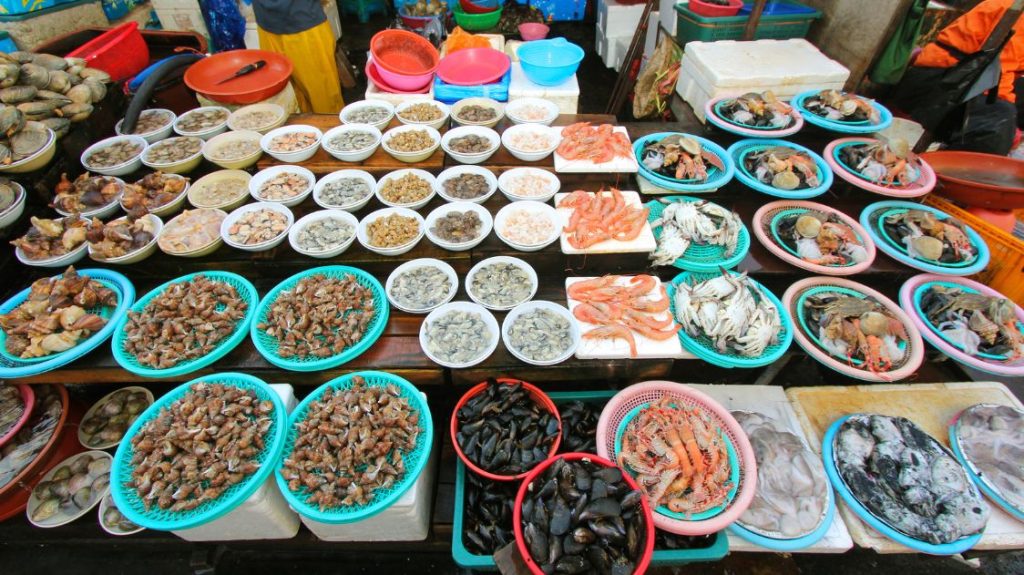
Jagalchi Market is the largest seafood market in South Korea and one of the most lively places to visit in the city. Located near Nampo-dong, the market spreads across a big building by the water, along with outdoor stalls selling all kinds of fresh seafood.
On the ground floor, you can pick your own fish, crab, or shellfish from the tanks. Prices are usually discussed on the spot, and a large sashimi platter often costs around 20,000 to 50,000 KRW. Once you’ve chosen, it will be prepared right away, and you can take it upstairs to the second-floor dining area with views of the harbor.
If you prefer cooked food, the outdoor stalls nearby serve simple and tasty dishes like grilled fish, fish cake soup, and fried seafood. Just next door, Gukje Market adds even more street food and a classic market atmosphere.
For the best experience, try to visit in the morning (before 10 AM) when the seafood is freshest and the market feels more local and less crowded.
Haedong Yonggungsa Temple
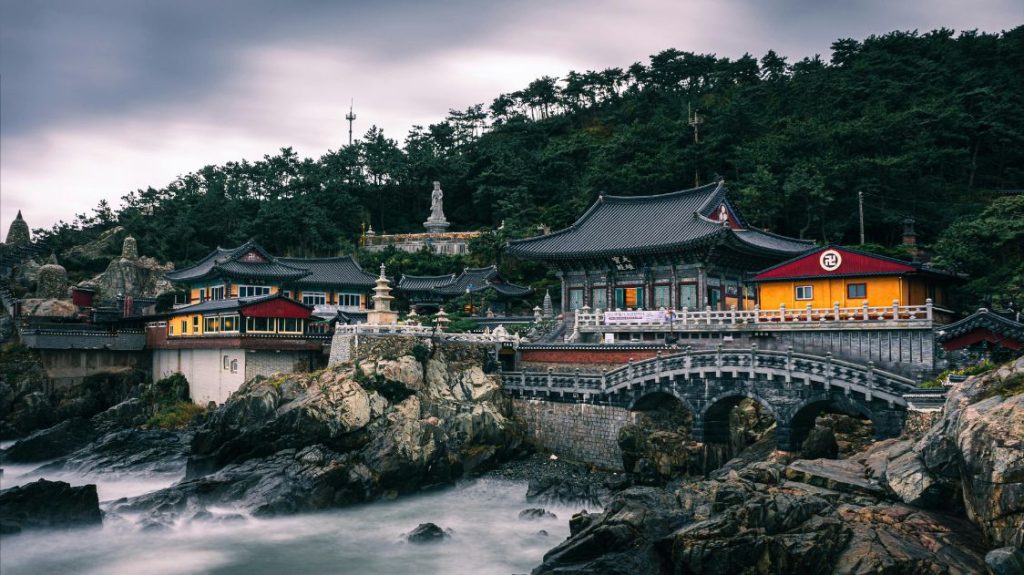
Unlike most temples in Korea, which are tucked away in the mountains, Haedong Yonggungsa sits right on the rocky coastline, making it one of the most dramatic temple settings in the country. Founded in 1376, the temple is set along seaside cliffs, with waves crashing just below.
To reach the main complex, visitors walk down a stone staircase of 108 steps, passing a golden Buddha statue and rows of stone lanterns along the way. At the bottom, the main hall opens up to wide views of the ocean, creating a calm and scenic atmosphere.
The temple is free to enter and open from sunrise to sunset. Early morning is the best time to visit, with softer light and fewer crowds.
To get there, take Bus 181 from Haeundae, then walk a short distance to the entrance. Plan for around two hours in total, including travel time.
Gwangalli Beach and the Diamond Bridge
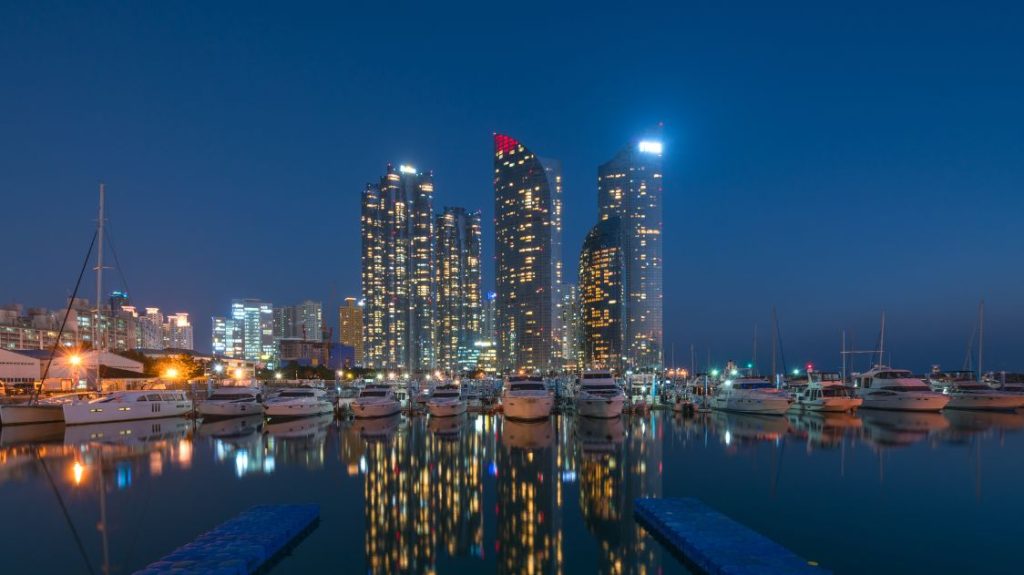
Gwangalli Beach is a more relaxed alternative to Haeundae, popular with locals for its laid-back vibe and clear views of the iconic Gwangan Bridge. Stretching 7.4 kilometers, the bridge lights up every evening with colorful LED displays that reflect beautifully on the water.
The beachfront promenade is lined with seafood restaurants, craft beer bars, and casual spots with live music, making it a great place to unwind. Many people come around sunset, when the sky changes color and the bridge lights slowly turn on.
Gwangalli is also known for hosting the Busan International Fireworks Festival, usually held in late October or early November. It’s one of the largest fireworks shows in Asia and draws huge crowds each year.
To get there, take Line 2 to Gwangan Station, then walk about 10 minutes to the beach.
Suggested 2-Day Busan Itinerary
Day 1: Coastal & Culture. Start your day early at Haedong Yonggungsa to avoid the crowds. From there, head to Haeundae Beach for a walk along the shore.
Next, ride the sky capsule at Haeundae Blueline Park to Songjeong Beach—it’s a scenic way to travel and a great spot to stop for a seafood lunch. In the afternoon, explore Gamcheon Culture Village, wandering through its colorful streets and viewpoints.
Wrap up the day at Gwangalli Beach. Come for sunset, stay for dinner, and watch the lights of Gwangan Bridge come on after dark.
Day 2: Markets & City Views. Start your morning at Jagalchi Market with a fresh seafood brunch. Then walk over to Gukje Market and nearby BIFF Square for street food and a lively local atmosphere.
In the afternoon, visit Beomeosa Temple, a peaceful temple in the mountains that feels far from the busy city. Finish your trip at Busan Tower in Yongdusan Park for panoramic views, then catch the evening KTX to Seoul.
For electronics and gear before your trip, check our guide on where to buy electronics in Seoul.
Frequently Asked Questions
How many days should I spend in Busan?
Two to three days is ideal. With two full days, you can see the main highlights without rushing. A third day gives you time to visit places like Beomeosa Temple, Taejongdae Park, or even take a day trip to Gyeongju.
It’s possible to do Busan in one day, but it will feel rushed.
What is the best way to get from Seoul to Busan?
The KTX high-speed train is the easiest option. It takes about 2.5 hours from Seoul Station to Busan Station and costs around 59,800 KRW one way. It’s best to book in advance, especially on weekends.
Buses are cheaper but take longer—usually 4 to 5 hours.
When is the best time to visit Busan?
Spring (April–May) and autumn (September–November) have the best weather. Summer is great for the beach but can be hot and crowded.
Major events include the Busan International Film Festival in October and the Busan International Fireworks Festivallater in the season.
Winter is colder but quieter, and it’s actually one of the best times for fresh seafood.
Final Tips
Busan is best enjoyed at a slower pace. Staying one or two nights lets you settle into the rhythm of the city—temples in the morning, beach walks in the afternoon, and long seafood dinners by the water.
The subway is easy to use and covers most major areas, but buses are helpful for places like Haedong Yonggungsa and hillside neighborhoods. A T-money card works on all public transport, and apps like Naver Map are very useful for directions.
And most importantly, eat as much seafood as you can! Being right by the ocean means Busan’s seafood is fresh, affordable, and a big part of the experience. Don’t miss trying a sashimi set at Jagalchi Market or a bowl of dwaeji gukbap, the city’s signature pork soup.
For broader trip planning, explore the best things to do in Seoul and discover the best food in Seoul.